Kōrero: Te Tiriti o Waitangi – the Treaty of Waitangi

Kāwana William Hobson

Image
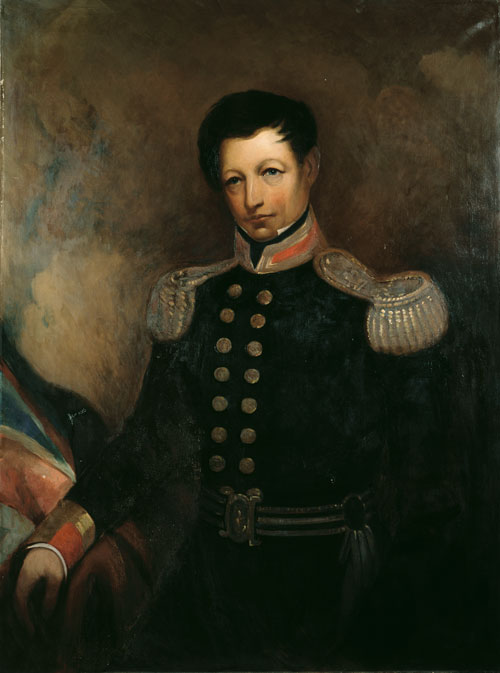
Governor William Hobson

Ko te kāwana tuatahi o Aotearoa ko te āpiha tauā moana Piritānia ko William Hobson. I te tau 1839, e 46 ana tau, i kōwhiria ia hei māngai mō Piritānia (māngai takawaenga) i Aotearoa, ā, hei kāwana-rūtene o ngā takiwā o te motu e whakaaetia ana e ngāi Māori kia tukua i raro i te ture o Piritānia. I tana taenga mai i te Hānuere 1840, i puakina e ia ko ia te rūtene kāwana o ngā nōhanga mihinare kua whakatūngia kētia ki Pēwhairangi. I tonoa ngā rangatira Māori kia haere ki tētahi hui ki Waitangi ki te matapaki i te waitohutanga o tētahi tiriti me te Karauna o Piritānia.

Te whakamahi i tēnei tūemi

Alexander Turnbull Library

Reference: G-826-1

by James Ingram McDonald

Permission of the Alexander Turnbull Library, National Library of New Zealand, Te Puna Mātauranga o Aotearoa, must be obtained before any re-use of this image.

Ngā whakaahua me ngā rauemi katoa o tēnei kōrero

Me pēnei te tohu i te whārang

Claudia Orange, Te Tiriti o Waitangi – the Treaty of Waitangi – Creating te Tiriti o Waitangi – the Treaty of Waitangi, Te Ara – the Encyclopedia of New Zealand, https://teara.govt.nz/mi/artwork/36339/kawana-william-hobson (accessed 4 June 2026).

He kōrero nā Claudia Orange, i tāngia i te 5 June 2012, reviewed and revised 28 March 2023 me te āwhina o Claudia Orange. He mea whakamāori nā Basil Keane.

Comments

John Jensen
24 February 2014
The story has always been that Captain William Hobson was the first Lieutenant Governor of New Zealand. This indeed is well substantiated but it may be of interest that there is good evidence that Captain David Buchan was the first Lieutenant Governor Designate of this country. The Colonial Secretary, Lord Glenelg in his letter to Sir George Gipps 1st Dec 1838 indicates that he had approached a suitable candidate, and hoped to be able to make an announcement shortly. It has always been assumed that this referred to Hobson, but my family research indicates Buchan as being Glenelg's choice. Captain Buchan captained the East Indiaman, 'Kellie Castle', and happened to be in Calcutta when he was suddenly called back to England. He was expected home by December 1838. Unfortunately the ship that he was on, the 'Upton Castle' was last seen off Cape Argulhas on fire, and was never heard of again. Captain Buchan had been placed on the 'Appointments register' by Glenelg in December 1835, awaiting a suitable position. He had served many years on the Newfoundland Station. He had led a North West Passage Arctic Expedition in 1818, and had been acting Governor of the island on a number of occasions. His final appointment in Newfoundland was as High Sheriff. What was of particular significance was the fact that he was the highly regarded 'go to man' of the Colonial Department in dealings with the indigenous Beothuk Indians. Glenelg was concerned with the treatment of the indigenous Maori in New Zealand as much as he was, the protection of the pakeha settlers. Buchan had proved himself adept in both fields. My recent book, 'Under a Southern Sky', presents the compelling evidence of 'the Governor who never was'.