

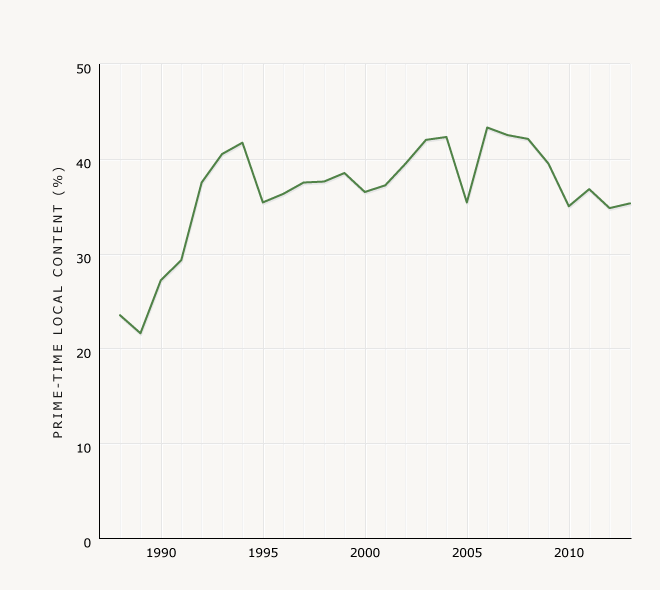
This graph charts the rise and fall of local content broadcast in prime time, between 6 p.m. and 10 p.m., seven days a week. The figures to 2004 cover only TV One, TV2 and TV3. Prime was added in 2005 and Māori Television and C4 in 2006. The figures suggest that the establishment of television funding body NZ On Air in 1989 provided a significant boost to local programme-making, with the proportion of local content on screen rising to over two-fifths in 1993 and 1994. There was then a significant decline until the establishment of the public-service charter for TVNZ in 2003 and the emergence of Māori Television. Local content increased to 43.3% in 2006. After that there was a gradual decline in the proportion of New Zealand-made programmes.
Te whakamahi i tēnei tūemi
Te Ara - The Encyclopedia of New Zealand
Source: Statistics New Zealand
This item has been provided for private study purposes (such as school projects, family and local history research) and any published reproduction (print or electronic) may infringe copyright law. It is the responsibility of the user of any material to obtain clearance from the copyright holder.