

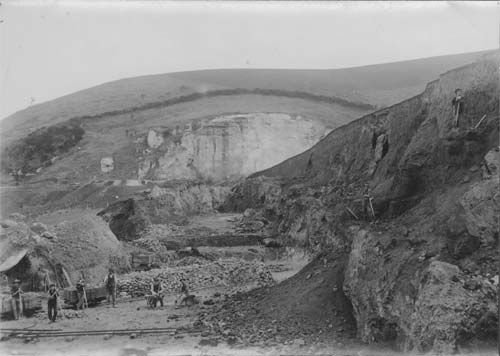
Probably dating from the early 1920s, this photograph shows the phosphate workings at Milburn, Otago. This was the only significant phosphate deposit in New Zealand. Large lumps of phosphate occur in association with limestone, and a limestone quarry is visible in the background. The phosphate was crushed and used to produce fertiliser. However, the deposits lay under thick basalt rock (top right) which made mining difficult. Rising transport costs and the advent of cheap, high-grade phosphate imports from the Pacific Islands put an end to the venture later in the 1920s.
Te whakamahi i tēnei tūemi
Hocken Collections, University of Otago, Milburn New Zealand Collection
Reference: 89-085/10
Permission of the Hocken Library Uare Taoka o Hakena, University of Otago, must be obtained before any re-use of this image. Further information may be obtained from the Library through its website.