

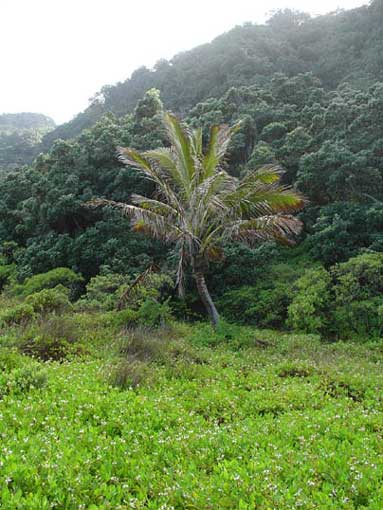
This coconut (Cocos nucifera) on Raoul Island in the Kermadecs, photographed in 2004, was probably planted by people. Coconuts regularly wash up on Kermadec shores, but none have germinated. They do not usually grow outside of the tropics, but their arrival in the Kermadec Islands (halfway between New Zealand and Tonga) shows that plant material can reach distant lands on ocean currents. Fossil coconuts of another species (Cocos zeylandica) have been found in Northland. They flourished around 20 million years ago, when northern New Zealand was almost tropical.
Te whakamahi i tēnei tūemi
Reference: 10057067
by Rebecca Stanley
This item has been provided for private study purposes (such as school projects, family and local history research) and any published reproduction (print or electronic) may infringe copyright law. It is the responsibility of the user of any material to obtain clearance from the copyright holder.
Comments
21 September 2022