

Image
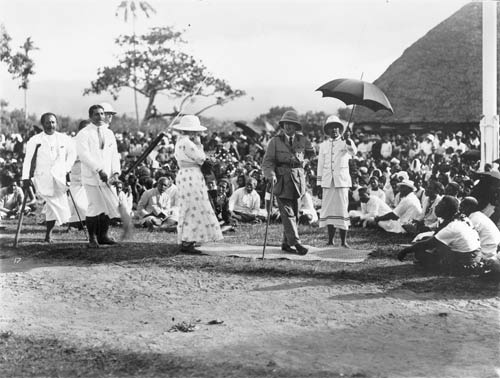
Colonel Robert Tate, New Zealand's second resident commissioner for Samoa, speaks to an outdoor meeting under the protection of a sun umbrella, about 1920. Tate held absolute authority in Western Samoa as the Fono of Faipule, an advisory body of Samoan leaders, was not legally recognised until his departure in 1923. Referring to the Mau movement for Samoan independence, Tate told the governor of American Samoa that much of the unrest resulted from ideas of racial equality.
Te whakamahi i tēnei tūemi
Alexander Turnbull Library, Robert Ward Tate Collection (PAColl-0085)
Reference: PAColl-0085-035
Permission of the Alexander Turnbull Library, National Library of New Zealand, Te Puna Mātauranga o Aotearoa, must be obtained before any re-use of this image.