Kōrero: Inner-city living

Wellington YMCA hostel

Image
Wellington YMCA hostel

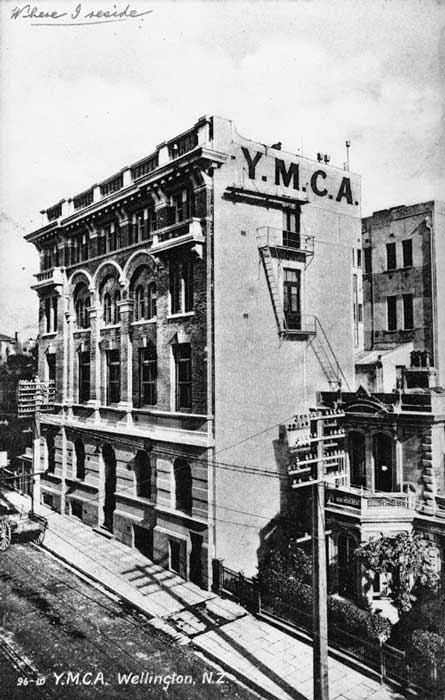
Hostels attracted young people moving to the city from the country or other towns. Parents were reassured by the care hostel staff took of their offspring, and residents found that hostels were a good place to meet new friends. Hostels had night curfews and were segregated. The Young Men’s Christian Association (YMCA) and Young Women’s Christian Association (YWCA) were among the largest providers, with hostels in each of the main cities. This 1910s postcard shows the YMCA hostel in Wellington’s Willis St, and has been annotated ‘Where I reside’.

Te whakamahi i tēnei tūemi

Alexander Turnbull Library

Reference: PAColl-5932-52-front

Permission of the Alexander Turnbull Library, National Library of New Zealand, Te Puna Mātauranga o Aotearoa, must be obtained before any re-use of this image.

Ngā whakaahua me ngā rauemi katoa o tēnei kōrero

Me pēnei te tohu i te whārang

Philip Morrison rāua ko Ben Schrader, Inner-city living – Early inner-city living and its decline, Te Ara – the Encyclopedia of New Zealand, https://teara.govt.nz/mi/photograph/23737/wellington-ymca-hostel (accessed 4 June 2026).

He kōrero nā Philip Morrison rāua ko Ben Schrader, i tāngia i te 6 April 2010.

Comments

Derek
24 January 2015
History: I stayed at the wellington YMCA when I was about 18 for 6 months and it was not a happy place.in the late 1950s the hot water went off at 5.30 pm, washing of clothes was done at the weekend but one had to be quick before the hot water ran out then we took our washing to dry in our bedrooms or it would disappear over night. The dressing table had no bottoms in the drawers so one had only one drawer to store clothes. The bathroom was in the open plan with showers and toilets open.......no doors and the lady cleaner timed her cleaning duties at the same time, we were there for her 'entertainment ' as it was young men only establishment. Meals were mainly mince, sausages or salad and luncheon with a potatoe if you were lucky.The fish and chip shop across the road did a great trade. No radios/ gramophones or music of any kind was permitted in rooms.A piano with dust cover in the dining room was provided but no one ever played it. The 11pm curfew enforced very strictly. And if you did get caught you snarled at and pushed inside having to report in the morning why you were late and given three counts and you were out. There was no heating of any kind. I recall a young man complaint of constipation in the toilets crying all night but not one came to his aid. There were poker sessions in some of the rooms but thank goodness cards did not hold any interest. It was bleak house with no care and attention, that you were on your own was made very clear. After the war accomodation was very scares. Guess I was one of the lucky ones. I still find christain organisations suspect even today. I am 83 years old but I survived regardless '