

Phase I, July to October 1863
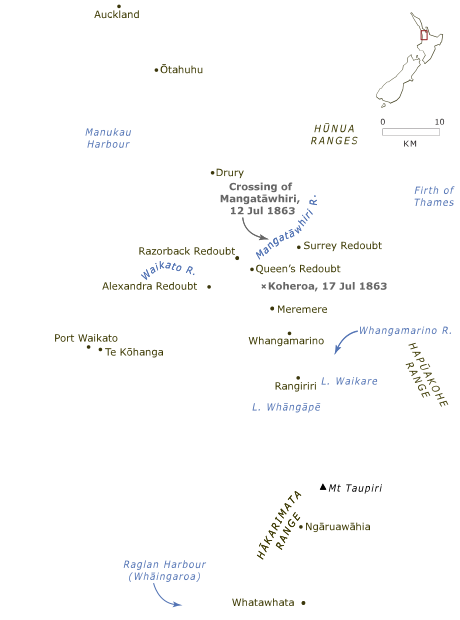
Forces under the command of General Duncan Cameron crossed the Mangatāwhiri River boundary on 12 July 1863 and took the Koheroa ridge. The Māori pā at Meremere was bombarded from Whangamarino over the next three months, but British forces did not advance. Māori made attacks behind the lines through July, August and September, around Pukekohe and Drury. Until October Cameron lacked gunboats to proceed safely up the Waikato River.
Phase II, October 1863 to January 1864
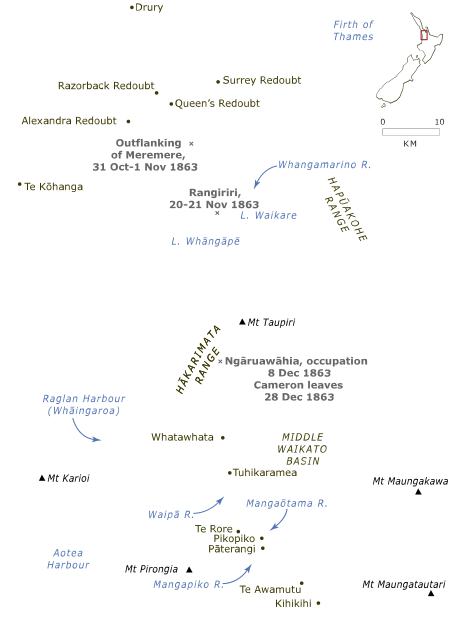
At the end of October British forces advanced. Māori abandoned their pā at Meremere, but made a stand at Rangiriri, 15 kilometres upriver, which the British took after fighting on 20–21 Nov. The next feasible defensive positions for Māori were in the middle Waikato basin, another 60–70 kilometres upstream. Through December and January British forces moved in that direction, the pace dependent on the provision of vessels, other transport and supplies.
Phase III, January to April 1864
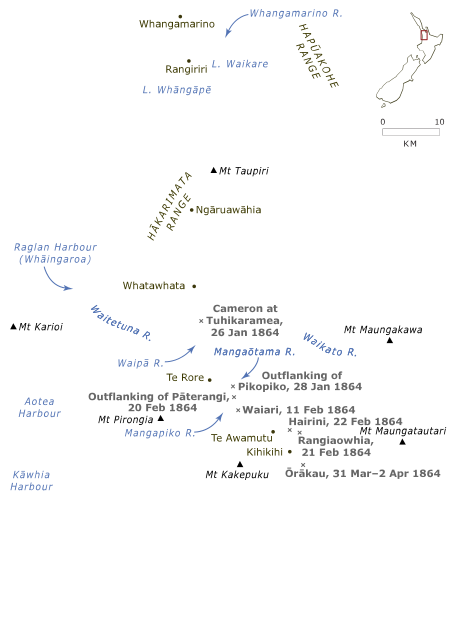
At the end of January British forces marched out from the encampment at Tuhikaramea, about 8 kilometres south-west of present-day Hamilton. The main Māori fortifications in the middle Waikato basin were outflanked over the next three weeks, with relatively little loss of life. Fighting at the populated settlement of Rangiaowhia on 21 February took a greater toll, especially of Māori. After the siege at Ōrākau, an incompletely built pā, at the end of March the British controlled the middle Waikato.
The invasion of Waikato in 1863–64 by British and colonial forces aimed to destroy the aspirations of the Māori King movement to autonomy and self-determination. It targeted the stronghold of the movement in the middle Waikato basin – one of the most populated and productive Māori districts in the country. Click the arrow (right) to see the phases of the war.
Te whakamahi i tēnei tūemi
Te Ara - The Encyclopedia of New Zealand
This item has been provided for private study purposes (such as school projects, family and local history research) and any published reproduction (print or electronic) may infringe copyright law. It is the responsibility of the user of any material to obtain clearance from the copyright holder.