

-
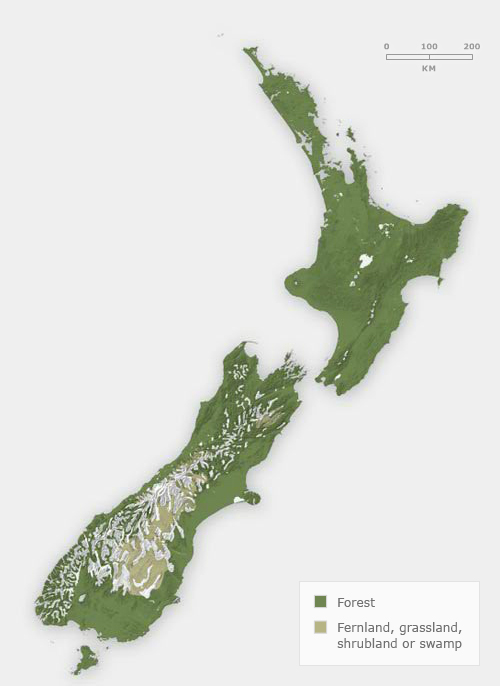
c. 1000 CE
-
1840 CE
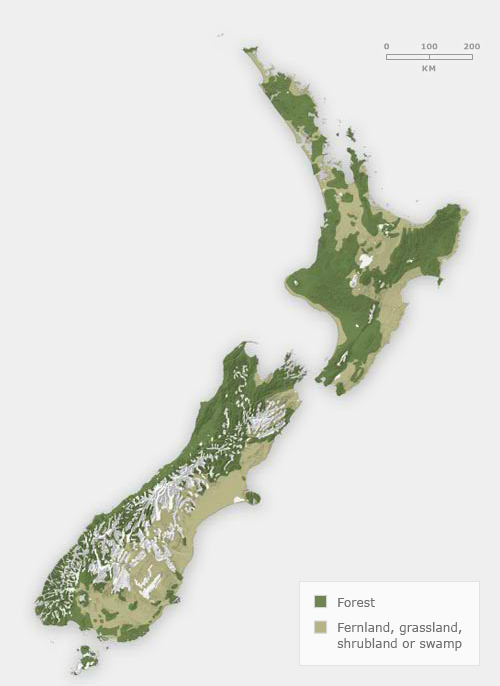
Around 1000 CE, before humans arrived in New Zealand, forest covered more than 80% of the land. The only areas without substantial forests were in the South Island – Central Otago and the Mackenzie Basin. After Māori arrived around 1250–1300, they burnt off large areas, and European traders logged timber for export from the late 18th century. By 1840, when organised European settlement began, forests covered only 50% of the country.
Te whakamahi i tēnei tūemi
This item has been provided for private study purposes (such as school projects, family and local history research) and any published reproduction (print or electronic) may infringe copyright law. It is the responsibility of the user of any material to obtain clearance from the copyright holder.