

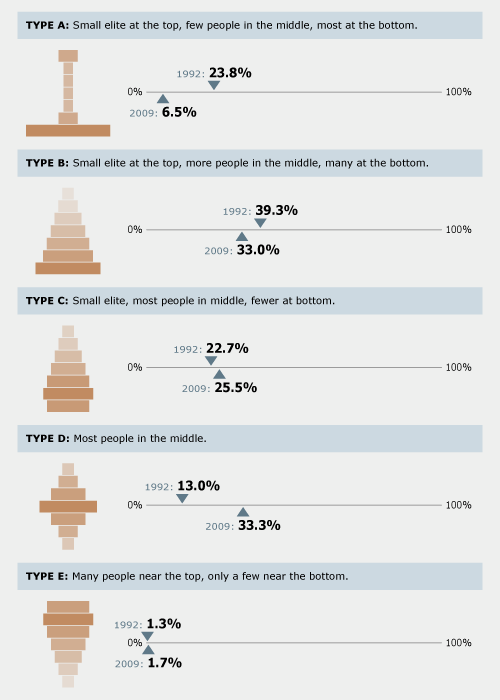
These charts show the models of social structure New Zealanders believed best represented their society. Despite other evidence which suggests that inequality increased between 1992 and 2009, more New Zealanders believed that their society was predominantly middle class (Type D) in 2009 than earlier. In addition, in 1992 almost a quarter believed the society was extremely stratified with most people at the bottom of the pyramid (Type A), whereas by 2009 only 6.3% believed that was the shape of the society. This finding is consistent with a decline in the use of class as a way of understanding New Zealand society.
Te whakamahi i tēnei tūemi
Te Ara - The Encyclopedia of New Zealand
Source: Philip Gendall, Social inequality in New Zealand. Palmerston North: International Social Survey Programme, Massey University, 1993; and Philip Gendall and Nicola Murray, Social inequality in New Zealand. Palmerston North: International Social Survey Programme, Massey University, 2010
This item has been provided for private study purposes (such as school projects, family and local history research) and any published reproduction (print or electronic) may infringe copyright law. It is the responsibility of the user of any material to obtain clearance from the copyright holder.