Kōrero: Gold and gold mining

Chinese settlement, Arrowtown

Image
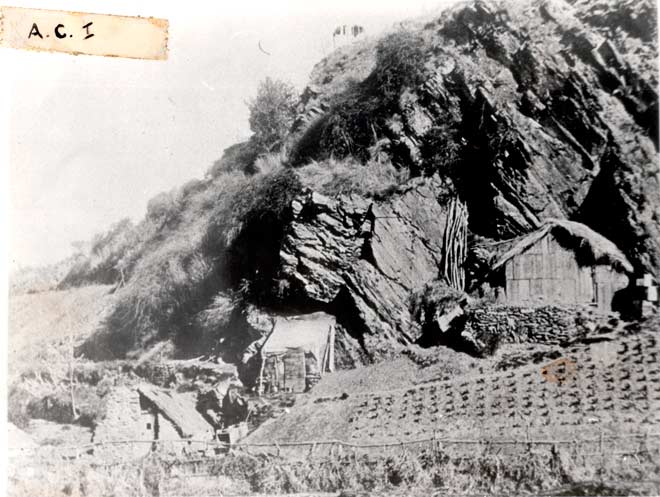
Chinese settlement, Arrowtown

Chinese miners mostly worked the ground that Europeans had abandoned as unprofitable. They worked hard and established more permanent settlements than Europeans. Many constructed sod and schist cottages, dry stone walls, and planted gardens.

Te whakamahi i tēnei tūemi

Lakes District Museum

This item has been provided for private study purposes (such as school projects, family and local history research) and any published reproduction (print or electronic) may infringe copyright law. It is the responsibility of the user of any material to obtain clearance from the copyright holder.

Ngā whakaahua me ngā rauemi katoa o tēnei kōrero

Me pēnei te tohu i te whārang

Carl Walrond, Gold and gold mining – Māori and Chinese miners, Te Ara – the Encyclopedia of New Zealand, https://teara.govt.nz/mi/photograph/8647/chinese-settlement-arrowtown (accessed 4 June 2026).

He kōrero nā Carl Walrond, i tāngia i te 2 March 2009.

Comments

Madeline Crump
13 October 2011
The Old Arrowtown a narrative written by a year 8 student Madeline Crump St John's Girls' School The cold, damp, dreary, conditions of the Chinese huts were ideal... for disease. But the Chinese did not complain about the lack of proper building materials. For what they lacked in riches, they made up for with creativity. The Arrow Mountains contained large amounts of a rock called schist and the river had some clay (which, when mixed with dirt, cut up straw and muddy water, made a decent substitute for cement.) Trees were scarce, so wooden houses were few and far between. The houses were always small and cramped, sometimes so tiny, there wasn't room to swing a cat. Siegon Wong lived in such conditions. His house was one of the biggest, but he was also the shop keeper so most of his house was taken up by the meat, fruit and veggies he grew and sold, not leaving much space to live or sleep in. Once a month the garden sale was on and he would open his doors and the other miners would come down to his house and buy his products. When the garden sale wasn't on he was often found panning for gold to send to his family back in China. The river was bursting with gold and panning was one of the most effective ways to make a fortune. But the river was also crowded with miners as well. If you made a big strike you didn't have to yell "gold" for everyone to find out. All you had to do was to put the gold in your pouch. Your neighbour would almost always see the yellow metal you slipped in to your pocket. The European miners didn't make it any less stress-free. If anything they hindered the Chinese all they could. The devious, scheming, tricky, fraudulent European serpents would hide their own gold and blame it on one of the "filthy, pilfering yellow scum", or so the European miners sometimes called the Chinese back then. Then would they take all the gold off the miner they  had blamed, and the miner would have to start from scratch. This trick led the Chinese to soon learn to hide half on themselves and to hide the other half in plain sight in their huts. Siegon, as the shopkeeper, would be blamed the most. "That shop owner must have stolen my money to be able to buy seeds to plant, he's guilty, and he's a thief "...and Siegon would have his money stripped off him, again. The smoke from the fire places would choke a man or woman if the wind blew the wrong way, as would the stench from the "bathrooms". The reek was unbelievable and the lack of showers, baths, and any washing facilities, didn't help. Spring and summer the sight would get a little better, with the pretty flowers in the spring and the trees bursting with delicious looking, tasting and smelling fruit in the summer. Autumn was pretty coloured with the dying leaves but the cold and frost was sometimes unbearable. But winter was downright torturous. The snow was freezing as was the water, making panning near impossible. The worst bit was that the fires needed to keep going and the lack of trees meant using wood off the ground. That wood was always wet and would hardly ever light properly. The life of a Chinese gold miner was like being invited to a birthday party and then being turned away as soon as you gave the birthday girl her present. like winning the lotto to be told you weren't allowed it, was like being a princess, then being told to work, for your food. The Chinese were being treated as dogs, being pushed, shoved, bullied, intimidated, abused, harassed and so, so much more. As Siegon trudged down to the river in the slush he saw a snow drop peeking out from under a pile of snow and his hopes lifted. Maybe, just maybe, during his 17th year in Arrowtown he might finally find enough gold to send to his family, and have enough to sail back to China as well. He walked down to the Arrow River with double speed, his head held high and in good spirits.