

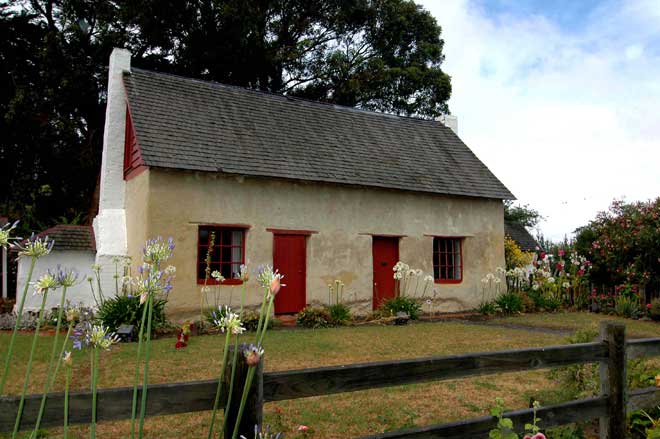
Early European settlers often had to make their own houses. They used forms of construction that were familiar to them from their place of origin. These often utilised earth or clay in various forms. Migrants from Cornwall built cob houses, made from a mix of clay and straw or grass, built up in layers to make walls that were thick and warm. In this case the Riverlands cob cottage walls are a mix of clay, chopped tussock and horse manure containing undigested chaff. It is not clear exactly when it was built – it was possibly as early as 1859.
Te whakamahi i tēnei tūemi
Flickr: Chook with the looks' photostream
by Chook Searles
This item has been provided for private study purposes (such as school projects, family and local history research) and any published reproduction (print or electronic) may infringe copyright law. It is the responsibility of the user of any material to obtain clearance from the copyright holder.
Comments
10 January 2024