Kōrero: Diseases of sheep, cattle and deer

Fly strike

Image
Fly strike

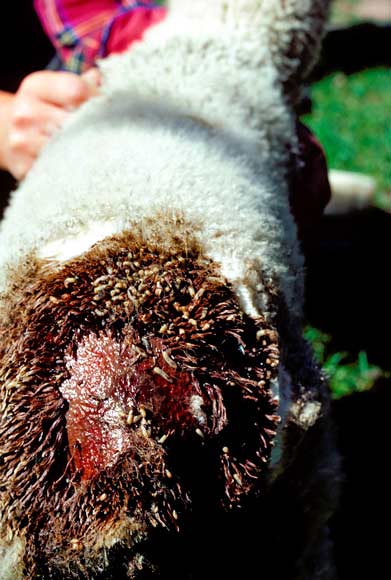
One of the most upsetting and horrifying problems that farmers have to deal with is fly strike in lambs. This lamb has advanced fly strike, with many maggots (fly larvae) visible and a large area of bare skin exposed.

Te whakamahi i tēnei tūemi

Natural Sciences Image Library of New Zealand

Reference: Ag1884Rbt.jpg

by G. R. Roberts

This item has been provided for private study purposes (such as school projects, family and local history research) and any published reproduction (print or electronic) may infringe copyright law. It is the responsibility of the user of any material to obtain clearance from the copyright holder.

Ngā whakaahua me ngā rauemi katoa o tēnei kōrero

Me pēnei te tohu i te whārang

Gary Clark, Neville Grace rāua ko Ken Drew, Diseases of sheep, cattle and deer – Sheep external parasites and fungal diseases, Te Ara – the Encyclopedia of New Zealand, https://teara.govt.nz/mi/photograph/17443/fly-strike (accessed 4 June 2026).

He kōrero nā Gary Clark, Neville Grace rāua ko Ken Drew, i tāngia i te 1 March 2009.

Comments

Bree
31 August 2011
It really is horriffic to deal with, i think the smell is worse than anything. Poor thing. I tend to clear the area and remove any maggots and eggs before crovecting the flock. Even so, the effects of the crovect seem to ware off after 24 hours especially if its wet, is there any way of keeping the flies off the lamb for long enough to let the area heal again?