

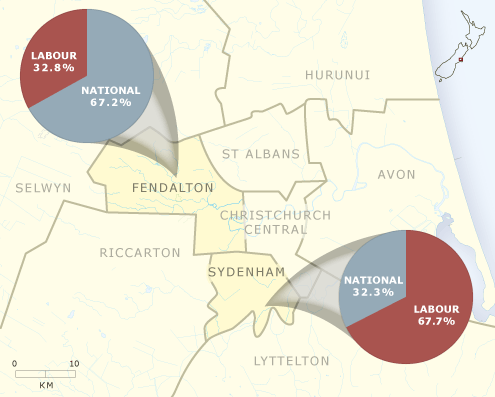
In Christchurch there was a relatively strong contrast in the class character of different parts of the city. Fendalton was heavily dominated by professional and business people; Sydenham was a working-class area. This was reflected in the voting patterns in the city. The National candidate, Sidney Holland, who was also the prime minister, gained over two-thirds of the vote in the Fendalton electorate, while the Labour candidate, Mabel Howard, received an even higher proportion of the vote in neighbouring Sydenham.
Te whakamahi i tēnei tūemi
Te Ara - The Encyclopedia of New Zealand
Source: Alan McRobie, New Zealand electoral atlas. Wellington: GP Books, 1989, p. 97; Clifford Norton, New Zealand parliamentary election results, 1946–1987. Wellington: Department of Political Science, Victoria University of Wellington, 1988, pp. 224–350
This item has been provided for private study purposes (such as school projects, family and local history research) and any published reproduction (print or electronic) may infringe copyright law. It is the responsibility of the user of any material to obtain clearance from the copyright holder.