

-
ENTER LAYER TITLE
-
ENTER LAYER TITLE
-
ENTER LAYER TITLE
-
ENTER LAYER TITLE
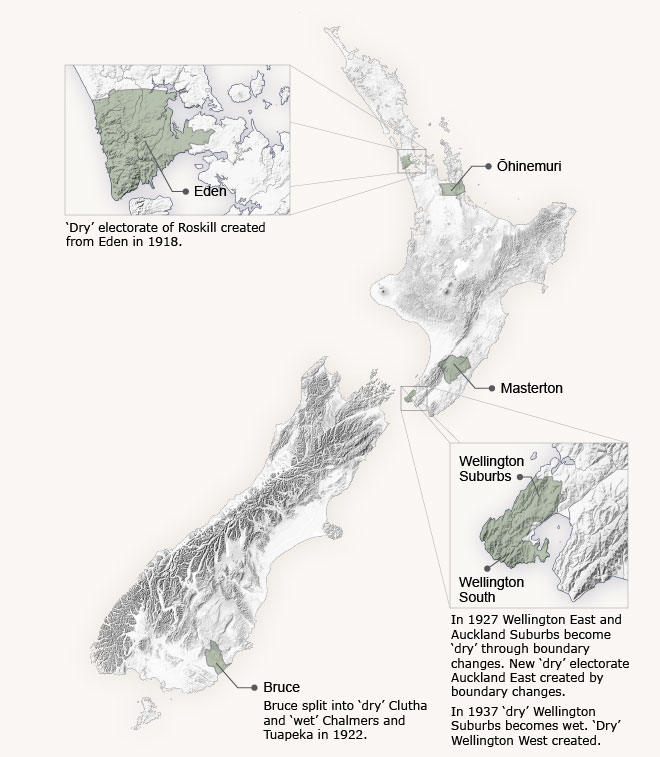
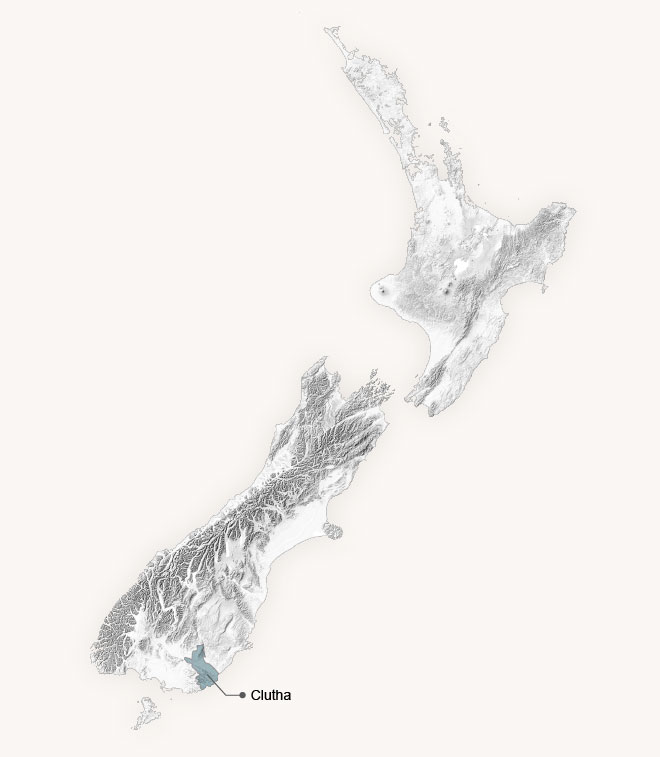
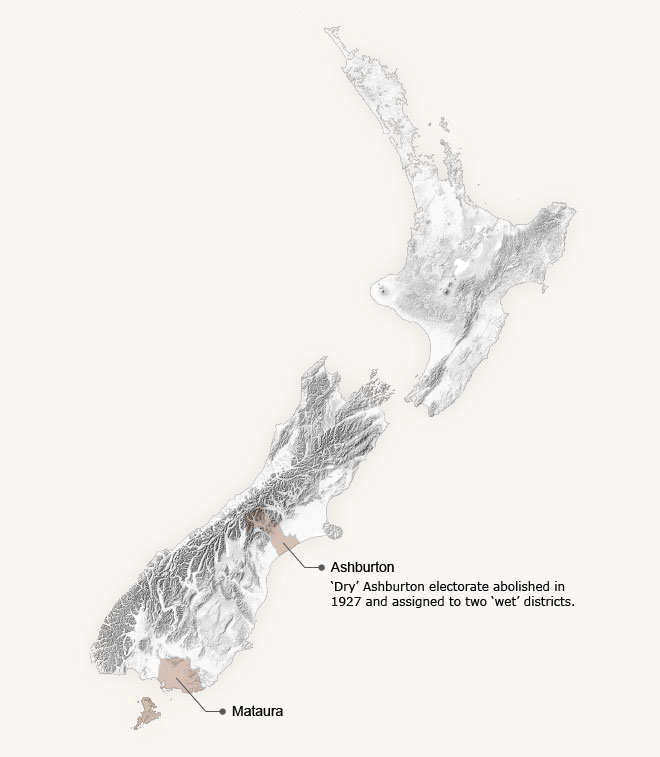
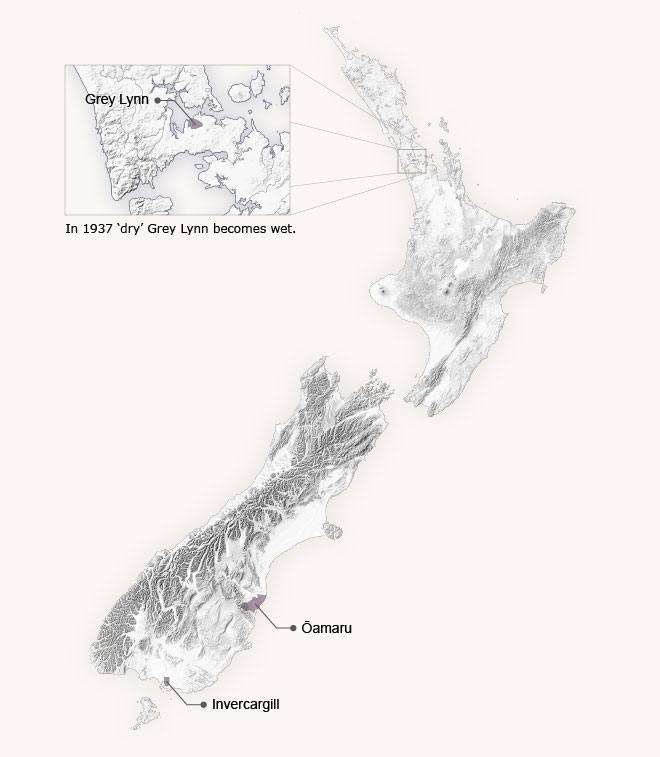
Under an 1893 act voters could reduce the number of liquor outlets in their electorate, or ban them altogether, in polls held every three years. Between 1894 and 1908, 12 out of 76 general electorates banned liquor sales and went 'dry'. The local veto was abolished in 1918, but this caused problems for some dry areas. Electoral reviews created new dry electorates and shifted towns between wet and dry areas. Places in new dry electorates, some of which had never voted dry, had no way of voting to restore licences. In 1945 Parliament amended the Electoral Act so dry areas did not shift with electoral boundary changes and subsequently legislated to allow dry areas to vote on the issue. This did not mean dry areas quickly became 'wet' (allow the sale of alcohol) – the last dry areas to go wet were Eden and Roskill (Auckland) and Tawa (Wellington) in 1999.
Te whakamahi i tēnei tūemi
Te Ara - The Encyclopedia of New Zealand
This item has been provided for private study purposes (such as school projects, family and local history research) and any published reproduction (print or electronic) may infringe copyright law. It is the responsibility of the user of any material to obtain clearance from the copyright holder.