

-
ENTER LAYER TITLE
-
ENTER LAYER TITLE
-
ENTER LAYER TITLE
-
ENTER LAYER TITLE
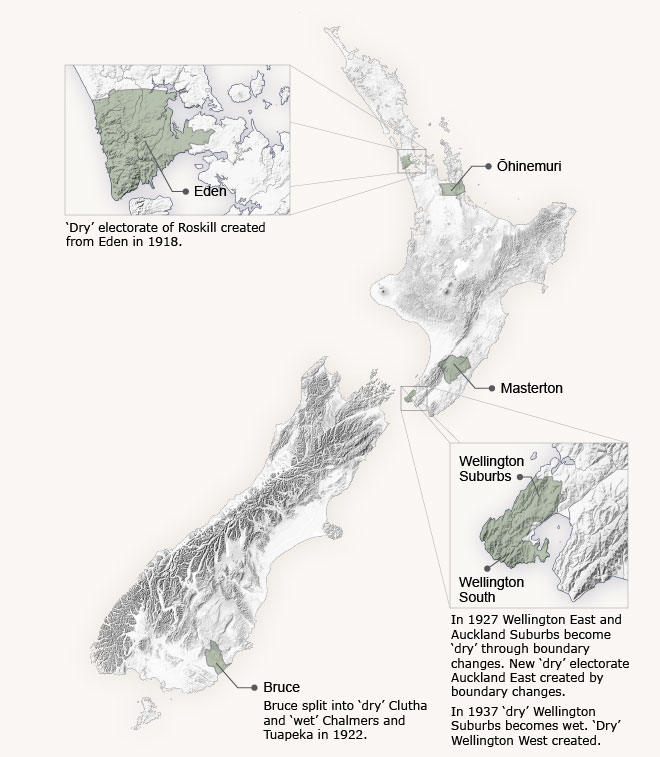
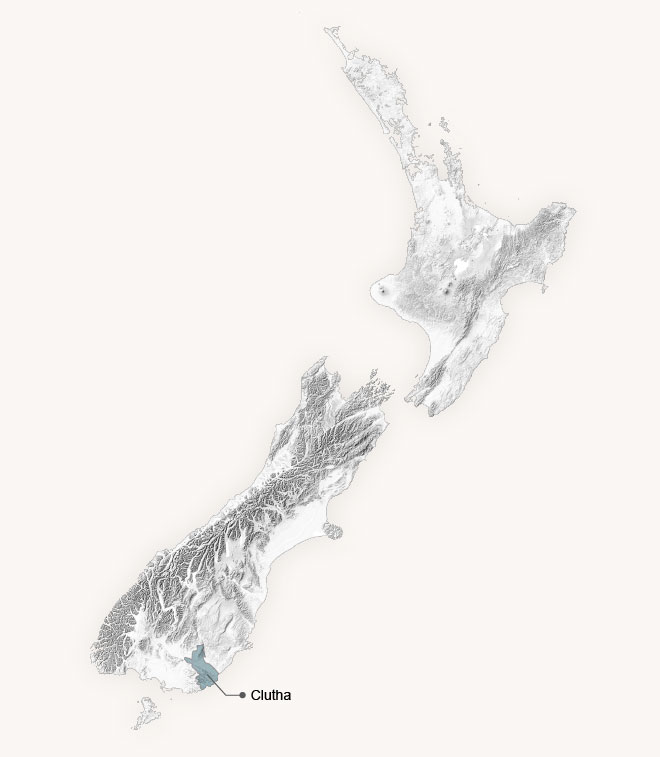
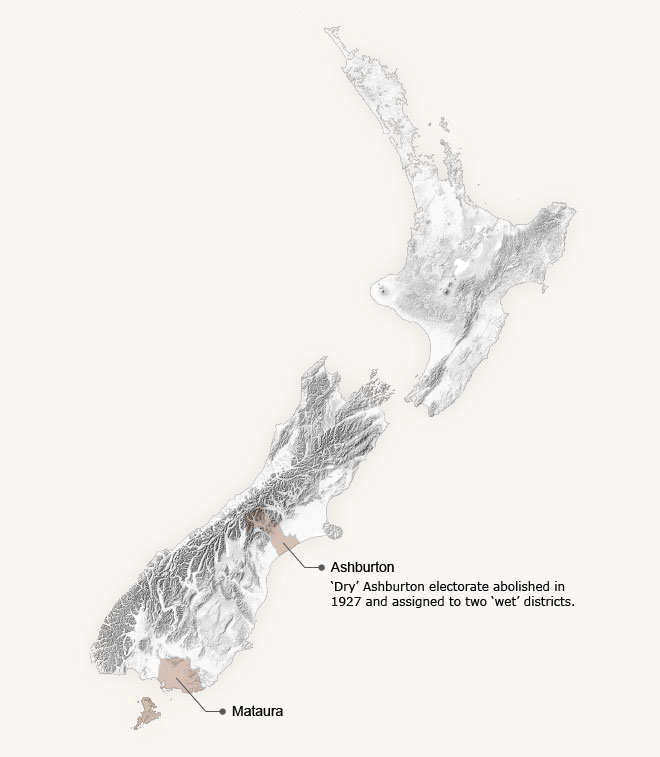
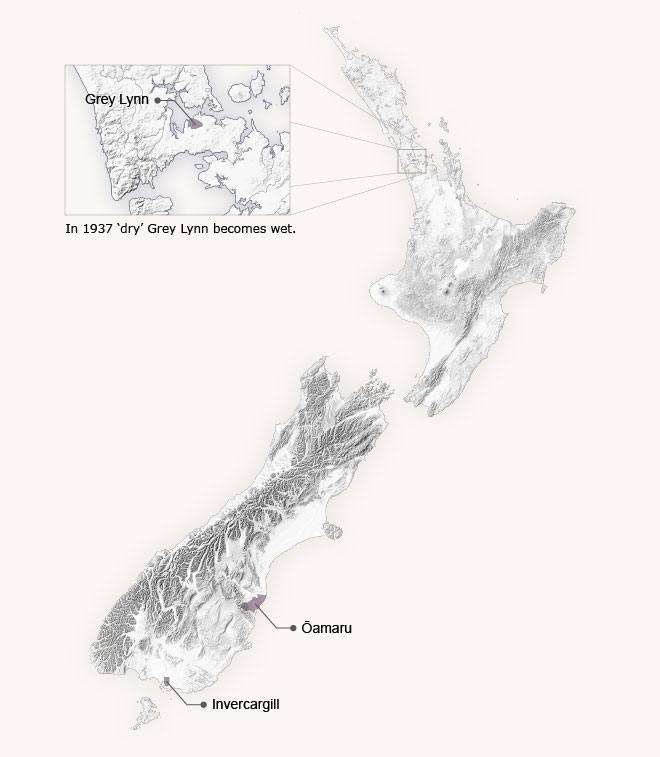
This map shows the spread of 'no-licence districts' or 'dry electorates' from 1894 to 1908.
In 1894 one electorate, Clutha, voted to go dry. In 1902 two more electorates went 'dry', followed by three in 1905, and six in 1908. In 1918, a new 'dry' electorate, Roskill, was created from 'dry' Eden. Of the dry electorates, Ōhinemuri voted out 'no-licence' in 1925, becoming 'wet' again. In 1922 the 'dry' Bruce electorate was abolished and split between 'dry' Clutha and 'wet' Chalmers and Tuapeka. 1927 saw Ashburton abolished and split between two wet electorates. Boundary changes made both Wellington East and Auckland Suburbs 'dry' and created a new 'dry' seat, Auckland East. Changes in 1937 saw both Grey Lynn and Wellington Suburbs become 'wet', and the creation of a new 'dry' Wellington West electorate.
Te whakamahi i tēnei tūemi
Te Ara - The Encyclopedia of New Zealand
This item has been provided for private study purposes (such as school projects, family and local history research) and any published reproduction (print or electronic) may infringe copyright law. It is the responsibility of the user of any material to obtain clearance from the copyright holder.