

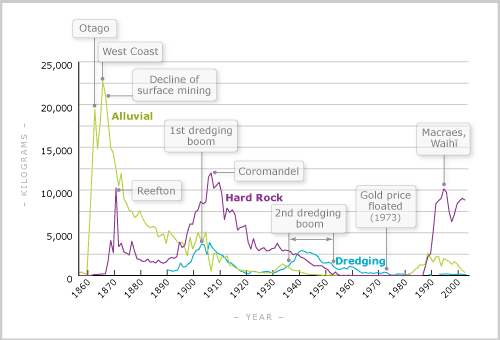
This graph shows the production from different types of gold mining in New Zealand from the 1850s to the 2000s. In the 1850s to 1900, alluvial gold dominated. Two dredging booms (also alluvial gold) occurred, one about 1900 the other in the 1930s. Hard-rock mining became increasingly important from the 1890s, when the cyanide method for chemically recovering gold from crushed quartz was developed. The floating and subsequent rise of the international gold price in the 1970s was largely responsible for the boom in gold mining in the 1980s and 1990s.
Te whakamahi i tēnei tūemi
Te Ara - The Encyclopedia of New Zealand
Source: Annual production reports, Mines Department (later Ministry of Energy, then Crown Minerals, Ministry of Economic Development)
This item has been provided for private study purposes (such as school projects, family and local history research) and any published reproduction (print or electronic) may infringe copyright law. It is the responsibility of the user of any material to obtain clearance from the copyright holder.