

Pine plantations are the most efficient way of absorbing carbon dioxide of any major land use in New Zealand.
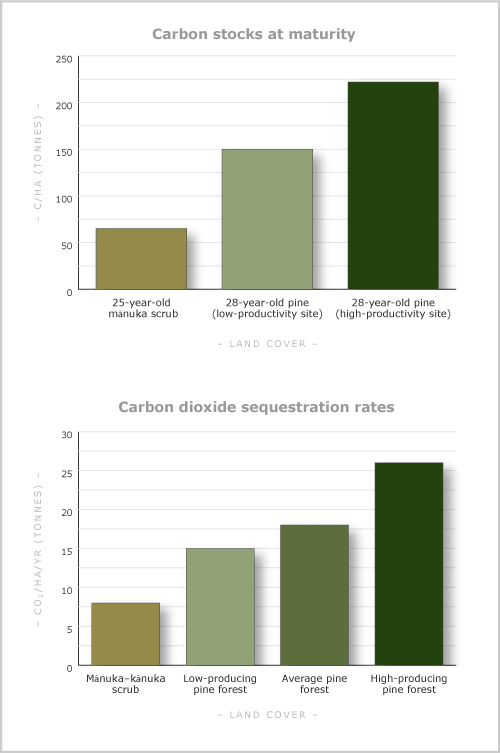
The top graph shows that around 222 tonnes of carbon are held in each hectare of mature trees on a high-producing site. A low-producing pine stand of identical age will only hold about 150 tonnes of carbon per hectare. Native mānuka scrub of comparable age to a mature pine plantation holds about 65 tonnes of carbon per hectare.
The bottom graph illustrates the efficiency of pine plantations in capturing carbon dioxide during their active growing phase. The average pine plantation is twice as efficient at capturing carbon as regenerating scrublands dominated by mānuka and kānuka.
Te whakamahi i tēnei tūemi
Te Ara - The Encyclopedia of New Zealand
Source: Ministry of Agriculture and Forestry
This item has been provided for private study purposes (such as school projects, family and local history research) and any published reproduction (print or electronic) may infringe copyright law. It is the responsibility of the user of any material to obtain clearance from the copyright holder.