

Image
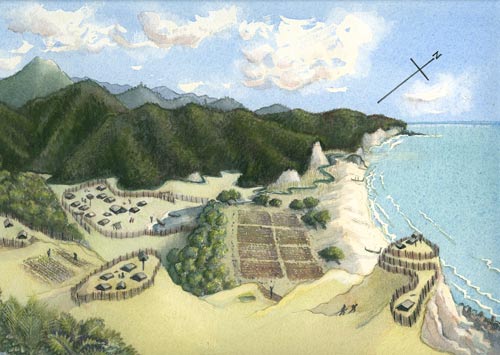
This is a sketched reconstruction of Māori gardens near the mouth of the Washpool River in southern Wairarapa, about 600–700 years ago. The forest had been cleared from the river flats, and stone walls were built to provide shelter and divide the land for growing kūmara (sweet potato).
Te whakamahi i tēnei tūemi
Te Ara - The Encyclopedia of New Zealand
by Rozel Pharazyn
This item has been provided for private study purposes (such as school projects, family and local history research) and any published reproduction (print or electronic) may infringe copyright law. It is the responsibility of the user of any material to obtain clearance from the copyright holder.
Comments
07 May 2015