


Tribunal members
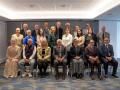
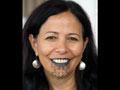
The Waitangi Tribunal comprises up to 20 members, plus a chairperson. Tribunal members are appointed by the governor-general on the recommendation of the minister of Māori development, in consultation with the minister of justice. Their professions and backgrounds are often in law, history, tikanga Māori, anthropology, business or community development. About half the members are Māori and half are Pākehā.
Each inquiry is heard by a panel, made up of three to seven members, always with at least one Māori member. Judges of the Māori Land Court are usually appointed as presiding officer for a tribunal panel.
The chairs of the tribunal have been Eddie Durie (Rangitāne, Ngāti Kauwhata, Ngāti Raukawa), Joe Williams (Ngāti Pūkenga, Te Arawa), Wilson Isaac (Ngāti Porou, Tūhoe, Ngāti Kahungunu) and Caren Fox (Ngāti Porou).
Tribunal’s roles
The tribunal’s roles include inquiring into and making recommendations on Treaty of Waitangi claims, and making recommendations or determinations on Crown forest land, railways land, state-owned-enterprise land and land transferred to educational institutions.
Waitangi Tribunal Unit
The staff working for the tribunal carry out the administration of the claims and the hearings, support claimants and other inquiry participants through the tribunal’s processes, and help them prepare for events such as hearings. They also carry out research on the claims where needed and assist the tribunal members to draft reports.
Types of tribunal inquiry
Claims accepted by the tribunal are grouped into categories:
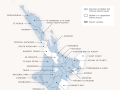
- District inquiries group together and investigate claims (mostly historical) brought by Māori within a particular geographical area.
- Kaupapa (thematic) inquiries are not specific to a particular geographical district and often deal with matters of national significance that affect Māori as a whole.
- Urgent inquiries are only held under exceptional circumstances, when claimants can demonstrate significant and irreversible prejudice as a result of current or pending Crown actions or policies.
- Remedies inquiries are held when the tribunal has already found a claim to be ‘well- founded’ (based on good evidence) but has not made any specific recommendations for how the Crown can remedy the prejudice arising from the treaty breach. They typically occur following the release of a report on a historical inquiry after a claimant applies to the tribunal for specific remedies, such as binding recommendations for the return of Crown assets.
Hearings
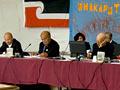
Hearings allow the tribunal to hear evidence from claimants and other interested parties, including the Crown. They follow the protocol of claimant groups and can be held on marae or at other venues such as town halls, conference centres, hotels or the tribunal’s own offices. Hearings are usually open to the public. It can take anywhere from a day or two to several weeks to hear all the evidence for an inquiry, which can be presented in te reo Māori or English, orally or in writing. The tribunal panel may also visit sites of significance to the claimants, such as pā sites or wāhi tapu, as part of hearings.
Tribunal reports
After hearing all the evidence on a claim, the tribunal panel decides whether, on the balance of probabilities, the claim is well-founded. It produces a written report summarising its findings and, if it considers the claim well-founded, recommends ways the Crown could compensate the claimants, remove the prejudice or prevent similar prejudice happening in the future. This report can then become the basis for negotiations between a claimant group and the Crown - although the Crown is not obligated to accept the tribunal’s findings.
By 2023 the tribunal had produced more than 150 reports, ranging from one-page statements to multi-volume reports on district inquiries involving many separate claims. These were supplied to relevant ministers of the Crown and the claimants, and published in hard copy and on the Waitangi Tribunal website.
Towards reconciliation
Celebrating the 40th anniversary of the Waitangi Tribunal, Māori leader and academic Hirini Moko Mead commented that the tribunal,
has produced a host of reports that, taken together, provide a rich source of historical information in relation to the colonisation of New Zealand, the meeting of cultures and the struggle of Māori to survive in the face of the colonial machinery that rolled over them. These reports also add significantly to our knowledge regarding legal and constitutional matters. … [T]he work of the Tribunal has made an honest endeavour to bring about reconciliation between the two parties of the Treaty of Waitangi … There is no doubt that the work and achievements of the Waitangi Tribunal deserve the gratitude of the nation for what it has accomplished.1