

-
1860–61

Through the 1840s and 1850s New Plymouth settlers lobbied the Crown to buy more land from Māori. The offer of the Pekapeka (Waitara) block by some Māori was opposed by others, including Wiremu Kīngi Te Rangitāke and his followers. Crown forces occupied the block in March 1860, and battles followed. A ceasefire in March 1861 did not solve underlying issues.
-
1863–64

In 1863 Crown forces reoccupied the Tātaraimaka block west of New Plymouth, which had been re-taken by Māori in 1860. This provoked further battles, not least because the Waitara block had not been returned to Māori, despite the government conceding that it had not been fairly bought. In 1864 Pai Mārire adherents, led by Te Ua Haumēne, attacked colonial forces at Ahuahu and Sentry Hill (Te Mōrere).
-
1864–66
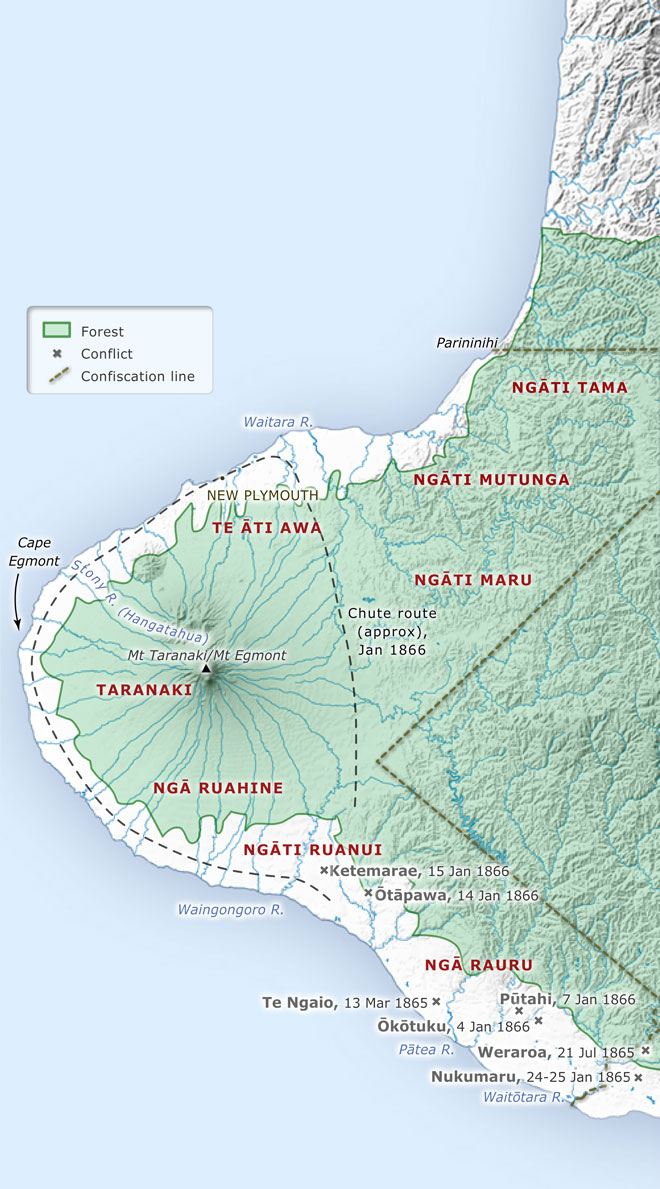
In early 1865 an expedition led by General Duncan Cameron campaigned against Māori in the lands between the Waitōtara and Waingongoro rivers. The Crown confiscated all land in the province that it had not already acquired. Māori resistance continued, and Cameron’s successor General Trevor Chute fought through the same territory in January and February 1866. He also took around 500 men on a nine-day trek through the forest to New Plymouth, then back around the coast.
-
1867–69
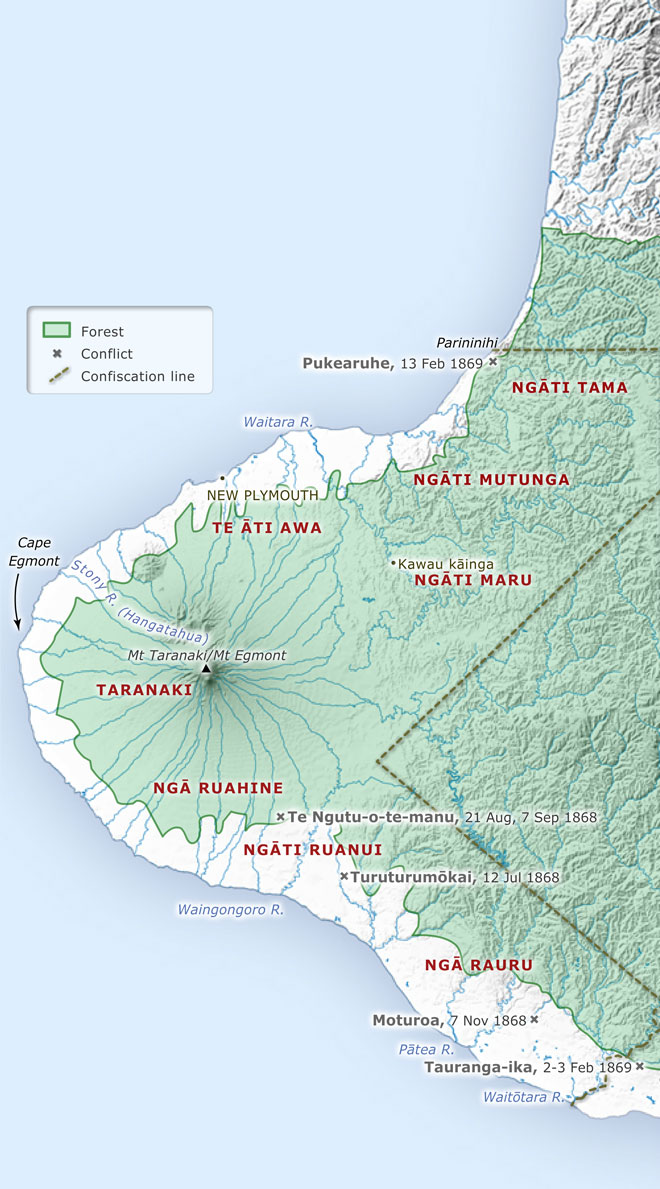
Taranaki Māori remained opposed to Pākehā settlement, particularly the advance into the lands between the Waitōtara and Waingongoro rivers. In 1868 Ngā Ruanui leader Tītokowaru attacked colonial forces at Turuturumōkai. He then defeated them at Te Ngutu-o-te-manu, his pā near present-day Kapuni, and at Moturoa, near Waverley. Tītokowaru’s force advanced almost to Wanganui, but his standing collapsed and in early 1869 he withdrew with his followers to inland Taranaki.
-
1869–1880
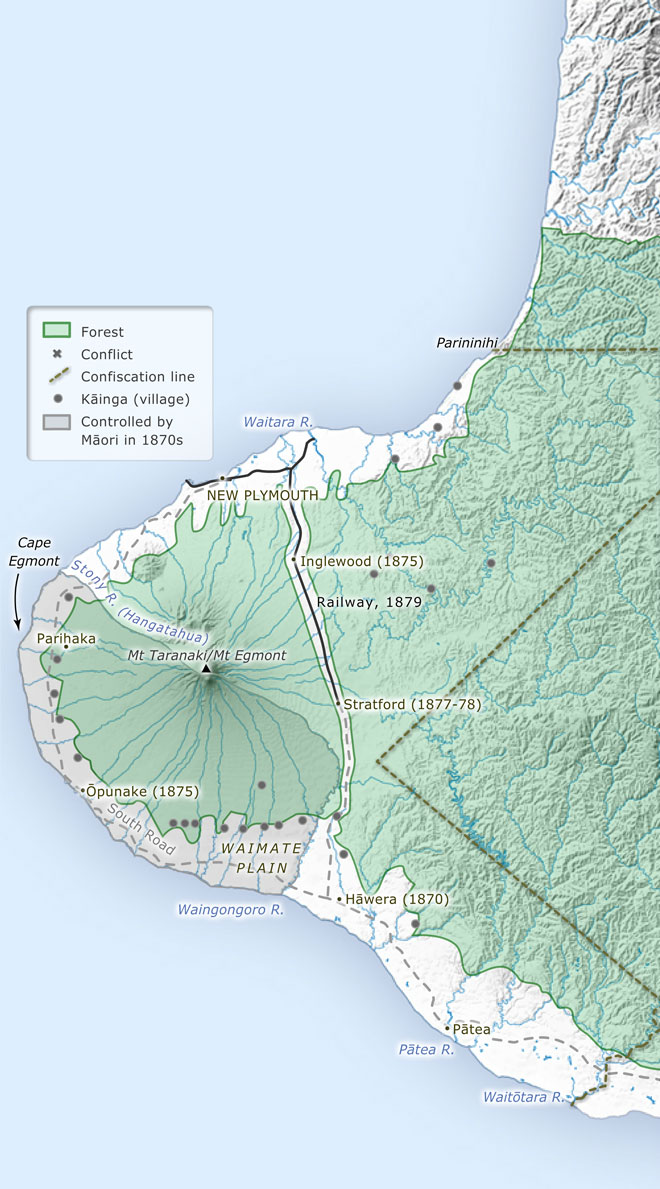
Pākehā returned to the area between the Waitōtara and Waingongoro rivers, and an inland route linked New Plymouth with the new settlements of Inglewood, Stratford and Hāwera. The land between the Hangatahua and Waingongoro rivers remained off limits to Pākehā, although a coast road had been formed and armed constabulary were stationed at Ōpunake. In 1878 surveyors and settlers crossed the Waingongoro into the Waimate plain, and in 1880 armed constabulary road-builders crossed the Hangatahua. Māori under the leadership of Te Whiti-o-Rongomai and Tohu Kākahi of Parihaka pā regularly ploughed up settler pastures on the plains.
-
1881
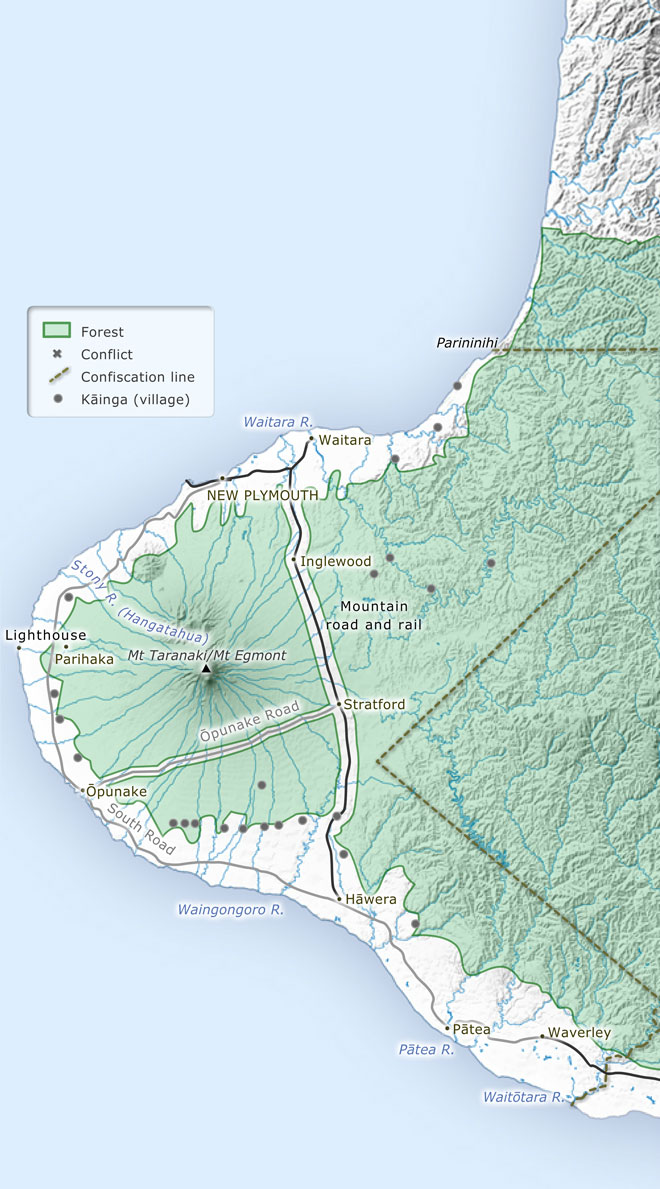
In 1881 the railway between New Plymouth and Hāwera was completed, a cross-country road was cut from Stratford to Ōpunake and the coast road upgraded. In November 1881 a colonial force of more than 1,500 occupied Parihaka, arrested Te Whiti and Tohu, and firmly established its authority over those who remained.
Taranaki was an unsettled area in the 1850s, as Pākehā settler pressure for land fostered rivalry and conflict among local Māori. The 1860s saw British and later colonial forces fight Māori throughout the region as many Māori resisted challenges to their authority and autonomy. By 1870 settler ascendancy was assured, but over the next 10 years Māori sought to limit it, in particular by peaceful resistance led from Parihaka pā in the late 1870s. Parihaka was occupied by colonial forces in November 1881 and largely destroyed.
A series of six maps shows the course of the conflict from 1860 to 1881.
Using this item
Te Ara - The Encyclopedia of New Zealand
This item has been provided for private study purposes (such as school projects, family and local history research) and any published reproduction (print or electronic) may infringe copyright law. It is the responsibility of the user of any material to obtain clearance from the copyright holder.