… Embarkation The journey to New Zealand began for most migrants with an overland trip to the … was relieved by such novel sights as dolphins, flying fish, albatrosses and whales. For cabin passengers at least, …
Type: Story Page
Part of story: The voyage out … travel in the mid-1960s, the arrival of famous people in New Zealand led to considerable media coverage and the … and angler Zane Grey wrote extensively about his deep-sea fishing exploits, and US First Lady Eleanor Roosevelt was …
Type: Story Page
… water released from dams, down to the harbour for shipping. Fishing The fishing fleet peaked at about 25 boats in the … wharf was landing the second-largest catch of snapper in New Zealand. The introduction of a New Zealand-wide quota system …
Type: Story Page
… Australia and South America. They all feed at sea. The six New Zealand species are found nowhere else. They nest on rock … metres deep, taking flounder, sand eels, cod and other fish as well as crayfish and crabs from the sea floor. Their …
Type: Story Page
… determine Lieutenant-Governor Hobson’s choice of a site for New Zealand's capital in 1840. Naming the waters Wai-te-matā … Basin to Westhaven The Viaduct Basin, site of the old fishing harbour, was redeveloped in the mid-1990s as a site …
Type: Story Page
Part of story: Auckland places … of Niue), was founded by the society, which established a New Zealand branch in 1994. In 2018, 55% of New Zealand Niueans … (Niuean cricket), netball and softball. From minnows to big fish Despite being one of the world’s smallest rugby-playing …
Type: Story Page
… to calve, passing through the Pacific Ocean to the east of New Zealand between the mainland and the Chatham Islands. The … which eat krill in polar waters, the Bryde’s feeds on fish, such as pilchards, mackerel and mullet. Whaling The …
Type: Story Page
… reputedly named Kaikōura after eating (kai) crayfish (kōura) there. Archaeological history The findings of … the 13th century, when humans probably first arrived in New Zealand. A rich sea and bird life would have supported such …
Type: Story Page
… makes the most of its coastal waters by holding its famous fishing contests. Cash for a catch Fishing contests, with … from 1971 to 1985, is considered to have been New Zealand’s finest woman hockey player. She was raised at …
Type: Story Page
… For at least the first century of European settlement in New Zealand, the most common recreation at home was probably … was known as Invercargill’s playground. City folk also went fishing – in Wellington and Auckland people fished from the …
Type: Story Page
… percentage of Māori – 48.9% in 2013 (compared to 14.9% for New Zealand as a whole). In East Cape, the heartland of Ngāti … and knowledge. But to this region his greatest feat was fishing up the North Island – Te Ika-a-Māui (the great fish …
Type: Story Page
… Ngāti Kahungunu is the third largest tribal group in New Zealand. Although it is generally referred to as an iwi … on its shores. Te Whanganui a Orotū contained shellfish beds and fishing grounds, and the surrounding rivers, …
Type: Story Page
Part of story: Ngāti Kahungunu … Kurī were Polynesian dogs which gradually died out in New Zealand. They were descended from the dogs brought to New … During the later settlement period, kurī were fed mainly on fish, and slaughtered dogs were more likely to be adults. …
Type: Story Page
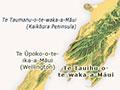
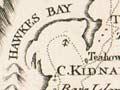
… The name of the country New Zealand was named by a Dutch cartographer some time after … and the South Island, most commonly Te Ika a Māui (the fish of Māui) and Te Wai Pounamu (greenstone waters). …
Type: Story Page
… secure the services of a cook, something not guaranteed in New Zealand. The modern homemaker Many overseas cookbooks sold … did the barbecueing. Some outdoor pursuits, such as fishing, also involved men cooking. Noel Holmes’s 1963 book …
Type: Story Page
… species. Many countries also have their own systems. New Zealand’s system In 2002, conservationists created a New … bryophytes (mosses, liverworts and hornworts), freshwater fish and invertebrates, frogs, fungi, macro algae, marine …
Type: Story Page
… noddies and grey ternlets live in large numbers in the New Zealand region. Their numbers are sure to increase following … cap that extends down to a long, slender bill. They feed on fish and plankton. Grey noddies The grey noddy or …
Type: Story Page
… Land area King Country: 9,550 sq km New Zealand: 268,690 sq km Climate (National Institute of Water … pattern is most distinctive) Agriculture, forestry and fishing King Country: 24.5% New Zealand: 5.7% Education and …
Type: Story Page
… is kapua. Another word, ao, is used in the Māori name for New Zealand: Aotearoa – long white cloud. In one tradition … European metaphor, likening the clouds to the markings on a fish. Māori saw in this pattern raised beds of kūmara (sweet …
Type: Story Page
… arrivals from Polynesia. They remain significant areas for fishing and shellfish harvesting. Estuaries provided safe, … have been found in every sheltered coastal site around New Zealand and are especially common around northern harbours …
Type: Story Page