… on the oars the crew saw ships turning to run before the weather, leaving them to make a long wet and dangerous row …
Type: Biography
… a single gate to replace the double gate, which in windy weather hampered the bullock wagons used to cart pit-sawn …
Type: Biography
… and pulleys that dragged logs to the loading skids. In wet weather the road became a quagmire. Soaked to the skin and …
Type: Story Page
… perch and a vertical upright. The mutu was often carved and weathered. A looped snare was draped over the mutu. It was …
Type: Story Page
… accessible resource on the Canterbury Plains. Most of the weathered and softer rock has been washed away, leaving …
Type: Story Page
… recorder of the daily activities at Altimarlock: the weather, the farm work being done, and the comings and …
Type: Biography
… recognised their potential to attract custom in inclement weather. Verandahs for all seasons An Australian visiting …
Type: Story Page
… Australian boats entered, and the races were marred by the weather – there was no wind for the first two and a …
Type: Story Page
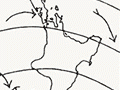
… Around 1300 CE, Polynesian settlers used subtropical weather systems to navigate their way to New Zealand. These …
Type: Story Page
… ship was again able to proceed under sail, further adverse weather was encountered. Finally, on 27 November 1860, more …
Type: Biography
… the ability to operate from short airstrips in variable weather conditions while carrying at least 1,000 pounds (454 …
Type: Story Page
Part of story: Topdressing … They had to stop at islands along the way, or use different weather systems. Southward to New Zealand Lying in a band of …
Type: Story Page
… dioxide concentrations. Neither the natural variability of weather systems nor changes in incoming solar radiation were …
Type: Story Page
Part of story: Climate change … carrying naval stores – approached Manukau Harbour in good weather. Seeing it was off course to cross the bar, the …
Type: Story Page
Part of story: Auckland region … cart to the diggings; but they did. After experiencing bad weather, rough terrain and difficult river crossings, they …
Type: Biography
… were eventually uplifted and now form the country’s karst (weathered limestone) landscapes. They are a dramatic sight …
Type: Story Page
… Putaruru stone. Unfortunately the material was variable and weathered badly in places. It was removed from the carillon …
Type: Story Page
Part of story: Building stone … effects Unusually warm or cold sea temperatures influence weather systems passing over a region. This can affect the …
Type: Story Page
… has claimed many lives – usually because of unexpected bad weather and fast-rising rivers. Wellington New Zealand’s …
Type: Story Page
… about 24 kilograms per hive, but this depends on the weather. The average for the 2006 season was 34.7 kilograms. …
Type: Story Page
Part of story: Beekeeping