… and poetry. Birds’ behaviour was used to predict the weather, and sometimes the future. …
Type: Story Front
… New Zealand’s long rocky coastline, windy and changeable weather, and harbours with sand bars have made safe …
Type: Story Front
… wide range of tracks and huts. A well-stocked backpack, all-weather gear and a love of the outdoors are the main …
Type: Story Front
… Surrounded by ocean, New Zealand is regularly swept by weather systems that bring heavy rain. The country’s many …
Type: Story Front
… people walked on brightly lit pavements sheltered from all weathers. …
Type: Story Front
… for many months). If the normal larvae die off in bad weather, the diapausing larvae will replace them. Alpine … wētā can freeze solid over winter and thaw out when the weather improves. …
Type: Story Page
… life is closely connected to the supply of nutrients. The weather brings nutrients to sunlit surface waters, where …
Type: Story Front
… Wild weather, vast seabird colonies and brightly flowering …
Type: Story Front
… good for eeling at night. Tamat[e]a-ngana: unpleasant weather, the sea is rough. Tamatea-kai-ariki: the weather improves. Huna: bad weather, food products suffer. Ari-roa: favourable for …
Type: Story Page
… People, plants and animals all need shelter from extremes of weather. New Zealand farmers have planted their land with …
Type: Story Front
… two trampers set off for a short walk in the hills. The weather turns stormy, and by evening they still haven’t …
Type: Story Front
… New Zealand’s rugged, weather-beaten coastline was perilous to ships arriving in …
Type: Story Front
… beneficial to livestock. Animals gather in shade during hot weather, and take refuge from cold winds. Sheltered animals … are less susceptible than sheep to hypothermia in cold weather. But shelter from the sun during hot weather can improve milk production and conception rates in …
Type: Story Page
… The weather is of prime interest to trampers, as they are out in it. Weather forecasts have become more accurate but ‘Huey’, as …
Type: Story Page
… prosperity and stability. They found New Zealand’s chilly weather and modern conveniences a far cry from the rhythms …
Type: Story Front
… Computer modelling Data collected from observations of weather conditions is entered into a computer modelling … to 120° west between latitude 25° and 55° south. Extreme weather MetService issues warnings of extreme weather – for heavy rainfall (more than 100 millimetres in …
Type: Story Page
… only wind would come. If yellow, a gentle wind and fine weather would follow. If it projected upwards and was pale, … – te Tātua o Kahu (the belt of Kahu). Predicting the weather Certain types of clouds were used to predict the weather or other events: Layers of cloud above the horizon, …
Type: Story Page
… cues such as landmarks instead of navigational instruments. Weather Failing to heed up-to-date weather forecasts is unwise in New Zealand, where the …
Type: Story Page
Part of story: Air crashes … Shelter from wind and weather is a primary need for humans – and for animals and plants. Protection from extremes of weather helps them to survive and grow. Farmers often plant …
Type: Story Page
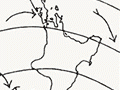
… The fluctuations in New Zealand’s weather are caused by the passage of anticyclones (centres … as depressions, develop on some of the fronts. Anticyclone weather Anticyclones form when air currents in the high and … is generally – but not always – associated with good weather. A cool story A spectacular frost occurred in Otago …
Type: Story Page