… time the 'crystal clear' Avon River observed by the first Pākehā settlers was filthy. Water-borne diseases were rife. …
Type: Story Page
… with a one-hour lunch break. Wellington had been settled by Pākehā in 1840, but it was not until February 1854 that 162 …
Type: Story Page
… meeting place of two very different cultures – Māori and Pākehā – whose encounters were without restraint of law or …
Type: Story Page
… William Hobson assured them that the treaty would control Pākehā settlers and protect Māori lands and interests. …
Type: Story Page
… particularly affected Māori women in relationships with Pākehā men. Prevalence Family violence appears to have been …
Type: Story Page
Part of story: Family violence … lived among Māori and learned their language were known as Pākehā–Māori. One of these, the trader Dicky Barrett , was …
Type: Story Page
… history). Many Māori leased land for grazing sheep to a few Pākehā men of means who had missed out on obtaining sheep …
Type: Story Page
Part of story: Chatham Islands … mission The Reverend Richard Davis was probably the first Pākehā New Zealander who could be described as a gardener by …
Type: Story Page
… development. About half the members are Māori and half are Pākehā. Each inquiry is heard by a panel, made up of three …
Type: Story Page
… expanded collections of objects relating to both Māori and Pākehā history. Most identifying and classifying of sites …
Type: Story Page
Part of story: Public history … land dealings became a central concern for both Māori and Pākehā, and land agents (the forerunners of real estate …
Type: Story Page
Part of story: Real estate … district was one of the last in the region to be opened to Pākehā settlement, but by the 1880s the Wellington–Manawatū …
Type: Story Page
… From the 1840s Māori regularly visited towns to trade. Pākehā prejudice meant few hoteliers welcomed them as …
Type: Story Page
… house) featured brightly coloured carvings of Māori and Pākehā ancestors represented in a modernist rather than …
Type: Story Page
… valley, the original home of one of the area’s first Pākehā settlers. A side road from Strathmore leads to Mākāhu …
Type: Story Page
Part of story: Taranaki places … Māori households were generally poorer than those of Pākehā. Running water and electricity were the exception for …
Type: Story Page
… Now Maori women could have the benefit, as she saw it, of Pakeha women's knowledge of health and homecraft. Despite …
Type: Biography
… as the local medical practitioner, treating both Maori and Pakeha. In 1878 he began work as a reporter, becoming the …
Type: Biography
… to new recruits to the mission (lay and ordained, Māori and Pākehā), and spearheaded new developments in education. …
Type: Biography
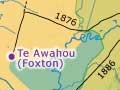
… were held in Foxton as early as 1855. Manawatū people, both Pākehā and Māori, petitioned for a racecourse in 1865, when …
Type: Story Page