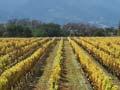
… Sunny Marlborough is a holiday playground, with visitors drawn to the beautiful Marlborough Sounds and the vineyards and wineries around … Marlborough region …
Type: Story Front
… European settlers arriving in the Wellington region from 1840 onward soon became accustomed to a … Although it was centred in the Awatere valley in the Marlborough district of the South Island, it caused … settlers were living in the Wellington region, while Marlborough was more sparsely inhabited. Māori settlements …
Type: Story Page
… Regional rainfall In general, New Zealand gets plenty of … of water; on 1 hectare it is equivalent to 10,000 litres. Regions to the east of the mountains in the South Island … Canterbury, 14.5% in Otago, 4.1% in Hawke’s Bay and 3.8% in Marlborough. By 2007 about 80% of these consents had been …
Type: Story Page
… both onshore and offshore, along 180 kilometres of the Marlborough coast. The shaking brought down tens of … Springs, Cheviot, Culverden and other small towns in the region had substantial damage. Strong shaking in the … while the largest horizontal movement was 12 metres. The Marlborough coast generally was raised between 0.5 and 2 …
Type: Story Page
… Between 1960 and 2000 a number of developments shaped the regional character of the economy: new resource-based industries emerged in some regions debate took place on the need for … new economic and settlement patterns to develop, notably in Marlborough and parts of Central Otago. Vineyard visits …
Type: Story Page
… Population-based sectors in regional economies Sectors such as education, health and the … retail trade have displayed very similar patterns across regions, because their incidence is population-based. But … Country in 2006, and over 15% in the East Coast, Wairarapa, Marlborough, South Canterbury and Southland, compared with …
Type: Story Page
… but Governor Thomas Gore Browne decided on the names Marlborough, Picton and Blenheim, linking the new province … At one point it looked as if bankruptcy would force Marlborough back into Nelson province (as Southland had … united council was established, covering the whole of the region, in 1978. This was succeeded in 1989 by a …
Type: Story Page
… those who indicated more than one tribe), and the regions where they were found in the greatest numbers in … regional locations Manawatū–Wanganui: 171 Canterbury: 150 Marlborough: 117 Ngāti Koata 1991 census: 390 2001 census: … 2013 census: 1,794 Major regional locations Nelson: 315 Marlborough: 261 Ngāti Rārua 1991 census: 312 2001 census: …
Type: Story Page
… climates and conditions for growing grapes. Nine major regions were recognised: Auckland, Waikato, Gisborne, Hawke’s Bay, Wairarapa, Nelson, Marlborough, Canterbury, and Central Otago. The Marlborough region dominated more and more, but from the …
Type: Story Page
… Pākehā It is likely that only a few hundred Māori lived in Marlborough in the first half of the 19th century, and many … Kaikōura and other localities brought some Pākehā to the region, but the total population would not have altered much … of Pākehā settlement dates from the 1850s. The heart of Marlborough developed on the Wairau plain. A major …
Type: Story Page
… Geology Marlborough is a rectangular block in the north-east South … diagonally into two zones by the Alpine Fault (known in Marlborough as the Wairau Fault), which roughly follows the … damage to buildings in Seddon and nearby towns. The region was further affected by a magnitude 7.8 earthquake …
Type: Story Page
… Tribes from the North Island were always attracted to this region because of minerals such as argillite, prized for … describe ‘fairy folk’ living in the mountains of Nelson and Marlborough, seen only rarely and at auspicious times. … ogres and giants, the Kāhui Tipua, who lived at the Wairau (Marlborough), impeded the explorations of the Polynesian …
Type: Story Page
… Kuia and Rangitāne, although visits from groups from other regions were recorded. Some individuals named in Cook’s … Relations between Cook’s crews and Māori from the Marlborough Sounds were generally amicable, but there was … of sealers, whalers and associated traders to the Nelson–Marlborough region. 19th-century invasions While modern …
Type: Story Page
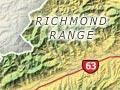
… it administered an area much larger than the current Nelson region – initially all the land north of a line from the … A less kind name for the group was ‘the Forty Thieves’. Marlborough was gazetted as a separate province on 4 October … by Nelson City Council, also a unitary authority). Nelson–Marlborough While the Richmond Range separates Nelson and …
Type: Story Page
Part of story: Nelson region … Land area Marlborough: 14,534 sq km New Zealand: 268,690 sq km Climate … sunshine: 2,475 hours Total population, 2006 and 2013 Marlborough: 46,170 (2006); 46,968 (2013) New Zealand: … aged 15 and over, in selected industries in which the region’s employment pattern is most distinctive) …
Type: Story Page
… Yukich’s hunch Grapes were first planted on a large scale in Marlborough by Montana Wines of Auckland in 1973. At the … warm areas like Gisborne, Hawke’s Bay and Auckland. Marlborough was thought to be too dry and too cold for … before the first of the new-era vines were planted in the region. David Herd, the manager of Meadowbank station, …
Type: Story Page
… to only 350 hectares, half of which were in the Auckland region. The vast majority – 87% – went into making fortified … earned $18.4 million, with Gisborne, Hawke’s Bay and Marlborough being the main wine-producing areas. During the 1990s Marlborough became easily the largest wine-producing region …
Type: Story Page
… area in the upper South Island, and also the name of the region to its south and west. The Nelson region includes the … administered by the Tasman District Council. To the east is Marlborough, and to the south and west is the West Coast. … west of the Alpine Fault, and shares mountain ranges with Marlborough and the West Coast. As on the West Coast, the …
Type: Story Page
Part of story: Nelson region … from Hawaiki the Kurahaupō , a later canoe, visited Nelson–Marlborough in the course of its circumnavigation of the … Kuia, who have the longest continuous residence in the region. Post-migration period Through intermarriages with … of Kupe (and Toikairākau), other ancestral tribes of Nelson–Marlborough developed. Ngāti Wairangi, from the Whanganui …
Type: Story Page
… Marlborough Low annual rainfall, regular summer droughts … water deficits) and brown pastures are characteristic of Marlborough. Although minimum winter temperatures are cool … needed to establish pasture. However, large areas of the region, including what was once farmland, are protected …
Type: Story Page