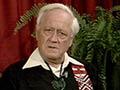
… near Nagasaki, Japan. His father was Noda Kakashi, a carpenter and shipbuilder. His mother's name is recorded as Noi … finally leaving ship at Invercargill, New Zealand, in the late 1880s or early 1890s. He was almost certainly the first …
Type: Biography
… February 1946 which left the country ‘black and lifeless’. Te Kapa o Te Rangiita marae lies on the west side of the road. The 1911 St Matthew’s Church, decorated throughout with woven tukutuku panels, is on the east. …
Type: Story Page
… Māori player, Wirihana, was probably Wirihana Puna, a lieutenant under Te Keepa Te Rangihiwinui (Major Kemp) during the New Zealand wars. He …
Type: Story Page
… Marlborough Sounds, and the large island Rangitoto ki te Tonga (D’Urville Island), are hills separated by valleys that have flooded since the last ice age. Red …
Type: Story Page
… gull or tarāpunga ( Larus novaehollandiae ) has a white body with grey wings tipped with black then white. Their bills and legs are red when they are adult. They … Gulls of Mokoia In 1823 the Ngāpuhi tribe attacked the Te Arawa people living on Mokoia Island, in Lake Rotorua. Te …
Type: Story Page
… built in 1877, is the oldest church on its original site in Whanganui District. Kaiwhaiki Settlement 18 km from Whanganui, the home of Ngā Paerangi and site of the first Catholic mission on the river in 1852. The unique twin-gabled meeting house is called Te Kiritahi. A nationally known cultural group, Te Matapihi, …
Type: Story Page
… formed – the Liberal Party. Its reforming government attracted support from a number of Māori MPs. The conservative … James Carroll James Carroll (Ngāti Kahungunu) was elected in Eastern Māori in 1887 and became an early supporter of the … The emergence of the party system …
Type: Story Page
… form of a dog. When Māui’s two wives, Hinetūrepo and Hinetekahere, asked after their brother, he told them to call ‘Moi!’ – the call … not lack food on their voyages, otherwise they would have eaten the dogs before reaching New Zealand. Conflict in …
Type: Story Page
… Māori moved to the city, but their patterns of urbanisation and work distribution was different … were overwhelmingly rural workers. Gradually, in the later 20th century, agriculture became less important. In 1951 … women. The largest groups were public hospital staff, hotel and boarding house staff, and private domestic servants. …
Type: Story Page
… Englishman, Vivian Fuchs, for a Trans-Antarctic Expedition (TAE). A plan for a combined Commonwealth expedition to … government announced it would contribute to the cost of the TAE and establish a base in the Ross Dependency. Scott Base … an obvious choice to head New Zealand’s contribution to the TAE. In November 1956 HMNZS Endeavour left New Zealand and …
Type: Story Page
… schools for the children of military settlers opened. Private and religious schools also emerged from the 1860s. Public … in the bigger towns from 1877. However, apart from failed attempts to establish district high schools at Hamilton and … spread from the 1920s, and the post-1945 baby boom necessitated more state primary, intermediate and secondary schools, …
Type: Story Page
Part of story: Waikato region … Early European explorers Cook Strait was named after the British navigator James Cook, who sailed past it during his first visit in 1770. Three years later, on his second voyage, Cook explored the northern side … had begun three years earlier. Only the coast between Capes Terawhiti and Palliser remained uncharted. While following …
Type: Story Page
… the first known European discovery of New Zealand. He charted the country’s west coast from north of Greymouth up to … in 1769, on the first of three voyages . Cook circumnavigated and mapped the three main islands and returned to …
Type: Story Page
… Jack Raharuhi Hēmi was born on 23 August 1914 at Te Whiti-o-Tutāwake, east of Masterton, the eldest surviving son of Hineipikitia-ki-te-rangi …
Type: Biography
… was evident in the Scenery Preservation Act 1903 (and its later amendments). It emphasised the protection of natural over built heritage, but some historic reserves included pā and battle-site remains. These were placed under the control of the Lands …
Type: Story Page
Part of story: Historic places … River The Manawatū River, 160 km long, rises on the eastern (Hawke’s Bay) slopes of the Ruahine Range. Downstream 50 km it enters the region through the Manawatū Gorge. The name …
Type: Story Page
… Waitangi Tribunal The Labour government elected in 1972 appointed Matiu Rata of Ngāti Kurī minister of Māori affairs. The responsibilities of the Maori …
Type: Story Page
… houses were built near the Matamata railway station, completed in 1885, but settlement did not really grow until Josiah Clifton Firth’s huge estate passed to the Crown and was subdivided in 1904. Matamata … railway tunnel has helped Matamata prosper. Hobbiton After part of the Lord of the r ings trilogy was filmed on a …
Type: Story Page
Part of story: Waikato places … European settlement of the King Country happened much later than in most other parts of New Zealand. It was one of … in the 1860s. The opening of the Rohe Pōtae 20 years later made European settlement possible on a much larger scale … 1880s government surveyor Lawrence Cussen tried to estimate the Māori population of Te Rohe Pōtae. He found this …
Type: Story Page
… and poi rākau) were played by both men and women. Players often formed two rows facing each other, then threw and caught … rākau (sticks) in time to a chant. Some games involved seated players throwing rākau to each other. In others the …
Type: Story Page