

-
Barrington's journal
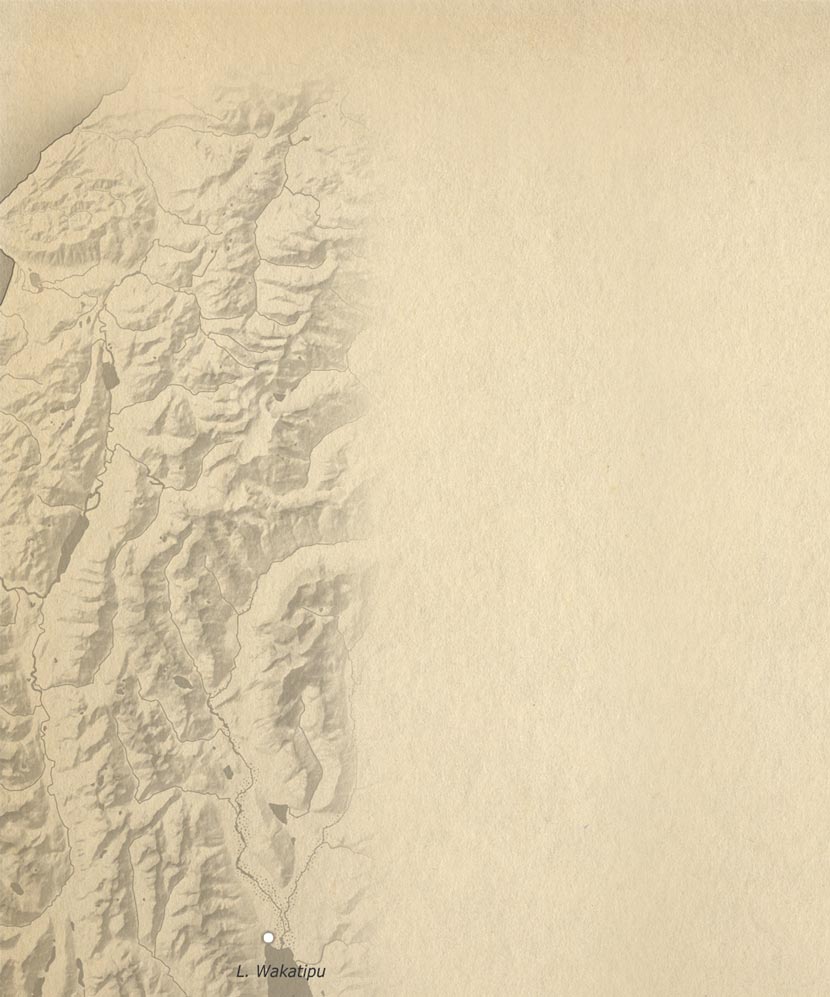
Between November 1863 and June 1864 Alphonse (George) J. Barrington searched for gold in the mountains and valleys north-west of Wakatipu. On 21 December Barrington set off from the head of Lake Wakatipu with two companions, Edward Dunmore and William Baylis.
-
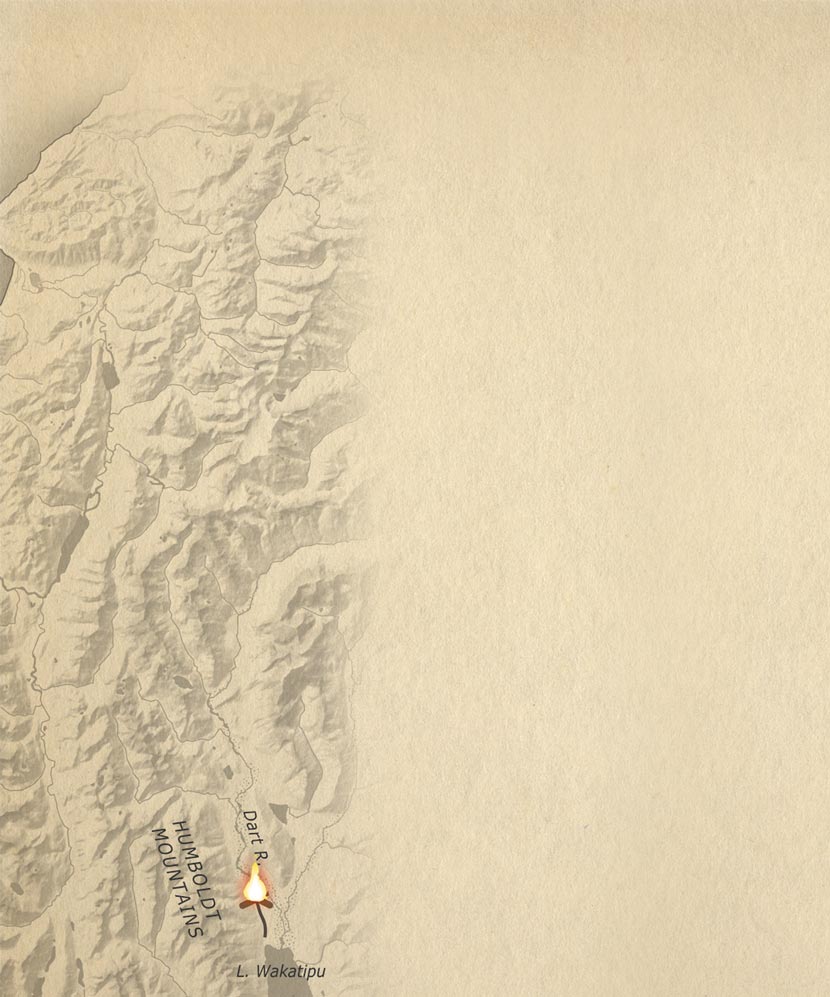
December 22nd
"Up before sunrise and proceeded up the river. When we got up abreast of Pigeon Island, we were crossing a branch of the Dart, when William Baylis was carried away on account of keeping too far down off the ford or shallow ground. I being first, and a good distance off, thought he would be drowned before I could get to him. On hearing the first scream, I looked round and saw his feet over the water. I had not time to land my swag on the other side, but dropped it in the river; told Edward Dunmore to hold it, so as not to let the water take it away. I jumped in and swam away, just as I was, after him. I could see him rolling, sometimes his swag would be uppermost, sometimes himself; he was struggling hard to get it off, and succeeded just as I got to him, and at the same time got ashore. I swam ashore and ran down the beach a quarter of a mile, and went into the river and stood there about a quarter of an hour, when I saw the swag, and picked it up with the loss of two tin dishes, one long-handled shovel, tea, sugar, and soda, wetting our oatmeal and flour in both swags. As mine were wet too, we had to camp there."
-
December 25th
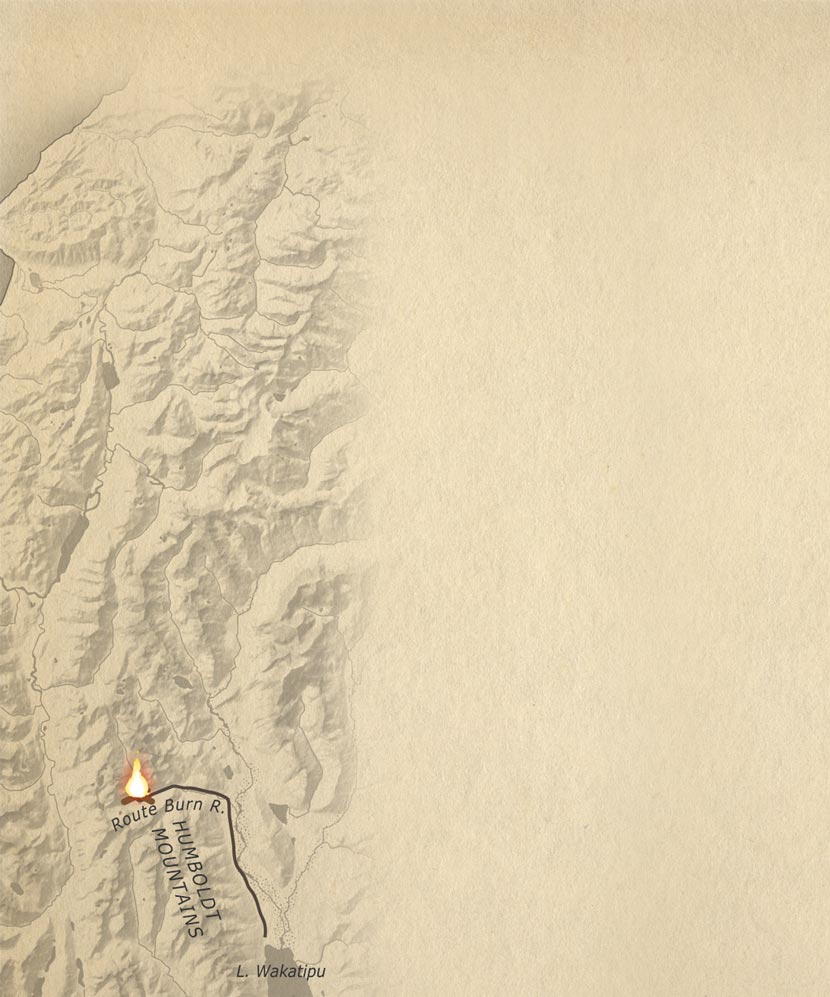
"Turned out at daylight, got breakfast and proceeded down the creek to fetch the remainder of our provisions. Arrived at the depot and packed up; got back again to the tent by 5 p.m., where we had a plum duff boiling; tapped a brandy bottle which we brought up for the occasion, made tea, cooked four Maori hens and had a jolly afternoon; that ended Christmas Day."
-
March 16th
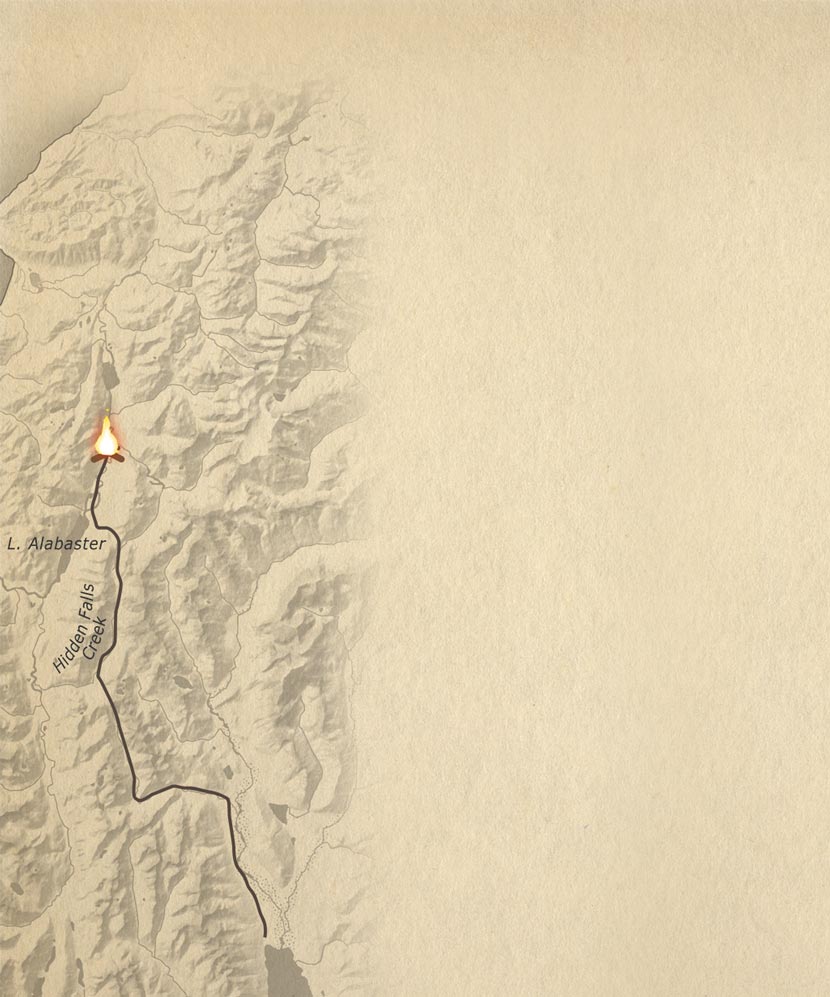
"Rained all last night: the river rose nearly up to our tent. Simonin gathered a handkerchief full of the tutu berries, beat them up, squeezed them, and got a pint of wine, which was first-rate drink. The refuse, or seed, he threw on the beach, which the dog ate. In an hour afterwards he showed every symptom of being poisoned, foamed at the mouth, and lay down in fits; I believe he would have died but for a good supply of salt and water we managed to pour down his throat. The native currant also makes first-rate wine, and grows very profusely."
-
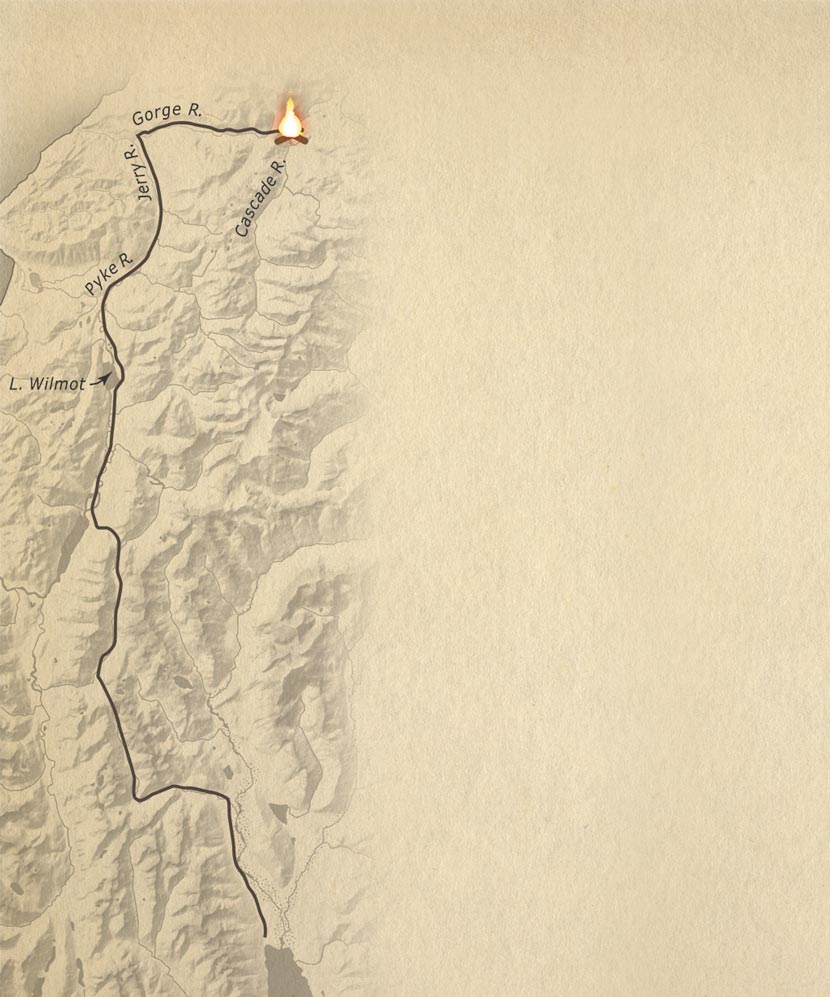
April 18th
"Proceeded up the river S.W. about three miles. Saw a likely place for gold; prospected and found gold in two places. Camped on the flat and dried our blankets and clothes, which have been wet now for a fortnight. Got more gold."
-
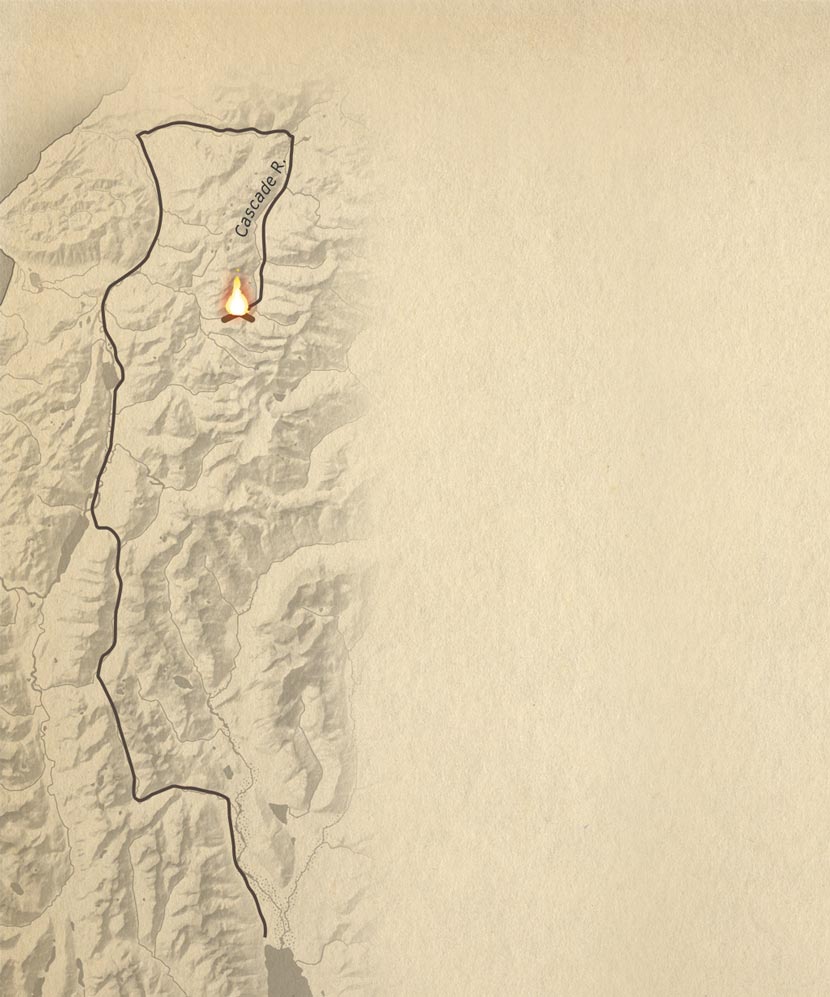
May 4th
"Made an early start, but it commenced raining about 10 a.m. and continued so all day. I lost the run of my mates all of a sudden, I having kept a little lower down on the side of the mountain. I thought nothing of it at the time, as we had often parted and met together again, but this time I cooeyed and got no answer. Could see the river down under me in the flat; got down, waited for an hour, but no sign of them; fired two guns hoping they would hear them, but no answer; so I gave them up, thinking that they had crossed along the side and over the mountain more to the eastward. I proceeded to follow up the river all the afternoon and shot one blue mountain duck, which I may say is all the provisions I have. I am very badly fitted for the road before me, having no dog and every appearance of a week or two’s rain, as at every change of the moon we have had a week’s rain lately, sometimes more. I have about three-quarters of a pound of oatmeal and a long weary road to travel."
-
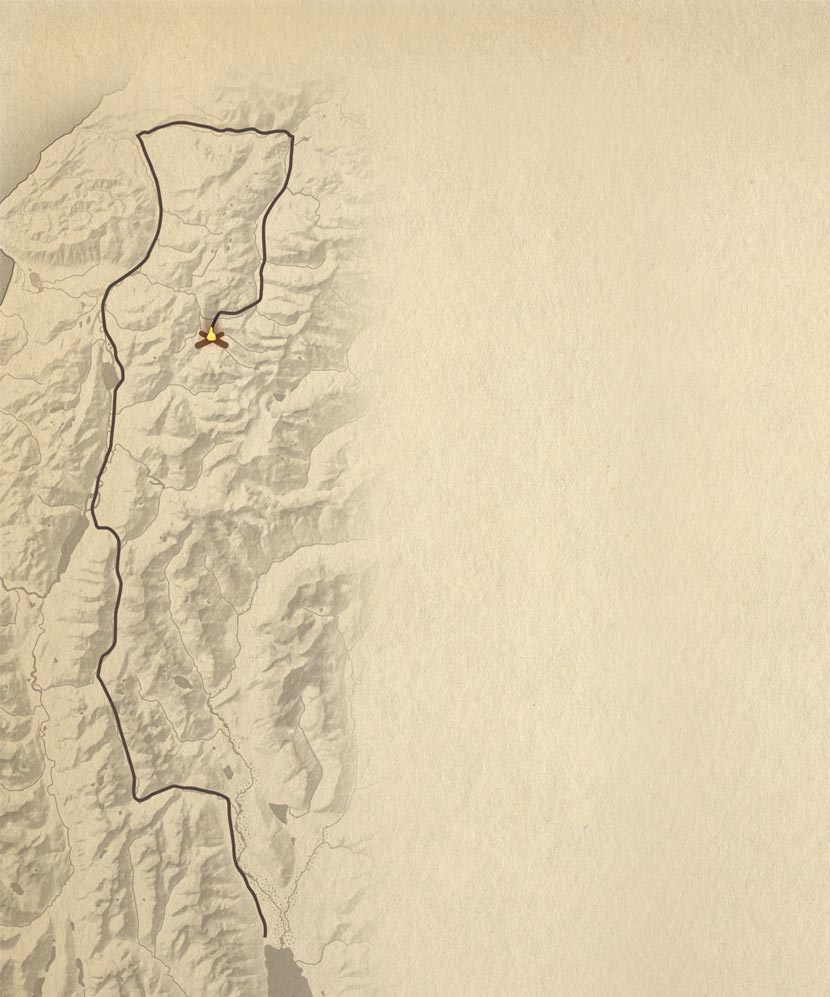
May 6th
"Still raining, with snow mixed. I am certain this is snow on the mountains; if so I shall have a hard matter to get over. Very cold; could not sleep last night, my teeth cracking together all night with cold, and cramp in my legs. I do not feel at all well. The rats stole my little duck, which I intended for this day’s food. This is the first day I have been heartily sick of the country. Nothing to eat; cannot light a fire; all my clothes and blankets wet. I am indeed miserable."
-
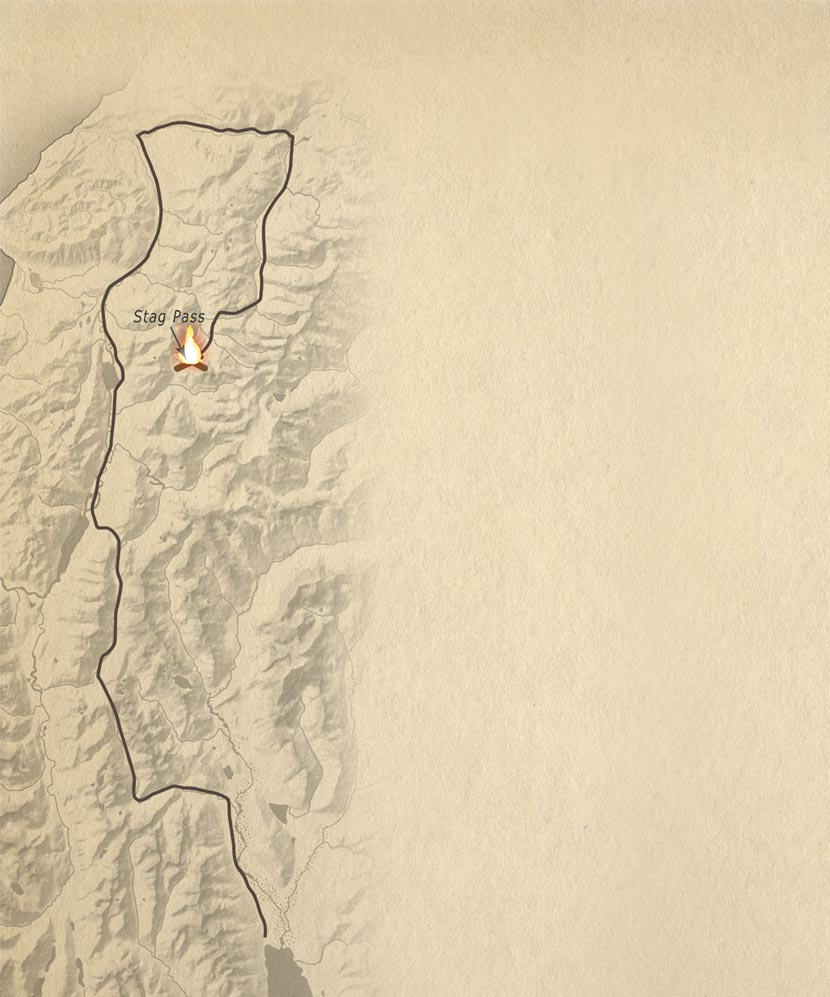
May 14th
"Turned out early; wrung the tent and other things, which were very wet, packed up once more, and made a start. Got on very well for about half a mile, when my legs began to fail me, and I found I could not get more than twenty yards at a spell. Toiled away till I saw by the sun it was nearly noon, and I had not got one mile away from the timber where I was camped, and was completely done, so there was nothing for it but desert my swag or die here. The former idea I carried into effect. I threw away everything but my blankets, gun, and a little powder and shot, which was my only dependence. Amongst the things I abandoned was a couple of specimens which we got in the Little River, and a small parcel of gold, which we found in prospecting, with maps, books, etc., all of which I have before mentioned. After throwing away my swag I had a very hard task to get up the hill, as there was over two feet snow and very soft. I kept slipping and falling, till at length I arrived at the top of the saddle and saw a creek at the other side, and a grassy flat about a mile long and half a mile wide. I got to the river by sundown, and was going to the west end of the flat to camp, and try to get a duck or something to eat; but on looking up the creek I saw a smoke, which I went to and found my mates camped there. They were surprised to see me. I was greatly reduced since they saw me, and was very weak—just able to put one foot before another. I asked them if they had anything to eat; they said they had had nothing that day, but they started hunting, and got two Maori hens which they gave me, and with the heat of the fire I was much refreshed."
-
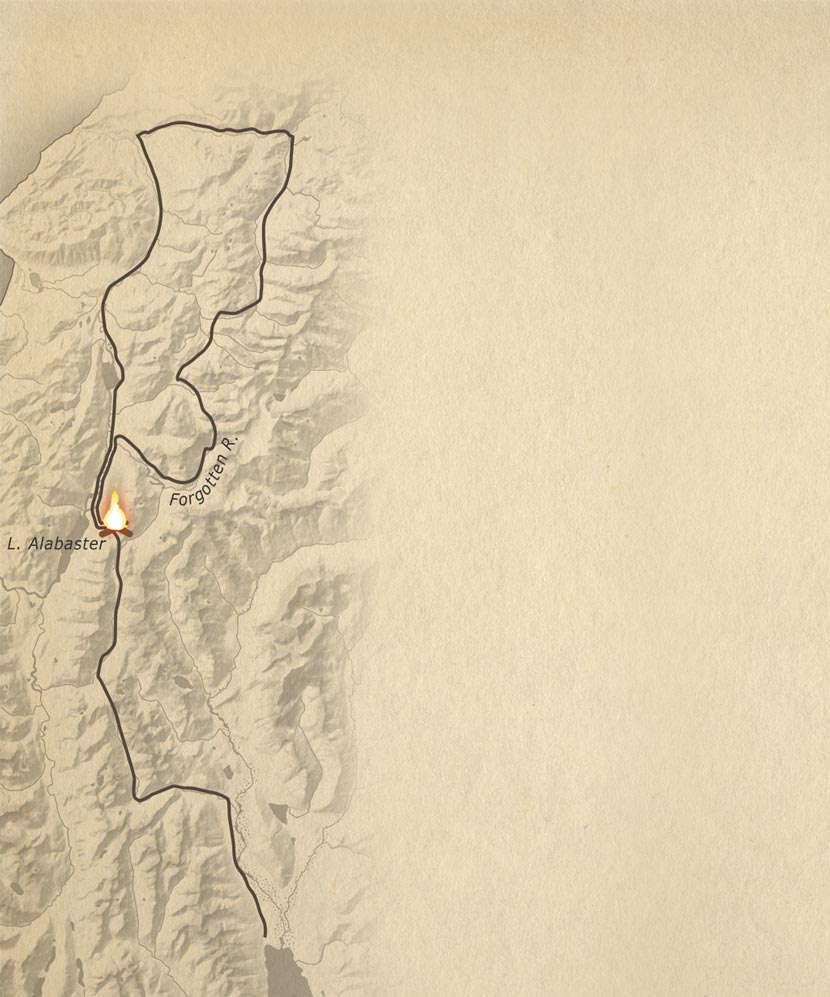
May 29th
"This is the most miserable day of my existence. We had to turn our last night at 10 o’clock, and the water rose so fast that we could not get anything away but our blankets. Had to wade to the side of the range up to our middles in water. We tied the powder and guns and a few other things up to the ridge pole, afraid to carry them away in case of getting them wet. The night was very dark and before [we rea]ched the hill I got up to my arms in water. [I thought] I should never get across, but we reached the land safe about a quarter of a mile distant. Had to walk up and down all night, the rain still pouring down. If this night does not kill us we shall never die. Daylight broke upon us, each looking for the other and wondering that we are all alive. Got a fire this morning: kept it going all day, but could not get back to our tent, as there is ten feet of water to go through, so we shall have another night, which I hope will be fine or we shall perish."
-
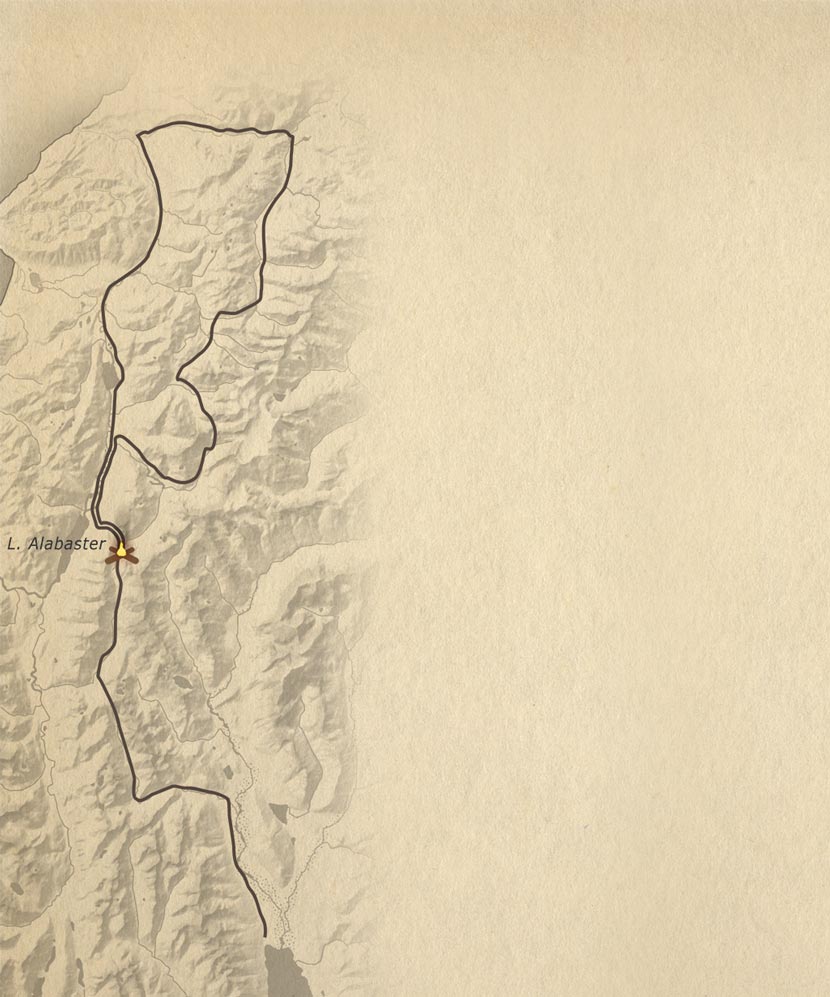
May 31st
"Whilst in the act of packing up, I saw a rat which the dog had killed in the night. I never picked up a nugget of gold during the last ten years with more satisfaction than I picked him up, put him in the fire, and roasted him just as he was, then cut him in three parts, which we pronounced the sweetest bit of meat we ever ate. Proceeded up the side of the range, very weak and tired, and the bush wet. Camped about one-third of the way up the range with clothes wet. Could not get a fire."
-
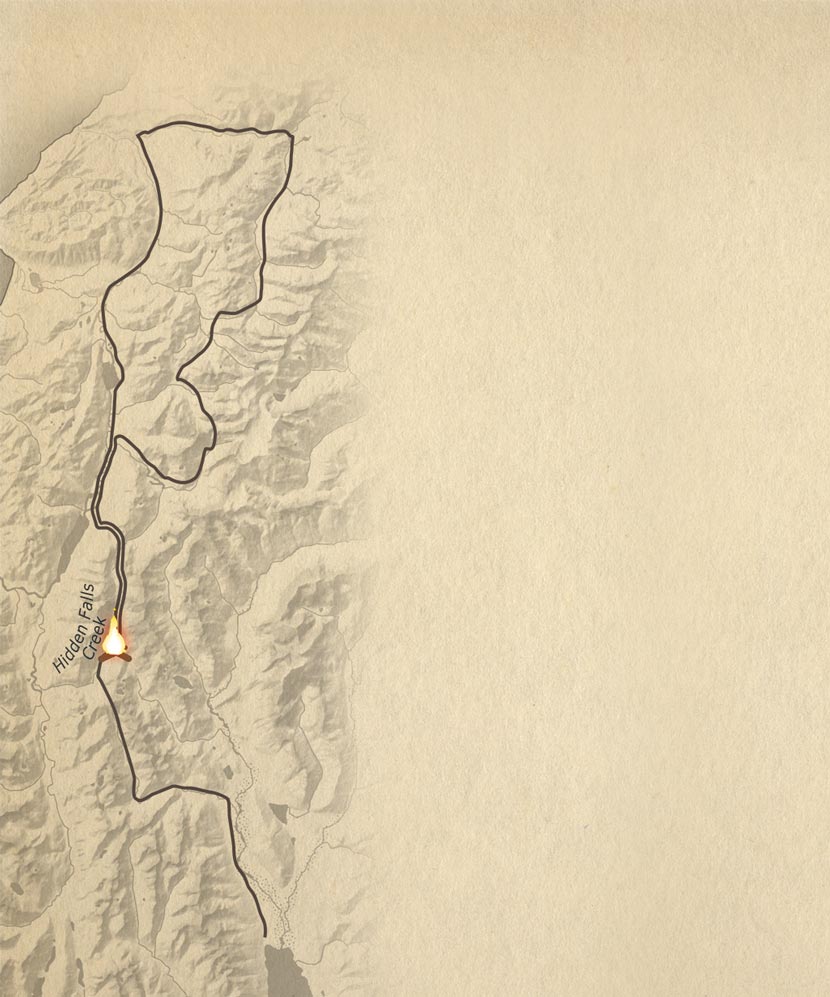
June 5th
"Got down to the edge of the bush, when it commenced raining, with a heavy thick fog on the mountain. We consulted as to whether we should go on or not, the weather looking so bad. Camped. Rained all day. Caught one kakapo; very poor store to carry us over the divide. My feet are in an awful mess, and nothing to put on them but Maori hen fat. I do not think we shall be able to get over; we are three skeletons just alive."
-
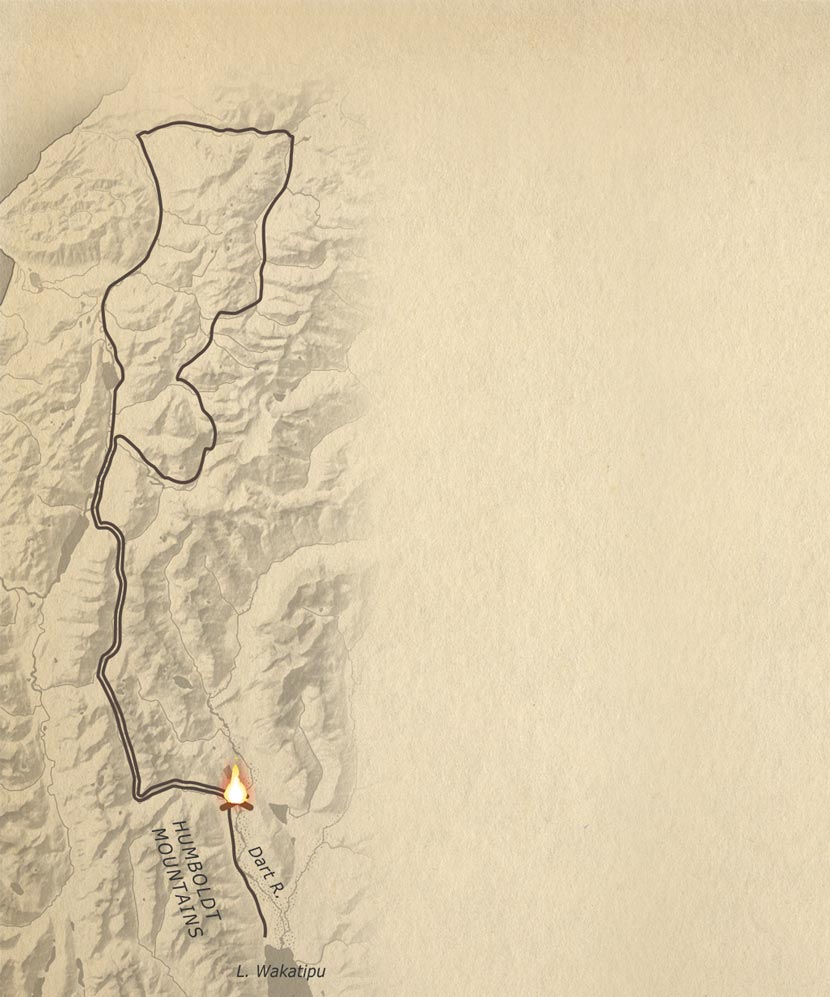
June 11th
"Got nearly to the Dart and in sight of the Wakatip, which was indeed a welcome sight to us. We caught plenty of Maori hens and had a good feast—happy once more, even under our circumstances. Nearly skeletons, and can scarcely put one foot before the other."
-
Barrington's journal
Barrington arrived back at Lake Wakatipu on 12 June, undernourished and exhausted. For sheer physical courage and stamina, Barrington’s exploration, made without maps or Māori guides, was outstanding. However, it did not prove useful in finding goldfields or places for settlement.
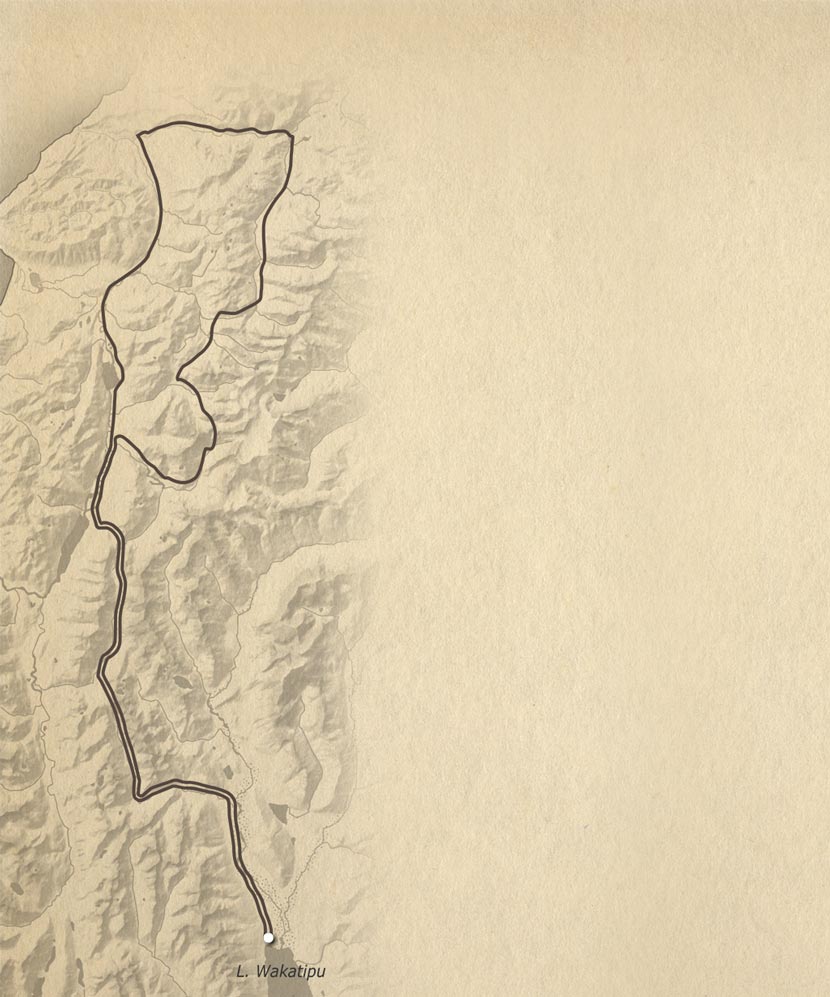
Between early summer 1863 and mid-winter 1864, Alphonse Barrington made a remarkable journey north-west of Lake Wakatipu. He and his companions were searching for gold. His journal tells how their small success finding gold paled beside the physical torments of the trip. Read Barrington’s account by clicking ‘Next’.
Using this item
Te Ara - The Encyclopedia of New Zealand
Source: Nancy M. Taylor, ed., Early travellers in New Zealand. Oxford: Clarendon, 1959, p. 387
This item has been provided for private study purposes (such as school projects, family and local history research) and any published reproduction (print or electronic) may infringe copyright law. It is the responsibility of the user of any material to obtain clearance from the copyright holder.