

Image
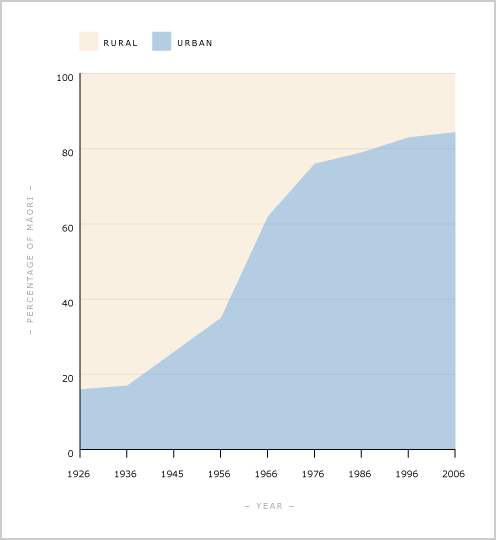
In 1945 around a quarter of Māori lived in urban areas and the remainder lived rurally. By the mid-1990s the situation had completely reversed, with around 80% of Māori living in urban areas.
Using this item
Te Ara - The Encyclopedia of New Zealand
Source: Ian Pool, Te [no-lexicon]iwi[/no-lexicon] Māori. Auckland: Auckland University Press, 1991, pp. 123, 154, 182, 197; and Statistics New Zealand
This item has been provided for private study purposes (such as school projects, family and local history research) and any published reproduction (print or electronic) may infringe copyright law. It is the responsibility of the user of any material to obtain clearance from the copyright holder.