

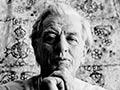
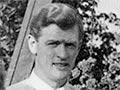
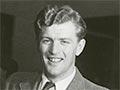
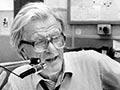
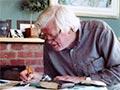
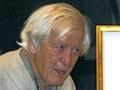
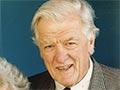
Ian Prior was an influential doctor, activist and art patron. His ground-breaking health surveys in Pākehā and Māori communities in Aotearoa New Zealand and in Cook Islands and Tokelau earned him recognition as the founder of New Zealand epidemiology. Over time he extended his ethic of care and doctoring from cardiology and public health to a growing range of local and international causes. As an ‘establishment radical’ he excelled at pushing, prodding and uniting people and governments to reshape the country, respect human rights, protect the environment, promote the arts and much more. Engagement with committed individuals from different cultures at critical moments expanded his world view significantly. His open mind, keen interest in and respect for people of all backgrounds and classes earned him respect even from those who disagreed with his views. He and his wife, Elespie, supported local artists, musicians, poets and writers seeking to express an independent identity for Aotearoa.
Early life, education and marriage
Ian Ambury Miller Prior was born in Masterton on 16 October 1923, son of general practitioner and surgeon Norman Henry Prior and his wife, Jessie Anne Miller. Ian grew up in a blended family, created by death rather than divorce. Norman’s first wife, Elizabeth, had died of sepsis after the birth of their son, the future logician and philosopher Arthur Norman Prior. Norman and Jessie had three children: Elaine, Ian and Owen. His family were ardent Methodists, and he was a great-grandson of John Smith Fordham, a missionary in Fiji from 1853 to 1862, and a grandson of itinerant minister Samuel Fowler Prior.
Prior grew up on Perry Street in Masterton in a two-storey brick home that also housed his father’s medical practice. As a teenager he learned about medicine accompanying his father on his rounds. He absorbed the family’s ethic of community service and the importance of hard work and play. He attended the local primary school, Hadlow Preparatory School and Wairarapa College (1936–9), where he was a keen rugby player, long jumper and runner.
When war broke out in 1939 the family decided Prior should leave school to train as a doctor, as medical men would be needed. So, at the age of 16, he headed to Dunedin, took up residence at Knox College and completed his five years of general medical training there. His passion for rugby continued, and he captained the University of Otago team and represented the South Island against the North in 1943.
His time in Dunedin was a watershed in Prior’s life. His world view expanded after he met Elespie Kate Forsyth, on the Ōpoho tram in 1943. She was then a driver for the Women's War Service Auxiliary. The young, Methodist, small-town man’s eyes were opened to the world of liberal, secular Jewish culture, the arts and the philanthropy of her extended family as well as to ski-ing and the Central Otago area that was so important to them. Elespie was a great-granddaughter of Jewish entrepreneur Bendix Hallenstein and a granddaughter of the businessman, collector, museum supporter and patron of the arts Willi Fels; poet Charles Brasch was her first cousin. Elespie’s mother Emily and her maternal aunts keenly supported young artists in all fields, purchasing their work and nurturing friendships, and through them Prior met many of the artistic figures of the era. On 14 March 1946 he married the ‘gay, friendly-hearted, loveable and lovely’ Elespie at Knox Church in Dunedin.1 Thus began a life-long loving relationship and 56 years of teamwork and family life with their daughters Bettina, Susan and Ione and, in later years, sons in law and grandchildren.
From general medicine to cardiology
Prior never considered going into general practice. He spent his final year as a medical student in Wellington, worked there as a house surgeon (1946–7) and as a registrar in New Plymouth (1948), then returned to Dunedin to learn more about pathology. The couple then moved to England for three years so Ian could earn admission to the Royal College of Physicians. Work as a research registrar in Leeds and at the National Heart Hospital, London, broadened his knowledge of cardiology.
In England the couple visited Henry Moore’s sculptures and learned more about European and British art from Elespie’s London cousins, Esmond, Dora and Mary de Beer. Years later, Ian was instrumental in the Wellington Sculpture Trust securing Moore’s striking ‘Bronze form’ for Wellington’s Botanic Garden. On returning to New Zealand they purchased the house in Wadestown, Wellington, that remained their home for the rest of their lives.
From 1953 to 1957 Prior worked at Wellington Hospital as a cardiologist. A Fulbright scholarship at the Peter Bent Brigham Hospital in Boston, Massachusetts in 1957 further enriched his cardiology training. Prior’s ‘Methodist sense of justice’ was enhanced by his friendship with the pioneering cardiologist and activist, Bernard Lown, who had experienced discrimination for his anti-racism, and sympathy for progressive causes, during the anti-communist campaigns of the late 1940s and 1950s.2 Lown’s commitment to collective action and positive change resonated with Prior. He returned to New Zealand with a greater awareness of the discriminations of class and race and a broader sense of how doctors could advocate social justice and global peace.
Māori and Pacific epidemiology
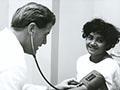
Prior was appointed director of the University of Otago’s newly created teaching and research Medical Unit at Wellington Hospital in 1959. He always considered research and publication essential to good medical practice, and this position allowed more time for both. He shifted his focus from the cardiovascular problems of individuals to health profiles of whole populations, from clinical medicine to social epidemiology.
Mortality statistics at the time showed that Māori had much higher death rates from coronary disease, diabetes and hypertension than Pākehā. Prior began systematic studies of the patterns of Māori health and disease in living populations, assembling teams to undertake comprehensive surveys among Ngāi Tūhoe in Ruatāhuna (1960), Ngāti Porou in Tikitiki (1962) and Pākehā in Carterton (1964). Keen to understand the impact of western food and lifestyles on disease rates, the team then compared Cook Islanders living in busy and outward-focused Rarotonga (surveyed in 1964) with those living on the relatively isolated island of Pukapuka (1965). They found that blood pressure and weight gain increased more with age among the former than the latter.
The team then turned their attention to collecting health, social and cultural information on Tokelauans. The Tokelau Island Migrant Study, which Ian and his multi-disciplinary team of researchers began in 1967 and continued into the 1980s, was pathbreaking. It received significant funding, support and recognition, including from the World Health Organization and the New Zealand Medical Research Council, enabling Prior to focus on this study as director of the new Epidemiology Unit at Wellington Hospital.
They undertook three major rounds of research over 14 years, comparing Tokelauans living on the three island atolls with those who had moved to New Zealand from the 1960s, some under a government resettlement scheme. The team documented changes, tracking the relationship of health and disease to the challenges of job searching, language acquisition, securing adequate housing, racism, climatic differences and building new communities in Aotearoa.
Their research found that western diets and lifestyles had devastating effects on Māori and Pacific peoples. Migration increased the likelihood of smoking, weight gain, high blood pressure, diabetes, gout and asthma. Environment and diet, rather than genetics, caused these and other health problems. ‘Civilisation’ and modernisation came at a price.3
Prior’s choice to study the health of Māori and Pacific populations was innovative and initially controversial, and he faced criticism from conservative medical colleagues in getting epidemiology, public health and community-based research accepted. His career might have taken a different path but for the advice, support and life-long friendship of Tūhoe leader John Te Rangiāniwaniwa Rangihau, which enabled him to take his research team into Te Urewera. Rangihau’s mentoring in te ao Māori expanded Prior’s world-view further. A good listener and patient when necessary, he recognised the importance of working with communities as partners, on their terms and for their benefit. He was able to pick up conversational skills in te reo Māori and, later, gagana Tokelau (the Tokelau language). The sensibilities and practices he developed in his first study carried over into subsequent ones. Henry Tuia, liaison officer for the Tokelau migrant study, secured cooperation on the islands and in New Zealand and ensured that team members understood Tokelauan cultural practices.
These studies broke new ground in their holistic, multidisciplinary and longitudinal approach. Prior had a knack for finding excellent people and supporting respectful, collaborative teamwork. Senior medical registrars were cajoled into working with him, encouraged to specialise in public health and mentored assiduously as they moved on to prominent careers in New Zealand and abroad. He politely prodded the anthropologists Tony Hooper and Judith Huntsman, who were already researching Tokelau ethnology, to join the Tokelau migration study, which included physicians, paediatricians, sociologists, nutritionists, human geneticists and biostatisticians.
Activism
From the 1970s Prior engaged in a range of social movements aimed at preserving the environment, countering racism and promoting peace, all of which he considered essential to a healthy society. He deployed his logistical skills, family resources and ever-widening networks to help effect change.
He joined locals to fight plans to build a large hotel on the Queenstown Gardens reserve in 1970, and to raise the level of Lake Manapōuri for a hydroelectric scheme in the early 1970s. He helped take the Save Manapōuri campaign to the national level, serving as chair and contributing time, funding, energy and his remarkable ability to get people of diverse opinions to work together.
This successful struggle demonstrated the need for an umbrella organisation that would unite environmental groups. In 1971 he helped create Conference on Environment and Conservation (later Environment and Conservation of Aotearoa New Zealand), representing more than 40 conservation organisations. While he was its chair (1975 to 1982), it coordinated major campaigns to prevent logging in native forests. He and Elespie marched together into the fray, as they did in the lead-up to the Springbok rugby tour in 1981.
The roots of Prior’s ‘Pacific consciousness’ lay in his family history and his research.4 In 1976 he learned of the police intimidation and harassment of Pacific overstayers and helped found Amnesty Aroha in Wellington to protest police and government actions and push for an amnesty for illegal immigrants. He chaired the group, while Elespie and other wives provided food and distributed bumper stickers and pamphlets. Meetings were often held in their Wadestown home.
In 1982 Prior co-founded the New Zealand branch of International Physicians for the Prevention of Nuclear War (IPPNW). Bernard Lown and the Soviet cardiologist Yevgeniy Chazov had started this global group two years earlier, aiming to unite doctors worldwide to have nuclear weapons declared a health threat. The New Zealand group soon had more than a thousand members. Prior served as founding secretary and later as national chair, promoting public education and joining other activists to pressure politicians. Convinced that talks by overseas experts helped win campaigns, he invited the Australian-born, United States-based physician and anti-nuclear campaigner Helen Caldicott to speak in Wellington in 1984. Saving the earth (1984), filmed by Gaylene Preston, documented Caldicott’s town hall talk and meeting with politicians.
IPPNW was an important voice in the campaign to make New Zealand nuclear-free. Its members celebrated the group’s Nobel Peace Prize in 1985. A year later, Prior helped create and fund the IPPNW Education and Research Trust to support work promoting their goals. He worked with Harold Evans, Erich Geiringer, George Salmond and others from 1986 in what became a worldwide movement, the World Court Project (WCP). Success came in 1996 when the International Court of Justice (ICJ) advised the United Nations that the use of nuclear weapons was generally contrary to the rules of international law in armed conflicts and to humanitarian law. Sadly, that neither prevented nuclear proliferation nor led to successful ‘negotiations aiming at nuclear disarmament’, which the ICJ declared was a general obligation.5
When in 1991 the National government sought to encourage private insurance and limit the subsidisation of health care to those on low incomes, Prior formed the Wellington Action Group, a team of health professionals and other experts, to critique the move. In the same year, he joined those fighting to stop the government from leasing out the Manapōuri Dam or its energy to private companies in the Save Manapōuri 1991/Power for our Future campaign. A decade later he convinced IPPNW colleagues to support Denis O’Reilly’s work tackling the impact of methamphetamine, especially in Māori communities, through a Moving Beyond Violence Campaign. Denis had taken Ian into prisons and introduced him to members of Black Power. It was there that he met Ranga Tuhi, who carved a pou for Elespie after her death and helped Ian at home in his last years before carving a pou for him.
The arts, collecting and philanthropy
Prior would have accomplished little without the unwavering support and patience of his wife, Elespie. Her financial assets allowed the couple to make significant donations to campaigns, causes and individuals. Her family had sparked his interest in the arts and had first introduced him to painters, dramatists, writers, composers, musicians and poets, and to the practice of collecting which led Ian and Elespie to acquire an increasingly rich collection of New Zealand art, sculpture, pottery, and literature.
The most comprehensive public exhibition of their collection, Luncheon Under the Ash Tree, was shown at Aratoi Art Gallery in Masterton in 2005 and later in Gisborne and Wellington. Works by friends predominated, including family portraits by Evelyn Page, landscapes and portraits by Doris Lusk, paintings and prints by Toss Woollaston, John Drawbridge and Ralph Hōtere, and sculptures by Tanya Ashken.
The couple offered financial support to painters, musicians, opera singers, sculptors, composers and film-makers as well as to many campaigns and causes. Curator Marcus Boroughs described them as ‘reluctant heroes of the New Zealand art scene’ with ‘so many friendships, family connections, and associations with artists that their relationships appear like a veritable “who’s who” of New Zealand art history.’6
The Priors were a handsome, welcoming and generous couple with little time for pretentiousness or pomposity. Their home was an inclusive space filled with art, sculptures, pottery, antiques, modern furniture, tapa cloth and other artefacts from the Pacific as well as books and maps. It was a vibrant place of sociability and family life as well as a site for meetings for various causes. Pākehā friends mingled with Māori and Tokelauans, straight with gay friends and family, musicians, artists, poets and writers with doctors, scientists and environmentalists. Most shared a belief that these disparate groups should help forge a distinctive culture in Aotearoa and work together to achieve social change.
Ian’s eye for art and leadership skills were recognised in his appointment to the Queen Elizabeth II Arts Council. In 1970 he chaired its Visual Arts Panel. He took the lead in fundraising to site Tanya Ashken’s sculpture ‘Albatross’ on Wellington’s waterfront. This led him and Henry Lang to form the Wellington Sculpture Trust, which sponsored the installation of ‘Albatross’ in 1986 and subsequently placed works throughout Wellington. His hard work, leadership skills, donations and eye for art were essential to the success of the trust.
Between 1972 and 1978, Prior was a forceful advocate for music and the arts on the Council of Victoria University of Wellington. In 1988 the university awarded him an honorary doctorate, citing his medical research, ‘deep and generous commitment to the creative arts’ and ‘passionate and compassionate’ commitment to urgent social issues.7 One of his final missions was to ensure that his friend Douglas Lilburn’s house in Thorndon could serve as a residence for New Zealand composers.
Methods and costs
Prior developed a set of strategies that fuelled his successes across his many fields of interest. Problems had first to be defined and resolutions identified. A team approach was essential. His enthusiasm, respect for people’s beliefs and strategy of assuming that people would want to do the right thing convinced many to get involved. His network expanded over time, within and beyond New Zealand, incorporating politicians, diplomats, bureaucrats and scientists who could help bring about change.
He raised awareness of causes by discussing them with everyone from taxi drivers to politicians, inviting experts, preferably from overseas, to participate in public talks or debates. Friends, neighbours and acquaintances were called on for advice and financial support. Film-makers (notably Gaylene Preston), poets (including Hone Tuwhare, Denis Glover, Alan Brunton and Glenn Colquhoun), photographers (including Marti Friedlander) and publishers (Steele Roberts Aotearoa) were asked to apply their skills to campaigns. He delivered radio talks and shared flyers, bumper stickers and posters for distribution. He provided funding from family funds and through the Willi Fels Memorial Trust set up by him and Elespie. In 1996 he was made an Officer of the New Zealand Order of Merit for services to medicine and the environment.
Prior combined campaigns with his considerable research workload until his retirement in 1986. Well into a ‘joyously non-retired’ state but in faltering health, he insisted he still had things to do.8 His extreme energy was fuelled in part by his bipolar condition. After moving from clinical cardiology into epidemiology, Prior began to experience periods of depression, precipitated by his worry that he lacked the necessary training, especially in statistics, to fulfil his ambitious research programme. Supportive colleagues and mental health professionals helped, but extreme mood swings from manic highs to grim lows became more frequent. Elespie tried unsuccessfully to discourage him from taking on so much and nursed him through periods of deep depression. She had more than a full-time job just keeping Ian going. He spoke publicly about his mental illness and supported others who faced similar challenges.
Later life
After Elespie’s death on 26 November 2002, Prior threw himself into new projects: Save Air New Zealand; Change the New Zealand Flag; marshalling evidence about Māori health for Waitangi Tribunal hearings in Ruatāhuna in 2004; supporting opera singers and the Lilburn Residence Trust. Two of his final projects were books. The first, Elespie and Ian: memoir of a marriage (2006), shared the history of his life with Elespie, their love, families, friends and his career and campaigns.
Over time Prior shed his Methodism and his faith in God. Getting people to do good things helped him more, he claimed, than getting on his knees. Wise quotations rather than biblical passages gave him strength. His plan to publish a collection of such aphorisms before he died did not come to fruition. Many live on in the memories of colleagues, friends and family. From his father he learned and practised a version of Luke 12:48 – ‘to those whom much is given, much is expected’ – as well as, ‘don’t let the bastards grind you down.’ Other favourites included, ‘when in doubt do the courageous thing’, and ‘you shouldn’t die rich.’9 These maxims shaped and reflect the choices he made in life.
Ian Prior died in Wellington on 17 February 2009, aged 85. Old St Paul’s Church in Wellington overflowed on the day of his funeral. Family and friends from Tūhoe, Tokelau, the Tudor Consort, the arts, social justice and public health campaigns spoke, sang and played in his honour. Black Power members showed their respect with a vigorous haka and the taxi drivers who had taken him everywhere after he stopped driving ferried guests back to Wadestown for refreshments without charging.
- C. Brasch. Indirections: a memoir, 1909–1947. Wellington and New York, 1980: 261. Back
- I.A.M. Prior. Elespie & Ian: memoir of a marriage. Wellington, 2006: 10. Back
- Ian A.M. Prior. ‘The price of civilization.’ Nutrition Today, v.6 n.4, July/August 1971: 2–11. Back
- Samuel William Day, ‘Acquiring a Pacific consciousness: Pākehā pressure groups and Pacific issues in 1970s Aotearoa New Zealand.’ MA thesis, Victoria University, 2023: 70–73 . Back
- Catherine Dewes. ‘The World Court Project: the evolution and impact of an effective citizens’ movement.’ PhD thesis, University of New England, 1998: 357. Back
- Marcus Buroughs. Foreword to Luncheon under the ash tree. Masterton, 2005: 5. Back
- Citation of Ian Ambury Miller Prior for the Degree of Doctor of Science, Victoria University of Wellington, 1988. Back
- Peter Isaac. ‘Dr Ian Prior – a very public physician activist, humanitarian and supporter of the arts’. Pacific Ecology, Winter 2009: 56–57. Back
- Quoted in P. Howden-Chapman and A. Woodward eds. The health of Pacific societies: Ian Prior’s life and work: a celebration at the Wellington School of Medicine, 25 February 2000. Wellington, 2001: 50, 60. Back