

-
2/3/5 vs 4/4/2
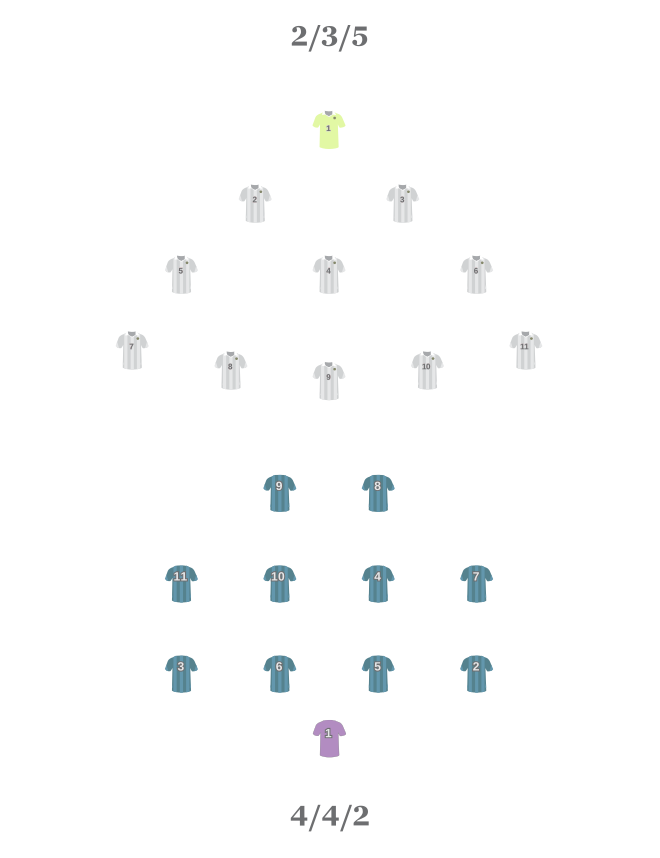
-
4/3/3 vs 3/4/3
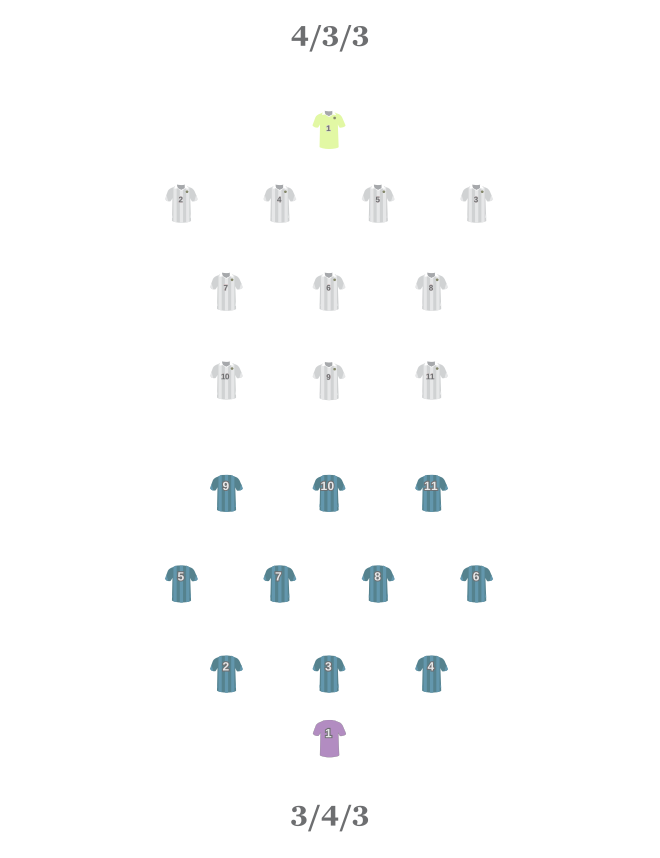
This interactive shows four of the better-known formations of football players on the field.
In contrast to many team sports, playing positions in football are fluid and flexible. The goalkeeper is the only player to have a fixed position – the other 10 players are simply ‘outfielders’, all theoretically able to defend, win the ball, attack and score goals. Over the years, however, teams have normally lined up formations such as 2/3/5 or 4/4/2, as shown in the first game here. (Those numbers refer to, in order, defenders, the midfield and the attack. The goalkeeper is excluded.) The 2/3/5 formation is a highly attacking arrangement of players, and was popular from about the 1880s to the 1930s.
Since the 1960s the most common formations have been 4/4/2 and 4/3/3, although there is considerable variation within each, depending on the players and tactics. Team formations frequently change from game to game, or even during games. Coaches often make adjustments (sometimes through player substitutions) to counteract the opposing team’s formation or to adopt a more attacking or defensive approach.
The 3/4/3 formation shown in the second game is less common, but was the one used, with surprising success, by the New Zealand team during the 2010 FIFA World Cup in South Africa.
Using this item
Te Ara - The Encyclopedia of New Zealand
This item has been provided for private study purposes (such as school projects, family and local history research) and any published reproduction (print or electronic) may infringe copyright law. It is the responsibility of the user of any material to obtain clearance from the copyright holder.