Story: Sewing, knitting and textile crafts

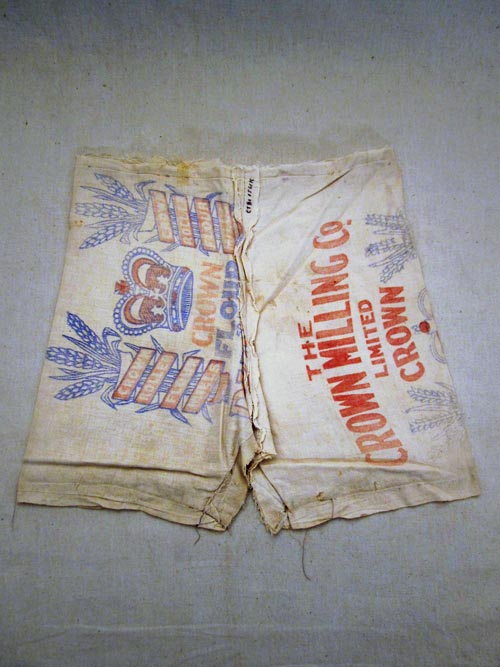
Boy’s shorts lining made from a flour bag, 1930s

Image
Boy’s shorts lining made from a flour bag, 1930s

During the depression of the 1930s, people who couldn’t afford to buy new material made clothes and kitchen items like aprons and oven cloths out of sugar and flour bags and sacks. ‘Making do and mending’ was not a new practice but it was particularly widespread in this time of economic privation. This lining for a pair of boy’s shorts is made from a Crown Milling Company cotton flour bag. The material was soft and prevented the legs and buttocks from being chafed by the coarse wool of the shorts. 

Using this item

Owaka Museum

Reference: CT81.1561k

This item has been provided for private study purposes (such as school projects, family and local history research) and any published reproduction (print or electronic) may infringe copyright law. It is the responsibility of the user of any material to obtain clearance from the copyright holder.

All images & media in this story

How to cite this page

Kerryn Pollock, Sewing, knitting and textile crafts – Home sewing, Te Ara – the Encyclopedia of New Zealand, https://teara.govt.nz/en/object/40527/boys-shorts-lining-made-from-a-flour-bag-1930s (accessed 4 June 2026).

Story by Kerryn Pollock, published 12 December 2012.

Comments

Anthony Dreaver
05 August 2013
Flour bag shorts lining would certainly have been from the 1930s but certainly didn't stop there. My mother provided the same service for my school shorts through the 1940s, probably until about 1951. Rationing continued, even senior teachers like my father were grossly underpaid, cheapish Jockeys were an innovation and people were just inured to make-do-and-mend as a way of living. Went with darned socks, dripping toast, home bottling, feeding the chooks and stoking the copper with the week's newspapers.