

-
1840
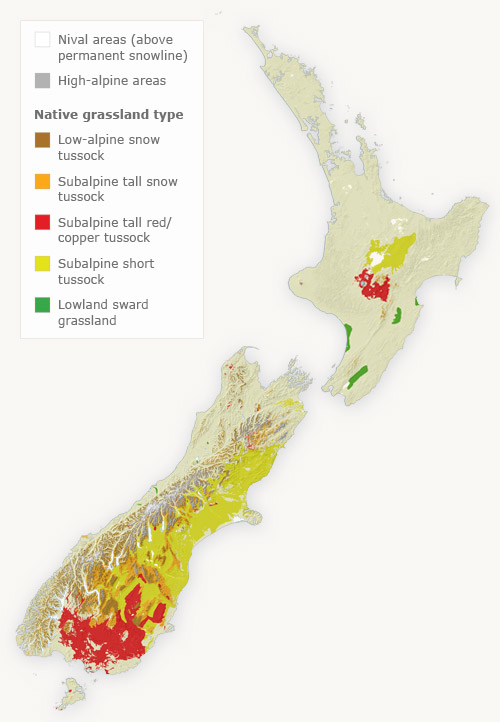
-
2002
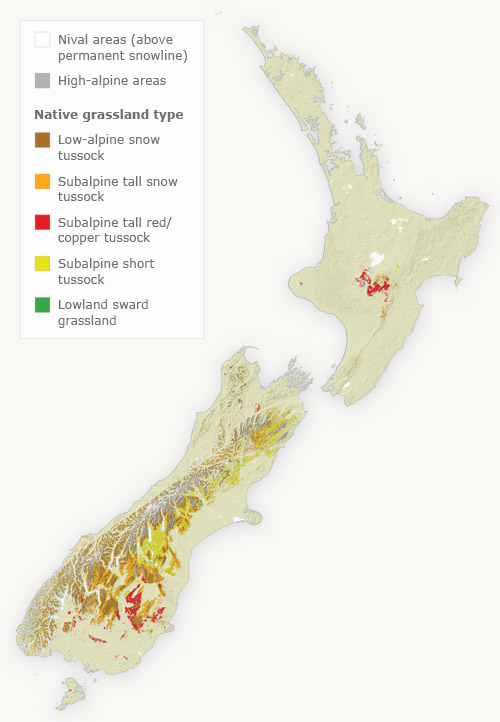
European farming methods transformed the vegetation of New Zealand. Much of the North Island’s forest and fernlands have been replaced by non-native grasses and legumes. In the South Island, burning and grazing created the tussock grasslands that varied in type according to altitude, rainfall and soil. These were later transformed by cultivation, or modified by oversowing with non-native grasses and clovers.
Using this item
Te Ara - The Encyclopedia of New Zealand
This item has been provided for private study purposes (such as school projects, family and local history research) and any published reproduction (print or electronic) may infringe copyright law. It is the responsibility of the user of any material to obtain clearance from the copyright holder.