

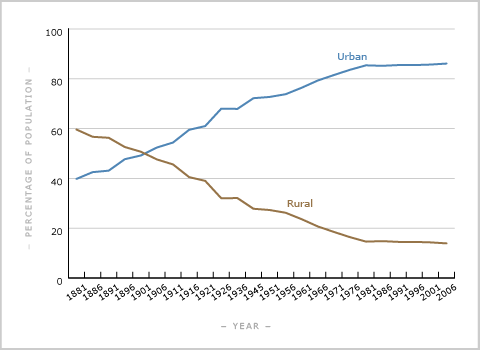
Until the 1920s people living in boroughs were classified as urban and those in counties as rural. However, some boroughs were mere townships and some counties contained sizeable towns. For the 1926 census the definition of urban was changed to settlements with populations of over 1,000; everything else was rural (it also included the urban and rural Maori population for the first time). Using this definition it is possible to track urban and rural populations back to 1896 – before then the borough and country definition is used. In 1901 they were neck-and-neck but by 1921 the urbanising trend was entrenched. Since 1981 the urban proportion has remained around 85%.
Using this item
Te Ara - The Encyclopedia of New Zealand
Source: New Zealand census, 1881–2006
This item has been provided for private study purposes (such as school projects, family and local history research) and any published reproduction (print or electronic) may infringe copyright law. It is the responsibility of the user of any material to obtain clearance from the copyright holder.