

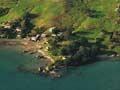
There are several histories that describe how Whangārei (the official name in 2021, with one macron) was named.
Te Whanga-o-Reitū or Te Whanga-o-Reipae
One meaning of ‘whanga’ is harbour; these names mean the harbour of Reitū, or the harbour of Reipae. Two sisters, Reitū and Reipae, flew from Waikato in the form of two birds. Reipae stayed at the Kaipara. Reitū flew on and was seduced by Manaia in the harbour that bears her name. A variation of this tradition is that Reitū and Reipae arrived on the back of a single bird and that Reipae married Tāhuhu-pōtiki there.
Whanga-rei
Another tradition says ‘whanga’ means to wait and ‘rei’ to ambush. Whangarei is a rock (Castle Rock) opposite Marsden Point, where sentries kept watch over the harbour. This version of the name means to lie in wait.
Whangarei-te-rerenga-parāoa
Whangarei can also mean to gather. Ngātiwai named the harbour Whangarei-te-rerenga-parāoa (the gathering place of whales) because whales gathered there to feed during summer. Another interpretation is that the harbour was a gathering place for chiefs.
Whangarei-o-te-tohorā
This name means ‘waiting for the breastbone of the whale’. One tradition refers to an incident where a young tohunga attempted to trick an older tohunga into revealing his highest knowledge. The master tohunga rebuffed his inquiries, saying, ‘E whanga nei i te rei o te tohorā?’ – Are you waiting (whanga) for the opportunity to extract the breastbone (rei) of the whale (tohorā)?