

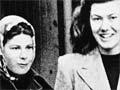
There have been a number of significant murder trials since the Second World War. They have included the 1954 trial of Pauline Parker and Juliet Hulme, teenagers charged with the murder of Parker’s mother; the wrongful conviction in 1971 of Waikato farmer Arthur Allan Thomas for the murder of his neighbours; and John Barlow’s three trials for the murder of father-and-son financiers Eugene and Gene Thomas in 1994.
Parker and Hulme
Pauline Parker (16) and Juliet Hulme (15) were convicted in 1954 of the murder of Pauline’s mother Honorah, who received 45 blows to the head, hands and body in Christchurch's Victoria Park from half a brick wrapped in a lisle stocking. The girls claimed that Honorah had fallen and hurt her head. Juliet, daughter of the rector of Canterbury University College, was about to leave New Zealand with her father for South Africa, as her parents were separating. Pauline’s mother was seen as an impediment to Pauline accompanying Juliet.
Pauline’s diary provided an account of their relationship, and their plans for the murder and a future in which the girls would write novels and pursue stardom in Hollywood. A defence of insanity was rejected. The girls were given life sentences which they served in different prisons before being released after five years. Both later moved to the United Kingdom, where Hulme reinvented herself as the successful mystery writer Anne Perry. She died in 2023.
A book, a play and a Peter Jackson-directed movie, Heavenly creatures, have presented different interpretations of the relationship between the girls, the reasons for the murder, and the trial.
Arthur Allan Thomas
In 1971, Waikato farmer Arthur Allan Thomas was convicted of the 1970 murder of his neighbours Harvey and Jeanette Crewe at Pukekawa. The Crewes’ weighted bodies with bullet wounds had been discovered in the Waikato River three months after their disappearance. Mystery surrounded the identity of the person who fed Rochelle, the Crewes’ two-year-old daughter, who was found by her grandfather in her cot five days after her parents were last seen alive.
Thomas protested his innocence and appealed against his conviction. Granted a retrial, he was convicted again in 1973. Thomas served nine years of his life sentence before being pardoned. A royal commission of inquiry held over 64 days in 1980 found that he had been wrongfully convicted. He was pardoned for the murders (effectively acquitted) and awarded almost $1 million in compensation.
John Barlow
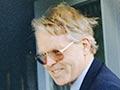
John Barlow was tried three times for the murder of father-and-son financiers Eugene and Gene Thomas, who were shot in their Wellington office building in 1994. Barlow, who had a loan from the Thomases, claimed that he went to the office for a meeting, found the bodies, panicked, and left with a CZ 27 pistol registered in his name, which he had earlier loaned to Eugene Thomas. The police found the pistol, .32-calibre ammunition, and a cut-up silencer in a rubbish tip where Barlow had dumped them. However, the pistol had a .22-calibre barrel, while a .32-calibre gun had killed the Thomases. After two trials ended in hung juries, Barlow was convicted of murder in 1995. His appeal to the Privy Council was rejected in 2009, despite a finding that ‘unscientific and untenable’ FBI forensic evidence had been presented at the third trial.1 Barlow was released from prison in 2010.
Mark Lundy
In 2000 Palmerston North woman Christine Lundy and her daughter Amber were found bludgeoned to death in their home. Six months later, their husband and father Mark Lundy, who had been out of town on business on the night of their deaths, was charged with their murders. The prosecution alleged that he had driven from Petone to Palmerston North, committed the murders, and then returned to Petone at high speed. Lundy was found guilty in 2002 and sentenced to life imprisonment. He continued to proclaim his innocence and appealed to the Privy Council in London, which in 2013 overturned his conviction and ordered a retrial. After the prosecution presented new scientific evidence and proposed a revised chronology of events, Lundy was again convicted and returned to prison in 2015.