… Te Rangihiwinui's birth and early childhood, the west coast tribes, Ngāti Apa, Rangitāne and Muaūpoko, were under severe … was to exert a strong influence on the lower Whanganui tribes. Te Rangihiwinui was possibly baptised at Pūtiki, …
Type: Biography
… at Waihī, near Tokaanu, in early adulthood he worked on the tribe’s farms and forests. On 27 January 1941, at Tokaanu, … until his death. His successful leadership resulted in the tribe becoming one of the strongest and most independent in … in 1987. In 1989, in response to increasing calls from the tribes to establish an autonomous Māori organisation to …
Type: Biography
… Some 50 elders and a large assembly of Ngāti Maru and other tribes were present; Ngāti Tamaterā sent a message saying … will and save the house for the children of the Hauraki tribes, but circumstances had changed and the tribes no longer met at Pārāwai. A chief of Ngāti Whanaunga …
Type: Biography
… in November 1821 or early 1822, when the Taranaki tribes helped Te Rauparaha to defeat the Waikato tribes at Motunui. Retaliation came in 1831 when the Waikato tribes invaded Taranaki and captured Pukerangiora pā, on the …
Type: Biography
… Te Maunu. As a young woman she migrated south with these tribes to Kapiti Island and the adjacent mainland coast. … the course of the wars between Ngāti Toa and other Waikato tribes, Ngāti Pou killed a number of Ngāti Toa women, … an early age a leader and a woman of great strength. The tribes which invaded and occupied the Cook Strait area were …
Type: Biography
… purchases were often justified to Māori on the basis that tribes would benefit from Pākehā settlement. Māori were … settlement would protect them from incursions by other tribes. However by 1855 Ngāti Whātua had lost title to all …
Type: Story Page
… Harbour. Te Patukirikiri are the tangata whenua (local tribe) of Coromandel. Ngāti Whanaunga and Ngāti Pāoa share … in recognition of assistance rendered by that Bay of Plenty tribe during the ‘musket wars’. This is one of the few large … people are of Ngāti Pūkenga, Ngāti Whanaunga and Ngāti Maru tribes. The marae is Te Kou o Rehua. Manaia was a rich …
Type: Story Page
… the traditional boundaries of the main South Island iwi (tribe), Ngāi Tahu. Originally from the North Island’s east … As they moved south they fought several battles with two tribes already living there, Ngāti Māmoe and Waitaha, and …
Type: Story Page
… last permanently inhabited by Te Whānau-a-Tauwhao, a sub-tribe of Ngāi Te Rangi. It is now a wildlife refuge … the island has been contested by Ngāi Te Rangi and Te Arawa tribes. Few people now live there permanently, although some …
Type: Story Page
… 's pā, from which the war parties set out to raid distant tribes. With unsettled conditions prevailing, the … treatment meted out to slaves captured from the defeated tribes. Continuing discord among their senior colleagues, … Māori, and undertook the role of peacemaker among warring tribes on several occasions. Charlotte Kemp, also well …
Type: Biography
… success in the 1830s. The musket wars had decimated many tribes and displaced others, and afterwards Māori were eager … when Henry Williams intervened in tensions between Hokianga tribes, missionaries gained a reputation among Māori as …
Type: Story Page
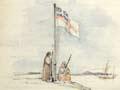
… The United Tribes’ flag (1834) can be seen as the first Māori flag, but … 1860s the government presented flags to Māori chiefs and tribes who had fought alongside colonial forces. The British …
Type: Story Page
… fishing rights, the Ministry of Fisheries and iwi (tribes) from around the country have worked to create … Taiapure are fishing areas intended to be managed by local tribes. They must be important for local Māori, and lie … had been established. Mātaitai are areas where local tribes manage all aspects of non-commercial fishing by …
Type: Story Page
… rūnanga and other institutions exercised control within tribes and subtribes. Chiefs enforced customary laws, assisted by selected … the police barracks, and take this experience back to their tribes. In 1846 resident magistrates replaced police …
Type: Story Page
… Before the European settlement of New Zealand, Māori tribes did not share an overarching national identity. The … Independence of New Zealand by the Confederation of United Tribes, and the 1834 choice of an ensign that became known …
Type: Story Page
… largest city. Many continue to associate with their tribes ‘back home’. However, in 2013, one in six people with … rise to more intermarriage between members of different tribes. In the larger towns and cities Māori met a wider …
Type: Story Page
Part of story: Urban Māori … They are free from the religious restrictions that many tribes associate with waka, and can be used by everyone – …
Type: Story Page
Part of story: Waka – canoes … coast Before Europeans arrived in New Zealand, Māori tribes of the Whangārei coast operated seafaring and trading … networks that reached from the territory of the Muriwhenua tribes in the far north, through Motu Kōkako (Hole in the …
Type: Story Page
… arrived around the 13th century. Survival A northern tribe, Ngātiwai, sees itself as kaitiaki (guardian) of … that kiore may be of cultural interest, and consult with tribes before carrying out eradication programmes. …
Type: Story Page
… (area) there were a variety of competing rights. Hapū (sub-tribes) had main or tūturu (permanent) villages near areas … were often given names. In the early 20th century Te Arawa tribes challenged the Crown’s claims to the beds of the …
Type: Story Page