… The Whangārei coast Before Europeans arrived in New Zealand, Māori tribes of the Whangārei coast operated … became part of a mountain summit. One day when out fishing Manaia hooked a fish by its anus. Taking this as a …
Type: Story Page
… Tasman. He and his men were the first Europeans to visit New Zealand, in 1642. Landforms and vegetation Though small, the … return to burrows on the park’s islands at night. Native fish, seals, and marine plants and animals are found along …
Type: Story Page
Part of story: National parks … motorway to Wiri encouraged industry and low-cost housing. New shopping centres sprang up at places like Māngere and … of 165 different ethnic groups makes South Auckland New Zealand’s most ethnically urban area. It also holds by far … Māngere and Ōtara Farming Fertile soils and good fishing created comfortable living conditions for Māori, who …
Type: Story Page
Part of story: Auckland places … taking soundings and putting down dredges and trawls. New Zealand waters were included in this amazing voyage. The … James Hector and Frederick Hutton described some of the fish collected there. The result of the project was the …
Type: Story Page
… belong to the Stictocarbo genus, which is found only in New Zealand. The birds are remarkable for their spotted plumage … travel up to 15 kilometres from the shore and take small fish and marine invertebrates. The oldest recorded age is 10 …
Type: Story Page
… long and weigh 1.1 kilograms. Crested grebes chase fish under water, and also take crustaceans and insects. … the Australasian crested grebe is found in Australia and New Zealand. Gone from the North Island, it now lives mainly on …
Type: Story Page
Part of story: Wetland birds … population: 1,794 Bluff (27 km south of Invercargill) is New Zealand’s southernmost town and Southland’s port. When … from 1986 to the mid-1990s. But Bluff remains home to a fishing fleet which harvests rock lobster and blue cod, and …
Type: Story Page
… In some contexts it can also refer to conger eels and other fish that look like eels. Tuna were an important food for … and turned into the freshwater eel. Tuna (freshwater eels) New Zealand has two native species of freshwater eel: The …
Type: Story Page
… limited to subsistence farming, grape-growing, quarrying, fishing and seafaring. In the 1880s a population increase … look into its mottled depths for a sign of the future. “A new kind of gold!” Stipan’s grandfather, old Dida Petar, the … introduced in 1881. The first Dalmatians in New Zealand probably arrived via the Californian and Australian …
Type: Story Page
Part of story: Dalmatians … and other large birds through over-exploitation led to a new paradigm in food production. The protein boom was over, … notes, ‘An all-year-round living could be wrested from New Zealand nature ... but it took immense effort and … in pōhā (containers made from bull kelp). Mātaitai – shellfish gathering Various shellfish such as pāua, pipi, …
Type: Story Page
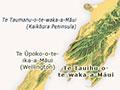
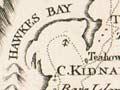
… hill country that stretches south to Cape Turnagain. Māui’s fish hook In Māori mythology, Cape Kidnappers is the hook of … them into suburbs. South of Hastings is heartland rural New Zealand. In contrast, the land north of Napier up to Wairoa …
Type: Story Page
… had a range of industries, and a number of well-known New Zealand firms are still based there. Industry and farming … locally. A plant near Rangiora manufactures particle board. Fishing Fishing fleets have worked out of both Lyttelton and …
Type: Story Page
… red coral ( Errina novaezelandiae ), which lives in New Zealand’s fiords and other southern localities. It has a … waters. They can be abundant and are major predators of fish larvae and small crustaceans. …
Type: Story Page
… New economic policies in the 1980s had a big impact on the Chathams. The New Zealand government became more sceptical about subsidising … generation, ports and airfield. The leasing of the annual fishing catch entitlement and investment in forestry became …
Type: Story Page
Part of story: Chatham Islands … Māori grievance into action and altered the course of New Zealand’s colonial trajectory. Son of Te Hāpua Matiu … of Muriwhenua, though the claimants opted to split fisheries issues from the wider claim in an effort to head …
Type: Biography
… However, as adults they show little resemblance to fish or other mobile backboned animals. Many settle … squirts Sea squirts are the best known of the tunicates. New Zealand has at least 166 species, some of which are …
Type: Story Page
… Untrustworthy trustee In December 1927 Andrew Josey, a fisherman in his 80s, was beaten to death by Southland … ā Te Wera and bays along the north-east coast. Minerals Newspapers featured frequent reports of mineral finds on … the time of the abolition of provincial government in New Zealand, but a county council was not set up until 1895. In …
Type: Story Page
… or common. He made tools and canoes out of Tāne (trees), he fished up Tangaroa (fish), and dug up Rongo (kūmara) and … war god in Taranaki. In tradition, he was brought to New Zealand by Turi, the captain of the Aotea waka (canoe). …
Type: Story Page
… Kupe was the first Polynesian to discover the islands of New Zealand. His journey there was triggered by difficulties with fishing in Hawaiki, his homeland. Apparently the problem was …
Type: Story Page
… Māori beliefs The Polynesians who arrived in New Zealand about 1300 came from societies where growing crops … foods in the birds and plants of the forest, and fish and shellfish, they also cultivated kūmara (sweet …
Type: Story Page