… Fifteen species of coarse fish (so named for their large, rough scales) have been introduced to New Zealand for aquariums or fishing. A few aquarium fish have … Coarse fish …
Type: Story Front
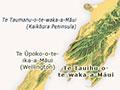
… transplanting Polynesian ancestral names and symbolism to New Zealand places taunaha (naming after body parts) to … New Zealand The North Island was called Te Ika-a-Māui (the fish of Māui) or Aotearoa, while the South Island was Te …
Type: Story Page
… In New Zealand, hoki ( Macruronus novaezelandiae ) are typically … tonnes annually. Hoki, also known as blue grenadier, is now New Zealand’s most valuable export fish. Ling ( Genypterus blacodes , belonging to the cusk eel … Fishing in the deep …
Type: Story Page
… Fly fishing involves different gear from spin fishing. Flies … Some were changed to suit local conditions. Distinct New Zealand patterns emerged, with their own colourful names – … Fly fishing …
Type: Story Page
… Māori have always had a great passion for fish and seafood, which was a major part of their … Such aspirations were generally fulfilled in that most New Zealanders could afford to eat large quantities of beef and … Fish and seafood …
Type: Story Page
… Fish Over 150 species of fish are known from New Zealand’s … Fish and marine mammals …
Type: Story Page
… was also important. But neither became established in New Zealand. The kurī (dog) and kiore (Pacific rat) were a poor … seal colonies being wiped out, except in the far south. Fishing Māori adapted their fishing gear and methods to suit … Adapting to New Zealand …
Type: Story Page
… gave names from the Māui mythological tradition to the New Zealand landscape. Māui is the trickster hero of Polynesian … from island to island over centuries of migration. Māui’s fish The most common tradition tells how Māui fished up land … Names from Polynesian mythology …
Type: Story Page
… Eels are New Zealand’s top native freshwater predators – no other species … There are three species, all from the Anguillidae family of fish: longfin eel ( Anguilla dieffenbachii ), found further … New Zealand eels …
Type: Story Page
… term used in many countries to describe small freshwater fish that are tender and edible. In New Zealand it describes the juvenile forms (around 4–5 … Whitebait in New Zealand …
Type: Story Page
… species again – perhaps more – are yet to be discovered. New Zealand biodiversity New Zealand’s beetle life is diverse – … all mammal species worldwide, or all New Zealand plant, fish, amphibian, reptile, bird and mammal species combined. … New Zealand’s beetles …
Type: Story Page
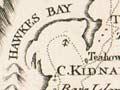
… Displacement A distinctive aspect of New Zealand place naming is the interplay of Māori and non-Māori … Many features which Māori had named, such as eel weirs or fishing grounds, were unfamiliar to Europeans, or were … Māori and Pākehā names …
Type: Story Page
Part of story: Place names … Three species breed around New Zealand’s coastline and on its temperate and subantarctic … trace their beginnings to a moment when some lobe-finned fish walked up the banks of a muddy estuary and the … New Zealand’s seals …
Type: Story Page
… New Zealand’s non-Māori place names tell the story of its settlement by Europeans and … South Island – perhaps He-mea-hī-nō-Māui (the things Māui fished up), and Te Wai Pounamu (greenstone waters). Stewart …
Type: Story Page
Part of story: Place names … New Zealand has a rich and diverse assemblage of squid and … Most squid are open-sea animals, although a few, like cuttlefish, spend their lives mainly on the sea floor. The vampire … Although they live far from shore, their presence in New Zealand waters is evident from the quantities of empty …
Type: Story Page
… Fish for food New Zealanders have long supplemented their … Easy pickings T. E. Donne spent over 35 years fishing in New Zealand. Here is one of his anecdotes: When residing at … Other recreational fishing …
Type: Story Page
… century Māori were participating in the major rituals of New Zealand life. They voted, had their own members of … minority, this tended to mean the swallowing of the smaller fish by the bigger. Māori sovereignty From the late 1960s … Bicultural New Zealand …
Type: Story Page
… Netting and hand lining New Zealand fishing in the late 1880s usually involved setting nets in … Fishing methods and boats …
Type: Story Page
… although their role had changed greatly and few people knew what acclimatisation was. In 1990, a government review of sports-fish and game-bird management changed the number of … fish and game councils – collectively, Fish & Game New Zealand. Structure Like its predecessors the acclimatisation …
Type: Story Page
Part of story: Acclimatisation … New Zealand is a land of lakes, often painted and photographed. Used widely for fishing and boating, they are also a source of water for … the world. The Maori word for lake is ‘roto’, and many lake names start with this. Some examples are: Rotoiti (small … New Zealand lakes …
Type: Story Page