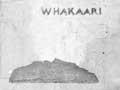
… of pigment Local geology and regional cultural diversity often influenced the way rock art was made, as well as its subject matter. Most South Island Māori rock art was painted in black carbon that was derived from soot then mixed …
Type: Story Page
… Godfrey Ross and his wife, Maretta Elizabeth Feiney. He attended Waiokaraka School, Thames, from 1915 to 1918, then … hair and a long, sharp nose, he held a succession of short-term jobs, mostly as a labourer, although he also had stints … baker and salesman. During the 1930s he accumulated 17 criminal convictions, mainly for theft, burglary, …
Type: Biography
… England, on 25 December 1835. She was the daughter of Elizabeth Dodd and Edward Allen, a businessman and … in 1861 and settled at Mount Albert in Auckland. Soon afterwards, the devoutly religious Annie Allen was asked by ex-missionary Eliza White to teach at the Wesleyan mission school at Kāwhia on the …
Type: Biography
… Specialisation, whether in separate hospitals or separate departments within general hospitals, became a feature of … exception was psychiatric hospitals, which were administered separately from the beginning. Wonder treatment In the …
Type: Story Page
… which employed up to 900 people on the fantasy blockbuster Avatar . Local extras and technicians were also employed on this production. But with … struggled in the 2010s. The Hobbit The hobbit: an unexpected journey (2012), a blockbuster adventure fantasy directed …
Type: Story Page
Part of story: Feature film … and around 1,400 back-country huts, bivouacs and shelters. About 1,000 of these huts are managed by the … marked by ‘blazes’ – axe or knife marks on tree trunks. Later, preserving jar lids were painted white and nailed to trees, and then white and red …
Type: Story Page
… William Webster was born in 1815 at Portland, Maine, in the United States, and arrived in New Zealand in March 1835. It has been … Webster, William …
Type: Biography
… housing Archaeological evidence from 14th-century sites in Palliser Bay, south Wairarapa, shows that Māori lived … Bay settlements were permanent, but groups also occupied temporary settlements as they moved from one seasonal … resource to the next, returning to a permanent base in winter. English explorers James Cook and Joseph Banks, visiting …
Type: Story Page
… with a population of just 100–120 birds, the elegant white heron or kōtuku ( Ardea modesta ) is nevertheless common … With a long, slender neck, yellow bill and thin legs, white herons grow to 92 centimetres in length and 900 grams in … breeding their bill darkens and a veil of fine feathers extends beyond the folded wings and tail, accentuating their …
Type: Story Page
… health surveys in Pākehā and Māori communities in Aotearoa New Zealand and in Cook Islands and Tokelau earned … as the founder of New Zealand epidemiology. Over time he extended his ethic of care and doctoring from cardiology and …
Type: Biography
… England, on 1 November 1831. He was the seventh of the thirteen children of John Atkinson and his wife, Elizabeth … Victorian England. His father earned his living as an architect and stonemason and brought up his children to be …
Type: Biography
… Great Barrier Island (Aotea) 2013 population: 927 Island lying 90 km north-east of … coast are five fiord-like harbour entrances, while the eastern side has white sandy beaches. Early settlement The island was visited by …
Type: Story Page
Part of story: Auckland places … around 1.2 metres long and weighing 5–6 kilograms. On the water, it appears all black with a bright red bill; however, in flight the bird shows wide white trailing wing margins. It has a bugle-like call, and … been regarded as introduced. However, numbers increased faster than expected, suggesting more birds arrived …
Type: Story Page
Part of story: Wetland birds … Often a mythological creation tradition is so compelling that … give people a way of looking at their world. These stories tell us about individuals acting in particular ways and … aspirations. Legendary heroes act as exemplars of human potential. By capturing the sun, entering the underworld, or …
Type: Story Page
… since 1991, residents of Māori descent were asked to indicate the tribe to which they were affiliated. The figures below show the number who indicated the Marutūahu tribes (including those who indicated more …
Type: Story Page
… have a fund of narratives about people and beings who existed long before the arrival of Polynesian settlers by canoe. … vessels had sails and outriggers, and some had two keels. After landing at various points along the coastline, the … made from the soil of the earth. Māui – the mythical character who ‘fished up’ the North Island, which is known as Te …
Type: Story Page
… The movement along the Alpine Fault has now separated the two areas by 500 kilometres, but the earlier overlap can be seen in the patterns of rock. The Southland Syncline The Southland … a colossal fold in the earth’s surface, is caused by tectonic activity. It reaches from the Tākitimu Mountains to …
Type: Story Page
… now REANNZ) can transmit data at speeds 1,000 times faster than current broadband. Through video streaming of … images and sound, REANNZ gives New Zealand researchers remote access to experiments involving large, high-cost … data from faultlines around the world. Its members are the tertiary education institutions, Crown research institutes …
Type: Story Page
… Tenure review Many of the remaining tussock grasslands of … to farmers. In the 1990s, the government began a voluntary tenure review process for this leasehold land. Farmers can negotiate freehold ownership of some parts of their runs – usually …
Type: Story Page
Part of story: Grasslands … the military to work in essential industries, which were often located in cities. Young Māori women were directed to work in factories. The Māori Affairs Department … Māori migrate to the cities …
Type: Story Page