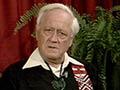
… (1974), he argued forcefully that the Crown had committed injustices against Māori under the terms of Te Tiriti o Waitangi which had a lasting and …
Type: Biography
… going far enough, restricting the tino rangatiratanga guaranteed to Māori in te Tiriti o Waitangi (the Treaty of Waitangi). Some have … Continuing debates …
Type: Story Page
Part of story: Biculturalism … Lakes formed by glaciation mark Fiordland’s eastern boundary, just as sounds (fiords), open to the ocean, mark its west. The lakes are effectively freshwater fiords. From north to south they are Te Anau, Manapōuri, Monowai, Hauroko and Poteriteri. Lake Te …
Type: Story Page
… Local government From 1846 to 1852 Taranaki was administered from Auckland as part of the province of New Ulster. The New Zealand Constitution Act 1852 then established …
Type: Story Page
Part of story: Taranaki region … piharau or lamprey ( Geotria australis ) lives in fresh water and the sea. Piharau resemble eels, but have no bones. … up and taken ashore. As piharau worked their way up waterfalls, they were knocked off with a fern or nīkau leaf … and piharau Piharau are mentioned in the proverb ‘Ka kitea a Matariki, ka rere te korokoro’ (when Matariki is seen, …
Type: Story Page
… with Ranginui, the sky, was born in the darkness known as Te Pō. Papatūānuku and Ranginui had several children while remaining in an embrace. The children grew frustrated with living in darkness between their parents, and conspired to separate them by thrusting Ranginui above and Papatūānuku below. …
Type: Story Page
… Establishment Jean Baptiste Pompallier, the first Catholic bishop in New Zealand, … with other Catholic priests in 1838 and first celebrated mass at Tōtara Point in the Hokianga. As with other … local Māori converts and their descendants remained committed to their early choice of faith. In 1839 seven priests of …
Type: Story Page
… Bay of Plenty, with its mainly Māori population, was limited in the 1840s and 1850s. The outbreak of conflict between … roles, and in 1886 to a regular Police Force. Magistrates at Tauranga, Maketū and Ōpōtiki reported on Māori affairs to the Native Department, as well as …
Type: Story Page
… large subclass of waiata. In 1975 Arapeta Marukitipua Awatere explored the features of different types of haka and their uses. He noted, ‘Each class and sub-class has its own convention: its … mind, there and then, an imagined, symbolic one.’ 1 Awatere gave a list of five haka types distinguished according …
Type: Story Page
… sauvignon and riesling – at its experimental farm at Te Kauwhata, Waikato. The vines grew well and a small winery … 1902, Bragato improved the research station and vineyard at Te Kauwhata, and another at Arataki, Hawke’s Bay, in 1903. Field days attracted winemakers keen to sample the station’s wine and to …
Type: Story Page
… sacred kingfisher – is iridescent blue, green, buff and white, with a disproportionately hefty bill. Kingfishers sit on perches above tidal flats or pasture. When their sharp eyes detect movement, they dart down to snatch the prey. They carry …
Type: Story Page
Part of story: Wetland birds … have an important place in Māori tradition. Several tribes tell of the arrival of their ancestor, Paikea, on the back of a whale. Although there is debate as to whether Māori hunted whales, it is clear they regarded stranded whales as a …
Type: Story Page
… Further intermarriage From Kaiapoi, Ngāi Tahu incorporated the southern sections of Ngāti Māmoe and Waitaha, who … occasional bloodshed, piecemeal occupation and intermarriage rather than steady conquest. Kinship connections …
Type: Story Page
… Auckland Teachers’ College The struggle to establish Māori studies in universities was matched by a similar struggle in teachers’ colleges. The first to make a move was Auckland Teachers’ College, with the appointment of Harry Lambert in … Teachers’ colleges and wānanga …
Type: Story Page
… in exile there from 1864 until the early 1880s, the remote King Country (also called Te Rohe Pōtae) was largely off-limits to Europeans until the 1880s. After the Ngāti Maniapoto tribe agreed to a survey for the …
Type: Story Front
… a short human past, New Zealand has a rich tradition of telling its history. The Māori way of thinking has been … The founding waka (canoes) and historical battles are often referenced. History counts When Māui Pōmare was trying …
Type: Story Page
… with other Pacific islands led to a renewal of Māori interest in the late 19th and early 20th centuries. In a 1929 letter, Taranaki …
Type: Story Page
… Mana and tapu Moko represented a person’s mana (status), and their importance is shown … tā moko for their services. This mana is also highlighted by the reproduction of chiefs’ moko as signatures when … between the mana and tapu (sacredness) of moko indicates the status associated with the art form, and its …
Type: Story Page
… through karanga (calls), whaikōrero (speeches), song and tears. This remembering of those who have passed away serves … by an undertaker and displayed in an open coffin. A tangi often takes three days and is held on a marae, but with the …
Type: Story Page
… When Māori looked up at the sky they saw the sun god, Te Rā, whose journey was slowed by the legendary Māui. At …
Type: Story Front