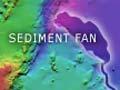
… New Zealand continent, Zealandia. In the north, sections of ocean floor of the Pacific Plate began to sink beneath … began to erode and shed more sediment into the surrounding ocean. Layers of soft, grey mudstones and fine sandstones …
Type: Story Page
… kidney-shaped glands on either side of their heads – the currents can be strong enough to knock down an adult person. … above and white underneath. They are found on or near the ocean floor, at depths from 5 metres to more than 1,150 … tails, but are essentially harmless. They inhabit the ocean floor at depths from 10 to 1,500 metres. Rough skates …
Type: Story Page
Part of story: Sharks and rays … ecosystems have evolved in isolation, cut off by deep ocean basins, currents, and climate zones such as tropical or polar …
Type: Story Page
Part of story: Marine invaders … have a remarkable life cycle, which begins and ends in the ocean. Spawning has never been observed. Life cycle Adult … at the surface and become leaf-shaped larvae, floating on ocean currents towards the coast. They have teeth, but it is not …
Type: Story Page
… navigating by making use of prevailing winds and ocean currents, and observing the stars. The navigator credited in …
Type: Story Page
… rivers carry the grains of titanomagnetite to the coast. Ocean currents then move the minerals along the coastline, and the …
Type: Story Page
Part of story: Iron and steel … aeromagnetic maps at a 1:250,000 scale, and maps of the oceans are also available. Because rocks lose their …
Type: Story Page
Part of story: Magnetic field … plants and animals progressively as it sank into the ocean. Around 30 million years ago, the land area was …
Type: Story Page
… man would usually steer. However, on voyages in the open ocean there could be up to four – two at the stern, and two … an anchor, was used in sounding, and determining the currents. Stones were made into anchors by various methods. …
Type: Story Page
Part of story: Waka – canoes … long coastline acts like a net. Flotsam and jetsam borne on ocean currents fetch up on our shores. Flotsam is wreckage found … Objects from the Tasman Sea, the Pacific, the Southern Ocean or even further afield wash up on New Zealand shores. …
Type: Story Page
Part of story: Beachcombing … of the land’). Rongomaiwhenua had a brother, Rongomaitere (‘ocean god’), who according to tradition travelled to New …
Type: Story Page
… to steep, shingle boulder beaches or rocky coasts. Local oceanic conditions may account for strandings. Golden Bay and Hawke Bay have currents that appear to explain strandings there. There are …
Type: Story Page
… Pacific, and are plentiful along the boundaries between currents. Those that reach New Zealand waters are probably … fishery. Skipjack Skipjack tuna occur in all the world’s oceans, with their southern limit in New Zealand waters. …
Type: Story Page
Part of story: Oceanic fish … recent arrivals, carried around the southern hemisphere on oceanic currents. Some endemic groups such as the pencil galaxias …
Type: Story Page
Part of story: Freshwater fish … the Kaipara and the Manukau. To the east, the subtropical currents of the Pacific Ocean give the Hauraki Gulf the warmest coastal waters in …
Type: Story Page
Part of story: Auckland region … evoked by vast, rugged, dark things, including mountains, oceans, and natural spectacles like volcanoes. Pretty as a …
Type: Story Page
… Ring of Fire – a term used for the rim of the Pacific Ocean, which has earthquakes and active volcanoes. Volcanic …
Type: Story Page
Part of story: Ecoregions … ‘Tangaroa whakamautai’, a journey into Māori legend and the ocean. The song was included in her third studio album, …
Type: Story Page
… been built out from the mountains to form a plain. Ocean currents have added to the coastline by depositing sediment, …
Type: Story Page
… Changes in colour, the presence of certain fish species, ocean currents, the ‘scent of land' and the appearance of …
Type: Story Page