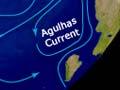
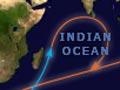
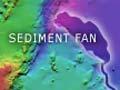
… Surfers and seafarers know that the oceans surrounding New Zealand are ever changing. Driven by … Ocean currents and tides …
Type: Story Front
… the east New Zealand lies in the path of eastward-flowing currents, which are driven by winds that blow across the South Pacific Ocean. These winds – the south-east trades to the north, and … gyre (giant circular current on the surface of the ocean). On the South Island’s West Coast, the Westland …
Type: Story Page
… visited New Zealand waters, probing the unseen depths of an ocean they had little understanding of. They were constrained by a cursory knowledge of the major ocean currents, with only the most rudimentary instruments at … Measuring the ocean …
Type: Story Page
… Oceans at risk Although the 1982 United Nations Convention … bodies have achieved much. But the state of the world’s oceans continues to deteriorate. The three greatest threats … response Joining in the effort to protect the world’s oceans, New Zealand has: participated in global efforts to …
Type: Story Page
Part of story: Law of the sea … Oceanic fish are those species that are found some distance … refer to ‘blue-water sailing’. The water in the open ocean is dark blue because it is very deep, and there is … Migrating to specific destinations, or swept by the currents, they are the most widely distributed fish in the …
Type: Story Page
Part of story: Oceanic fish … Almost the entire ocean floor is covered with different types of sediment: … and slope. Some is carried further offshore by wind and ocean currents. Sediment is also deposited through flows of mud …
Type: Story Page
… Swept by strong ocean currents and waves of sand or gravel, and shaken by earthquakes, the ocean floor around New Zealand is a hostile place. …
Type: Story Front
… crossing points between land and sea, through which currents and tides flow. Fiordland – ocean stratification An extreme example of ocean stratification is found in Fiordland. A remarkably …
Type: Story Page
… that are many kilometres in size, such as storms and large oceanic eddies. Upwelling Because of the earth's rotation, … blow along the coast with the shore to the right generate currents that drag surface water offshore. The near-shore … the surface, the nutrient-rich waters cause an increase in ocean productivity (the growth of microscopic marine …
Type: Story Page
… almost 1% of all the sand and mud entering the world’s oceans. This outflow is caused by rapid uplift of the … off the eastern North Island is swamped with mud because currents are relatively weak and the supply of sediment from … Hikurangi Plateau, then onto the deep Pacific Ocean floor. These currents overflow the channel spreading …
Type: Story Page
… of measuring and describing the physical features of oceans, lakes and other waterways. Historically, official … anchorages. Modern marine charts may also show tidal and ocean currents, water properties such as temperature and salt …
Type: Story Page
… world standards. The tidal range is 1–2 metres, and tidal currents are generally about 2 kilometres per hour (1 knot). … driven by the gravitational pull of the moon and sun on the ocean. The moon has the most influence as it is the closest … earth acts like a centrifuge, causing a second bulge in the ocean opposite to the moon. When the sun, moon and earth …
Type: Story Page
… and its offshore islands began to accumulate in the ocean. Torlesse greywackes Greywacke forms the mountain … of debate until the 1960s, when exploration of the deep ocean floors began. Large fans of sediment were discovered … intermittently cascaded down the canyons as turbidity currents – soupy mixtures of sediment and water – spreading …
Type: Story Page
… means that it is buffeted by prevailing westerly storms, ocean swells and currents. In addition, it lies astride one of the world’s … have been around Cook Strait, where storms and strong currents are funnelled between the North and South islands. …
Type: Story Page
… Coastal erosion is the retreat of the shoreline due to water currents, waves and wind. It is a natural process that can … shore (intermediate beaches). Weather patterns Changes in ocean and atmospheric circulation in the Pacific Ocean (such as El Niño, when warm ocean waters spread across …
Type: Story Page
Part of story: Coastal erosion … waste, often through short seabed pipelines, into the ocean. Except in a few places where ocean currents carried the effluent away, this replaced one health …
Type: Story Page
… For millennia the deep ocean, beyond human reach, was imagined to be populated with … word abyss (meaning bottomless) is used to describe the ocean’s apparently infinite depths. In 1521 the Portuguese … life in the depths was not possible because there were no currents or temperature shifts, and hence no oxygen exchange …
Type: Story Page
… dumped, indicating that the sea floor was swept by strong currents. Pantin’s study showed that the proposed cable … the world by a web of fragile cables. These are laid across oceans that are typically 5 kilometres deep and studded with … of carrying huge amounts of data have been laid along the ocean floor. They stretch from near Auckland to Sydney, and …
Type: Story Page
… All life in the open ocean ultimately depends on the growth of microscopic … contractions of the bell. They are also carried along by ocean currents in the same way that parachutes are carried by the …
Type: Story Page
Part of story: Open ocean … 1 A temperate climate As a small land mass surrounded by oceans, New Zealand enjoys a temperate maritime climate. … Zealand’s climate are the prevailing winds, the surrounding oceans, and the country’s mountain ranges. The wind and the … the tropics every day and is then carried by wind and ocean currents to the cold, energy-deficient polar regions. …
Type: Story Page