

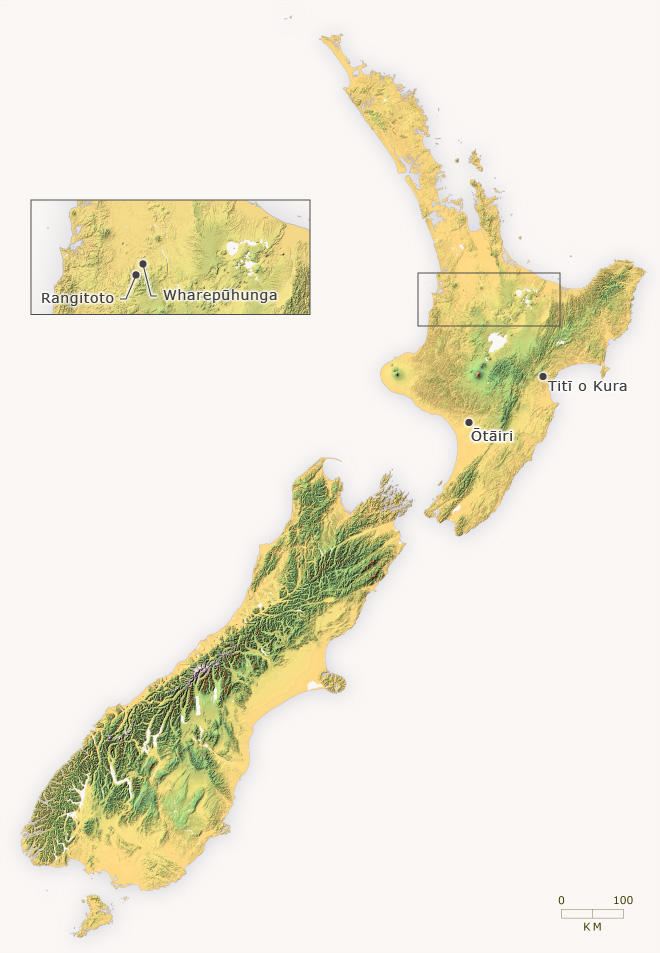


At the historic 1856 hui at Pūkawa, Lake Taupō, at which Pōtatau Te Wherowhero was selected as Māori king, the many rangatira present conducted a ceremony to transfer to him their mana. They gathered around a tall flagstaff which had long plaited ropes dangling from it. Iwikau Te Heuheu, the paramount rangatira of Ngāti Tūwharetoa and the host on this occasion, explained that the flagstaff represented his sacred mountain, Tongariro, while each rope represented a mountain sacred to the other iwi present.
Click on this map to see images of many of the maunga sacred to individual iwi Māori.
Using this item
Te Ara - The Encyclopedia of New Zealand
This item has been provided for private study purposes (such as school projects, family and local history research) and any published reproduction (print or electronic) may infringe copyright law. It is the responsibility of the user of any material to obtain clearance from the copyright holder.
Comments
14 August 2020