




New Zealand loses its attraction
The years of the third Labour government (1972–75) saw an influx of immigrants, especially from the Pacific. But there was little chance to implement the non-racist principles of the 1974 immigration policy review before Robert Muldoon became the head of a National government after an election campaign that included criticism of Pacific immigration. Guidelines for permanent entry were tightened, and there was a controversial campaign to find Pacific Island ‘overstayers’ in dawn raids. Pacific Islanders were not the only targets of public opprobrium – anti-British ‘bash a Pom’ T-shirts appeared in Auckland.
Such attitudes, or more likely New Zealand’s poor economic performance, sent migration flows into reverse. Fewer immigrants arrived and New Zealanders flocked across the Tasman. Between 1977 and 1990 there were only two years when more people arrived than left. The net loss of more than 40,000 in 1979 was the largest in New Zealand’s history.
Pacific Islanders
Yet there were also significant influxes during this period. Migrants continued to arrive from the Pacific Islands, especially Samoa. By 1991 there were 85,000 people of Samoan ethnicity in New Zealand, about half of whom were immigrants and half New Zealand-born. Cook Islands and Niuean migration tailed off, but Tongans came in large numbers during the 1980s. Many Pacific Islanders came to join families, forming settlements in Auckland and Porirua with strong ties to community and church. There was also a significant migration of Indo-Fijians after the two anti-Indian coups led by Colonel Sitiveni Rabuka in 1987. Further afield, political tensions in Sri Lanka encouraged some people to come to New Zealand.
South-East Asians
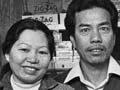
The collapse of American-backed régimes in Cambodia, South Vietnam and Laos in 1975 saw many flee to Thailand. Eventually the New Zealand government accepted some of these ‘boat people’ as refugees. From 1977 there was a steady stream which eventually brought in more than 1,000 Laotians, and more than 4,000 each from South Vietnam and Cambodia. After six weeks in Auckland’s Māngere refugee reception centre, the new arrivals were normally ‘pepper potted’ – scattered across the community to hasten assimilation. This approach was not always successful and community members often came together for mutual support, especially in Auckland, Hamilton and Wellington. Many were employed as machine operators.
Kiwi necessities
When South-East Asian refugees arrived in New Zealand they were each given a bag containing a plastic cup, a cake of soap, a toothbrush, a tube of toothpaste, two singlets and two pairs of underpants. Their first breakfast was baked beans.
1986 immigration review
In 1986 another Labour government embarked on a review of immigration. Once more, legislation widened the selection of immigrants on the basis of personal merit rather than national or ethnic origin. The Immigration Act 1987 emphasised skills needed in the domestic economy, the contribution which could be made by business migrants bringing capital, the humanitarian grounds for reuniting families, and a commitment to accept 800 refugees a year.
In 1991 the new National government introduced a points system based on age, skills, education and capital; criteria which once again were blind to ethnicity.