

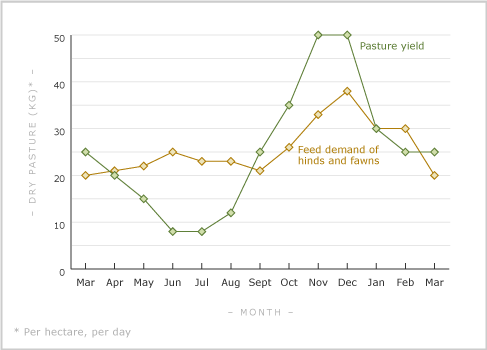
Pasture production typically peaks in spring, then declines through summer and autumn and reaches a mid-winter low. Hinds’ and fawns’ demand for feed is more constant, although it also reaches a peak in late spring or early summer. The surplus pasture in spring must be converted into hay or silage, to cover the shortage in winter.
Using this item
Te Ara - The Encyclopedia of New Zealand
Source: Alistair Nicol, ‘Pastures and forages for deer growth.’ In The nutrition and management of deer on grazing systems, proceedings of a New Zealand Grassland Association (inc) symposium held at Lincoln University, 8–9 November 2002, edited by M. J. Casey. Wellington: New Zealand Grassland Association, 2003, p. 36.
This item has been provided for private study purposes (such as school projects, family and local history research) and any published reproduction (print or electronic) may infringe copyright law. It is the responsibility of the user of any material to obtain clearance from the copyright holder.