

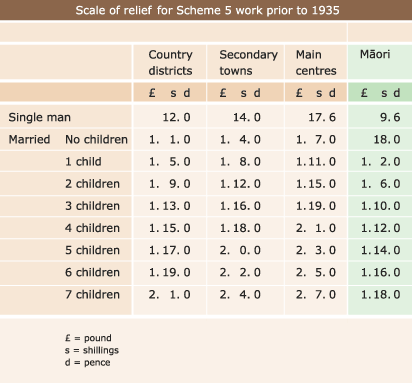
Although Māori became British subjects on the signing of the Treaty of Waitangi in 1840, and therefore subsequently New Zealand citizens, they did not always enjoy the rights and privileges to which they were entitled. The table shows the smaller relief payments made to Māori compared to Pākehā under a government scheme during the depression of the 1930s. The justification was that Māori could provide for themselves from their subsistence land holdings.
Using this item
Te Ara - The Encyclopedia of New Zealand
Source: Claudia Orange, ‘A kind of equality: labour and the Māori people 1935–1949.’ MA thesis, University of Auckland, 1977, p. 63
This item has been provided for private study purposes (such as school projects, family and local history research) and any published reproduction (print or electronic) may infringe copyright law. It is the responsibility of the user of any material to obtain clearance from the copyright holder.