

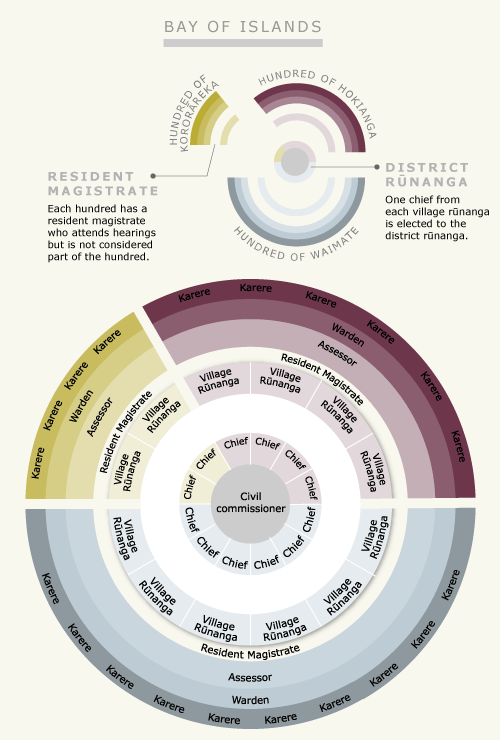
This graphic depicts the complicated and rarely used system of partial self-government for Māori introduced by Governor George Grey in 1861. It proposed to place a British commissioner in charge of each of 20 Māori districts (one of these is represented by the larger circle). Each district was subdivided into several 'hundreds' (an ancient English term for a local area), made up of a number of villages. Each hundred appointed its own assessors (Māori magistrates), warden and karere (constables). They met to decide cases involving Māori, together with a British resident magistrate.
Using this item
Te Ara - The Encyclopedia of New Zealand
Puna kōrero: Lindsay Cox, Kotahitanga: the search for Maori political unity. Auckland: Oxford University Press, 1993.
This item has been provided for private study purposes (such as school projects, family and local history research) and any published reproduction (print or electronic) may infringe copyright law. It is the responsibility of the user of any material to obtain clearance from the copyright holder.