

Content warning: This page contains information that readers may find confronting or distressing, including references to the sexual abuse of children.
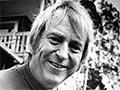
Commune leader Bert Potter was one of late-twentieth-century New Zealand’s most controversial public figures. The businessman-turned-guru developed a radical therapeutic programme which promised participants a happier life through cathartic purging of personal problems and the dissolution of interpersonal barriers. He channelled his success as a counsellor into the creation of Centrepoint, an intentional community in Auckland, which he led according to the principles he had developed through his psychotherapy. What began as a shared utopian dream of a better society ended in multiple convictions for sexual abuse and drug offences, with Potter widely regarded as a cult leader who had manipulated and exploited his followers.
Early life and military service
Herbert Thomas Potter was born in Christchurch on 20 May 1925, the elder of two sons born to Fanny Duckmanton and her husband, storeman Richard John (Dick) Potter. He spent his primary school years at North Beach, New Brighton, before moving to Richmond (Christchurch) in his teens.
Potter attended Christchurch Technical College for three years before enlisting for active service in the Royal New Zealand Air Force in September 1943. The war ended before he saw combat, and he rejoined his parents, who were now living in Dunedin. He spent a year as a builder’s labourer and 18 months as a psychiatric nurse near Nelson. In April 1947 he enlisted in Jayforce, the occupation army in Japan. He served in brigade intelligence in Yamaguchi prefecture until late 1948.
First marriage, teaching and business
Potter spent 1949 as a clerk in the Dunedin office of the Labour Department, in return for two free years of teacher training at Dunedin Training College (1950–1). There he met Euneta Leitea Murdoch, whom he married in Dunedin on 30 November 1951. The couple had two children together and adopted two more.
Potter spent two years teaching in Dunedin before the couple moved to Bay of Plenty in 1954. He taught at Pahoia and Katikati schools, worked briefly as a self-employed rotary hoe operator, and bought land at Katikati with the idea of starting a farm.
In 1956 the couple moved to Auckland, where Potter spent two years selling Electrolux vacuum cleaners door-to-door. In 1958 he launched his own business, Carpet Care Ltd, which fumigated insect-infested carpets. His focus gradually shifted to eradicating wood-boring insects in household joinery, and he changed his company’s name to Pestfree Service (NZ) Ltd in 1965. He opened branches in Whangārei, Wellington and Christchurch in 1966, and others soon followed in Hamilton, Tauranga, New Plymouth, Palmerston North and Dunedin. He had become successful and wealthy.
Move into psychotherapy
Potter’s business expansion was fuelled by sales techniques he learnt at a Dale Carnegie training course, which taught how to win customers through empathetic interactions, avoiding conflict and adopting a positive outlook. The course fascinated him, and he began teaching its techniques to others. By 1968 he was national manager for the programme and leading seminars around the country.
Potter formed an easy rapport with his pupils, who sought his advice on personal problems unrelated to the course. He had long regarded himself as a natural leader, someone with an unusually clear understanding of human nature who took nothing for granted and could help others to lead more fulfilling lives. He grew interested in counselling and believed he could help people failed by traditional psychotherapy.
In 1969, Potter read of a new form of psychotherapy being taught at the Esalen Institute in California. Esalen was the leading exponent of the Human Potential Movement, which used psychotherapy to help individuals shed their personal problems and become the best versions of themselves. Esalen used intensive group therapy sessions, known as encounter groups, to free people from constricting social expectations and allow them to emerge more insightful, authentic and spiritual. Potter spent three months at Esalen from late 1971 to experience the therapy at first hand; he was impressed by the ‘totally accepting atmosphere’ he experienced there.1
On his return to New Zealand, Potter decided to sell his business and dedicate himself to counselling and psychotherapy. In June 1972 he created the Shoreline Human Awareness Trust to run Esalen-inspired group therapy sessions from his Campbells Bay home, in collaboration with several like-minded counsellors. He presided over intense seven-to-nine-day live-in encounter groups, using rhythmic physical activities, deep massage, cathartic purging of trauma, confrontational honesty, sexual experimentation and group nudity to help break down inhibiting social taboos. The objective was a happier, more open and loving self, free from negativity and anxiety. It was a radical programme, at odds with the sober conventions of mainstream counselling and psychotherapy, and unsupported by either traditional training or links to professional mental health bodies.
Many attendees were impressed by Potter’s startling directness and intuitive, penetrating insights into their personalities and problems. Some wished to remain close to him to continue their spiritual growth. In 1975, after separating from Euneta, Potter moved to a large house in Gillies Avenue, Epsom, where he lived communally with former encounter group members.
In 1976 Potter visited the ashram of guru Bhagwan Shree Rajneesh, in Pune, India, where he saw how a charismatic leader could command the devotion of a large body of people who chose to live together under his direction. Potter identified closely with Rajneesh: they were both men of unwavering self-certainty, and ideally suited, Potter believed, to lead others to personal and spiritual growth.
Inspired by Rajneesh, Potter commenced weekly meetings at his home to foster ongoing contact with former group participants through inspirational talks and therapeutic exercises. He invited them to help him establish a Rajneesh-style therapeutic and spiritual commune (intentional community) in which they could live by the liberating principles of Potter’s therapy and forge an island of freedom and contentment in a hostile world.
By late 1977 the nucleus of a community had gathered around Potter, mostly young idealists and spiritual seekers, some with experience of other intentional communities. They pooled their resources to buy a 28-hectare bush property at Albany, on Auckland’s North Shore, where they could live together with Potter as their ‘Spiritual Leader’. They named their community ‘Centrepoint’.
Developing Centrepoint
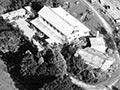
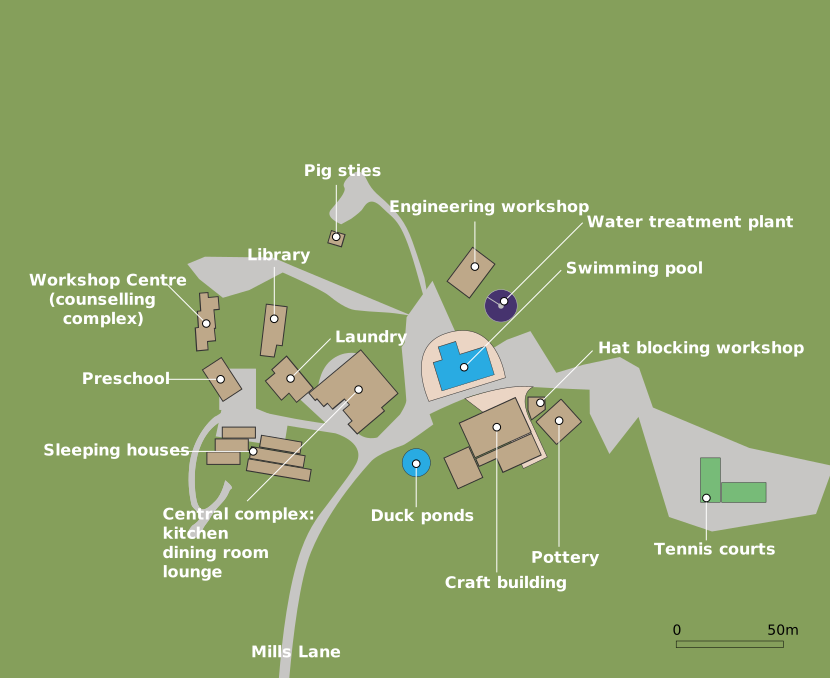
The first group of 25 adults and 17 children arrived at the Albany property in January 1978 and set to work clearing and developing the site; it would eventually accommodate an extensive complex of sleeping, dining, recreational, vocational and therapy buildings, along with vegetable gardens, an orchard, a tree nursery and a working farm. The ultimate ambition was economic self-sufficiency, and by 1989 on-site businesses were generating about 90 per cent of Centrepoint’s income. The small, idealistic, tight-knit community of the early years grew well beyond initial expectations; Centrepoint soon became a refuge for those in need, reaching a peak population of 275 in 1991.
Bert Potter rapidly established himself as unchallenged leader and guiding force, and those who disagreed with his vision soon left. He required his followers to surrender all their property to the community, reflecting a total commitment to the group, to him as guru, and to a life of authenticity and emotional and physical intimacy.
Potter taught his followers to strive for emotional honesty by breaking down the barriers between them: Centrepoint members therefore walked around naked, used open, communal toilets and showers, wore communally owned clothes, and slept in large, shared dormitories. Sex was both visible and ubiquitous, and Potter strongly encouraged his followers to open their relationships to sex with others as a path to spiritual growth. The therapy practiced at Centrepoint included sex between participants, and between participants and therapists.
The burdens of daily life, such as earning money and managing children, were shared. Members made day-to-day decisions communally, though Potter had ultimate authority, with the power to veto any decision and to admit new members. Disagreements were addressed openly and directly, and births and marriages were community events. In an environment without absolute rules, and with the expectation of absolute freedom, every individual was held to be responsible for their choices and actions.
Potter, like many residents, had a primary romantic relationship alongside sexual liaisons with others. He married teacher and commune member Margaret Lydia Maxwell (Margie) Smith, a woman 25 years his junior, in Takapuna on 25 July 1980. They had three children together.
Control, coercion and the sexual abuse of children
Centrepoint attracted public controversy from its earliest days. A commune member who was linked romantically to Potter died by suicide in November 1980, shortly after a television documentary presented the public with a frank portrayal of the unconventional community on the fringe of suburban Auckland. These events catapulted Centrepoint into public consciousness. Its ‘sex guru’ leader emerged as a national figure, a man who described himself as ‘God’, compared himself to Christ and the Buddha, and presented Centrepoint as a bold social experiment intent on creating a better society.2
Potter’s critics regarded Centrepoint as a dangerous cult, led by a sinister and manipulative guru who exerted hypnotic control over followers who surrendered their better judgement and moral principles to follow him unquestioningly. To his detractors, the therapeutic techniques which underpinned Potter’s leadership were harmful and destructive, enabling him to control people rather than help them. Disenchanted members regarded Centrepoint as a place of extreme, inexorable social pressure rather than freedom, a place where those who accepted Potter’s teachings were rewarded and those who questioned them were bullied and humiliated.
The sexualisation of Centrepoint’s children would prove the most controversial aspect of community life. In keeping with the community’s emphasis on open sexuality, Potter taught that children should be raised with ‘full sexual knowledge’, both theoretical and practical, moving ‘from birth through to adolescence having sexual experience appropriate to their own level.’ He argued that the moral implications of such questions were a matter for the individual conscience and could not be determined by law or social convention.3
As a result, some Centrepoint adults initiated sexual contact with children, encounters Potter framed as gentle initiations into sexuality under the guidance of an experienced adult. Children commonly first had sex between the ages of 11 and 13, and felt pressure to have sex with adults. The commune’s culture of sexual openness encouraged and rewarded promiscuity, and treated the wish to limit sexual interactions as evidence of unhealthy inhibition needing correction through therapy.
Though some adults were supportive and protective, and not all children were sexually abused, Centrepoint children were nonetheless exposed to overt and pervasive adult sexuality from an early age and socialised to regard it as a normal part of daily interactions. They grew up in a minimally supervised environment where abuse could easily occur and be rationalised, to some extent, by the abusers.
Centrepoint challenged
A group of Centrepoint’s Albany neighbours grew uneasy with the controversial community which had appeared in their midst, and resisted its efforts to expand. Takapuna City Council was sympathetic to the objectors, and rejected a series of Centrepoint planning applications between 1978 and 1985. A former Centrepoint member joined the objectors in October 1981, alleging at a council hearing that children as young as 18 months were being sexually abused by Centrepoint members, including Potter. Police investigated the claims but were unable to substantiate them when, at Potter’s request, Centrepoint parents refused to allow police to interview their children. The allegations were repeated at subsequent council hearings, but no further action was taken.
Takapuna City Council and the objectors secured a victory in December 1983, when the council threatened to withdraw all planning permissions unless Centrepoint reduced its numbers from 120 to 60. Potter insisted the community remain united, and the group spent the next 18 months shifting between factories, woolstores, a marae and a house in Glenfield, before sleeping in buses. In June 1985 the council finally granted Centrepoint the right to have 224 residents at the Albany property, recognised it as a religious institution for planning purposes, and granted it permission to expand its facilities.
Drug and sexual abuse prosecutions
The return to Albany marked the end of Centrepoint’s pioneering phase, and the commune entered a more settled period. In 1987, however, members appointed a committee to manage the commune’s business affairs after sustaining serious losses under Potter’s financial stewardship. A resentful Potter withdrew from active management and stopped leading therapy; in March 1988 he shifted out of the communal sleeping quarters and into a separate house.
Freed of practical concerns, Potter moved to shake his followers out of domestic complacency and persuade them to recommit themselves to radical personal growth. To encourage this, he introduced the illegal hallucinogenic drugs MDMA (ecstasy) and LSD into the commune as therapeutic tools to help people overcome their problems; he oversaw numerous drug-taking sessions, some with individuals and some with groups, including families with children. On one occasion, in late 1988, around 150 members took MDMA together at his instigation. Police subsequently concluded that several commune members manufactured and sold MDMA from Centrepoint between 1988 and 1992. Some members believed Potter used drugs as a tool to regain control of his followers, or as a means of breaking down young women’s resistance to his sexual overtures.
Tipped off by former community members, police raided Centrepoint in September 1989. They seized supply quantities of both MDMA and LSD, including 493 LSD tablets found in Potter’s kitchen cupboard. He was convicted on drug charges in March 1990, and sentenced to 3½ years in jail; two years were added to his sentence in 1993 for conspiring to sell MDMA. In February 1994 he was sentenced to an additional four months for perjuring himself in the 1990 trial, together with several Centrepoint members who had testified on his behalf.
In May 1991, following a second raid, police charged a number of Centrepoint members, including Potter, his wife and his eldest son, with sex crimes against girls under the age of 16 between 1978 and 1985. Eleven were convicted over the following four years, with nine receiving prison sentences.
In an October 1992 trial, five young women testified that Potter had coerced them into sexual activities between the ages of three and 15. The complainants and witnesses alleged that Potter used his position as spiritual leader to present such encounters as therapeutic, or as efforts to help the girls overcome inhibitions which prevented them from achieving spiritual enlightenment. The women described these experiences as traumatic and characterised Potter as a manipulative, self-serving sexual predator.
Potter pleaded not guilty to charges of indecent assault, but nonetheless accepted that the alleged sex acts with girls aged between 12 and 16 had probably occurred. He insisted that all such interactions were consensual and denied any sexual contact with girls under the age of 12. He defiantly turned the blame back onto his accusers, who, he insisted, had fallen prey to public hysteria about sexual abuse under the influence of bad therapists.
The jury found him guilty on 13 charges. In sentencing him to 7½ years in prison, Justice Peter Blanchard questioned whether he ‘had very little self insight’ or was just ‘an evil and hypocritical man.’4
Later life
During his incarceration, Potter tried to remain connected to his followers through community letters and a book summarising his teachings, Living and loving (1993). Membership numbers had plummeted to 60 by the late 1990s, as most members grew disillusioned with Potter and the failure of his utopian dream. This left the community divided and financially precarious. Litigation between the factions and a commission of inquiry into Centrepoint’s management prompted the attorney-general to appoint the Public Trust to manage Centrepoint’s affairs in 1997.
Potter returned to Centrepoint on his release from prison in March 1999, unrepentant and still convinced of his right to rule. In March 2000, after a year of controversy, the anti-Potter factions reluctantly agreed to pay the guru, his 11 remaining adult supporters and their children $49,200 each to permanently leave the commune. Centrepoint was closed and its remaining assets were dedicated to supporting ‘persons who have been disadvantaged by cults and/or spiritual communities and, in particular, past residents of the Centrepoint community … and their children.’5
Bert Potter spent his remaining years alone in pensioner flats in and around Auckland; Margie had divorced him in 1995. He died at Middlemore Hospital on 6 May 2012, aged 86, survived by his seven children.
Whatever he had achieved as a therapist, community leader or social critic, Potter died reviled and disgraced in the eyes of all but his most ardent followers. His actions as Centrepoint leader, and his unwillingness to accept responsibility for his crimes, caused lasting harm to his former followers, none more so than the children who had been swept up in their parents’ bold bid for a better, freer life.
- Quoted in L. Oakes. Inside Centrepoint: the story of a New Zealand community. Auckland, 1986: 20. Back
- Truth, 4 October 1981. Back
- Centrepoint 7, December 1981: 15. Back
- Quoted in Evening Post, 28 November 1992 . Back
- ‘Re Centrepoint Community Growth Trust’. New Zealand Law Reports, 2000, v.2: 339. Back