

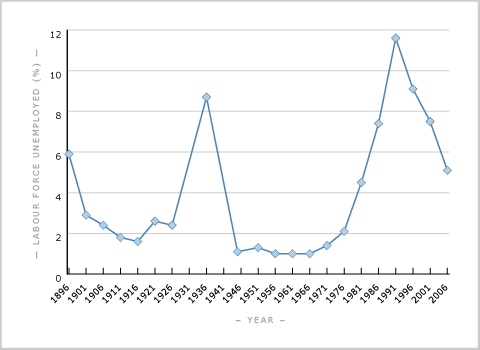
There are no long-term official estimates of unemployment except the census. A question about unemployment was first asked in the 1896 census, although Māori were not asked until 1945. The unemployment rate (total unemployment divided by the size of the labour force) is shown in this graph.
In the first quarter of the 20th century about 2% of the labour force said they were unemployed. Unfortunately the 1931 census was abandoned as a cost-saving measure, and the 1941 one was delayed until 1945 as a part of the war effort so it is unclear what happened over the middle period, although the unemployment rate was almost certainly above 10%, and perhaps above 20%, in the early 1930s. It was probably near zero during the war. Unemployment remained low during the post-war boom, but increased after the 1966 wool price collapse. It peaked in the early 1990s at above 10%. It fell through the next decade, but not to the low levels of earlier years.
Using this item
Te Ara - The Encyclopedia of New Zealand
Source: Statistics New Zealand
This item has been provided for private study purposes (such as school projects, family and local history research) and any published reproduction (print or electronic) may infringe copyright law. It is the responsibility of the user of any material to obtain clearance from the copyright holder.