

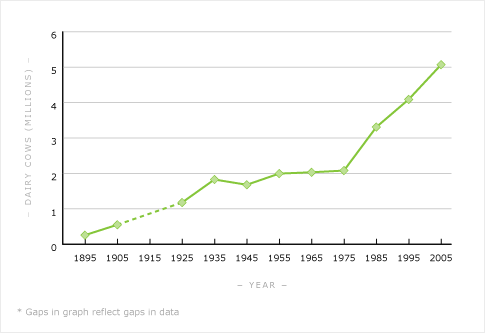
The number of dairy cattle (cows and heifers in milk, cows and heifers not in milk, heifer yearlings and calves, and bulls for breeding) increased steadily in the early years of the 20th century as mechanisation and transportation improved. Numbers remained relatively static from the depression years of the 1930s through the Second World War until the mid-1970s. In the period from 1975 to 2005, increased fertiliser use, better pasture species, and expansion of dairying in the South Island all contributed to a steady increase in dairy cattle numbers. There were 5.2 million dairy cattle in 2016, and 4.8 million in 2020.
Using this item
Te Ara – The Encyclopedia of New Zealand
This item has been provided for private study purposes (such as school projects, family and local history research) and any published reproduction (print or electronic) may infringe copyright law. It is the responsibility of the user of any material to obtain clearance from the copyright holder.